
Reviewed · STOCKHOLM TOURS
Stockholm Old Town and the Viking Museum, a Small Group Walking Tour
Stockholm’s story unfolds naturally on this tour, from the first settlements around Lake Mälaren to the royal dramas, wars, political reforms, and inventions that shaped modern Sweden. You walk through Gamla Stan, cross the water by public ferry, and finish at the Viking Museum with admission already covered.
I like the small maximum of 10 people, which gives the guide room to answer questions and adjust the pace. I also like the route itself: it mixes major sights such as the Royal Palace with less obvious history about noble power, religious change, and Sweden’s long period of peace. The main consideration is that three hours is a tight window, and the tour ends at the Viking Museum rather than returning you to central Stockholm.
Key points to know before booking
- A compact route with a wide sweep of Swedish history: You move from the Ice Age and Stockholm’s first settlements to the Bernadotte dynasty and the modern welfare state.
- Small groups make a real difference: The maximum is 10 people, and the tour can even run with just one participant.
- The ferry ride is part of the experience: The Djurgårdsfärjan carries you from Skeppsbron to Djurgården, adding views and a useful local connection.
- The Viking Museum ticket is included: Your guide introduces the museum, and you may stay after the guided portion ends.
- Guide Bengt Nykvist receives strong praise: His English, warm manner, and ability to explain both city sights and museum displays are central to the experience.
- Plan for a one-way finish: You end on Djurgården, near several other museums and attractions, not back at the Old Town meeting point.
A three-hour introduction to Stockholm’s story
This is not simply a photo walk through Stockholm’s prettiest streets. The route uses the city itself as a timeline. You begin under or near Gamla Stan Metro station, move across Riddarholmen, pass the Parliament and Royal Palace, then wander through Old Town before taking the ferry to Djurgården.
That structure is useful if you are new to Stockholm. Instead of seeing a church, palace, statue, or square as an isolated sight, you hear how each fits into Sweden’s changing political story. The guide covers the early settlement of the islands, the rise of the Swedish state, the age of warrior kings, democratic reform, and the country’s later turn toward diplomacy and social development.
The tour is offered in English and begins at 10:00 a.m. The stated meeting address is Munkbrogatan 8, while the directions describe meeting inside or below Gamla Stan Metro station, in front of the Pressbyrån kiosk. Since those details are not worded exactly the same way, I would check the final meeting instructions before setting out.
More Walking Tours in Stockholm
- Stockholm: Ghost Walk and Historical Tour
★ 4.7 · 2,206 reviews - Walking Tour of Stockholm Old Town
★ 5.0 · 1,175 reviews - The Original Stockholm Ghost Walk and Historical Tour – Gamla Stan
★ 4.5 · 1,165 reviews
Riddarholmen and the first chapters of Stockholm
The opening stop is a historical marker on Riddarholmen, the Knights Island. Here, the guide sets the scene with Sweden’s early past, beginning as far back as the Ice Age and moving toward the first settlements around the islands.
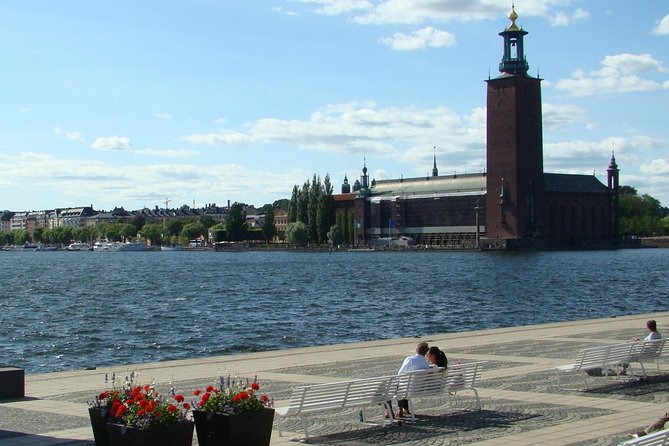
You also get a view across Lake Mälaren toward Stockholm City Hall. This is a good first pause because it places the city in its physical setting. Water is not just decoration here. It explains why these islands mattered and why Stockholm developed as a meeting point between inland Sweden and the Baltic world.
Outside Riddarholmen Church, the tour turns to Birger Jarl, the figure generally regarded as Stockholm’s founder. A statue represents him, and the guide explains the importance of 1252, the year Stockholm was first recorded in a surviving written document.
This portion takes only about 20 minutes in total, but it gives you a useful base. The drawback is that the stops are mostly outdoor explanations rather than interior visits. If you want long church visits or museum time during the Old Town portion, this tour will feel brisk.
Gustav Vasa, noble power, and the Swedish state
At Riddarhuset, the House of Nobility, the story shifts to Gustav Vasa. A statue of Gustav provides the starting point for one of the most important political turns in Swedish history.
The guide explains how Gustav rose after the Stockholm Bloodbath, when his father and many other noblemen were killed. Gustav led an uprising against Denmark’s control of Sweden and entered Stockholm in 1523. That year marks the beginning of Sweden as a sovereign state under the Vasa dynasty.
You also hear about Gustav’s religious reforms. Sweden moved from Catholicism to Lutheran Protestantism during his reign, a change that affected government, church property, daily life, and the country’s relationship with Europe.
This is one of the tour’s strongest features. A short stop outside a grand building becomes a lesson in how modern Sweden began taking shape. I especially like that the tour does not treat royal statues as mere decoration. You learn why the person represented mattered and what changed during his rule.
At Vasabron, the guide continues with Gustav Vasa’s heirs, including Gustav II Adolf. This king expanded Swedish influence around the Baltic Sea and is linked to the construction of the Vasa warship. The Vasa itself is displayed elsewhere on Djurgården, but this tour gives you the political background before you see the ship or choose to visit its museum later.
Parliament and the long road to voting rights
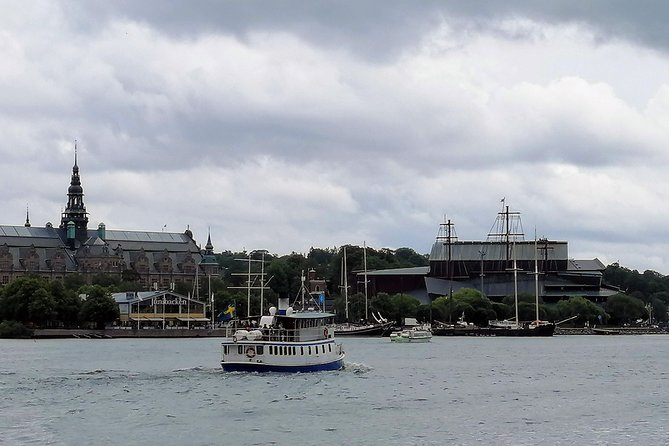
The route then reaches the Parliament Building, or Riksdagshuset. Here, the focus moves from kings and military power to representation.
Sweden’s earlier Riksdag of the Estates brought together nobles, clergy, burghers, and peasants. The groups met separately before addressing the king. This system lasted until 1866, when a two-chamber parliament replaced it.
The change did not create equal voting rights overnight. General suffrage came only after a long political struggle, with the first elections under universal voting rights held in 1921. The guide connects this transition to the work of liberals and socialists.
That context matters. Stockholm’s grand government buildings can make political history seem distant and formal. This stop reminds you that Sweden’s democratic system developed gradually, and that the country’s modern reputation for social equality has roots in lengthy political battles.
You spend about 10 minutes here. It is not a detailed constitutional seminar, but it gives you enough background to understand the building and the people who shaped Swedish public life.
More old town walks in Stockholm
- Stockholm: Old Town Walking Tour with Local Guide
★ 4.7 · 719 reviews - Walking Tour of Stockholm’s Old Town, Gamla Stan
★ 5.0 · 451 reviews - Stockholm: Old Town Historical Walking Tour
★ 4.9 · 344 reviews - Old Town Tour of Stockholm
★ 4.0 · 289 reviews
The Royal Palace and Sweden’s warrior kings
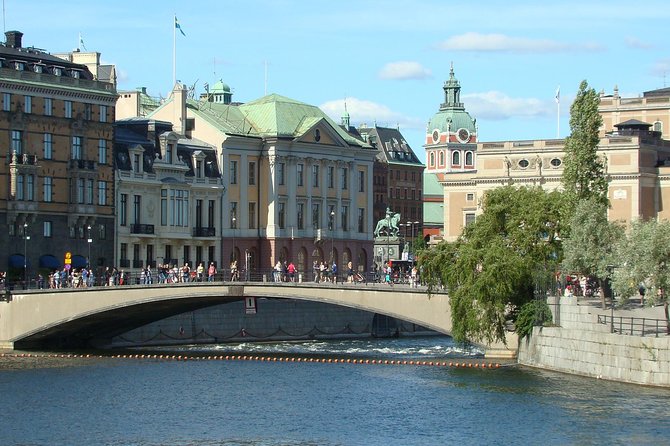
At Lejonbacken, on the north side of the Royal Palace, the story turns to Sweden’s age as a major power in northern Europe. A statue of Karl XII points east, toward the lands where Sweden once fought Russia.
The guide explains how Peter the Great eventually ended Sweden’s great-power ambitions. Karl XII and his army won early victories, but the Swedish forces were defeated at Poltava in 1709. That battle changed the balance around the Baltic Sea and helped bring Sweden’s expansion to an end.
The palace setting makes this history easy to picture. You are not just hearing about a battlefield in a classroom. You are standing outside the center of royal authority, looking at a monument tied to the direction of Sweden’s military campaigns.
The stop also introduces the Enlightenment and Gustav III, a king with strong interests in theater, art, and science. His rule shows that Swedish royal history was not only about war. Court culture and intellectual life also mattered.
The Royal Palace itself is not listed as an interior visit, so do not book this tour expecting a palace tour. The value here is the explanation outside, with time to take in the architecture and understand the events connected to it.
Stortorget, the Iron Boy, and Old Town details
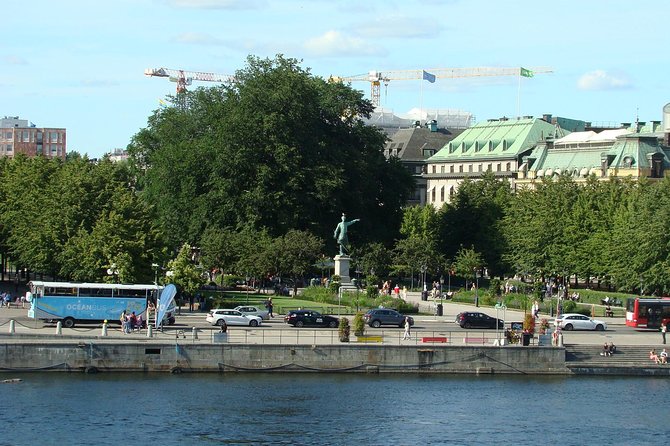
One of the shortest stops is Jarnpojken, known as Sweden’s smallest statue. It is a charming detail in the middle of a history-heavy walk, and it gives the tour a lighter pause.
The route then reaches Stortorget, Stockholm’s famous main square. The Nobel Prize Museum is located here, and the guide explains how Sweden’s royal academies select winners in major fields of science and the arts.
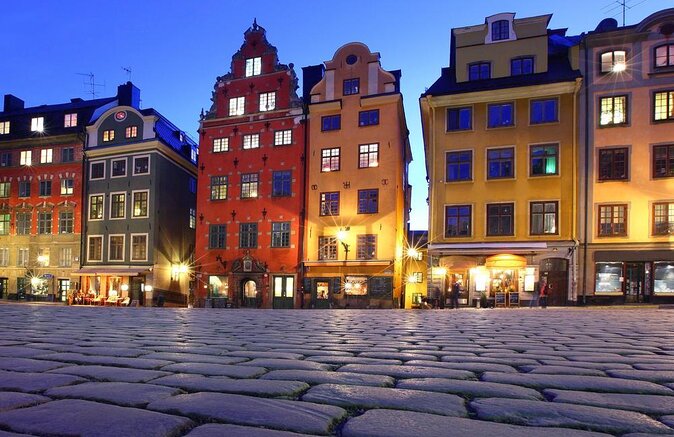
Stortorget is also one of the places where Stockholm’s Old Town feels most visually memorable. The colored facades and compact square make it a natural place for photographs, but the guide adds a useful layer by connecting the setting to Sweden’s cultural and scientific identity.
You will want comfortable shoes. The tour is a walking experience with several stops, and the physical requirement is listed as moderate fitness. The route is not described as strenuous, but standing and walking for most of three hours can be tiring if you are carrying heavy luggage or have limited mobility.
Carl XIV Johan and the road to modern Sweden
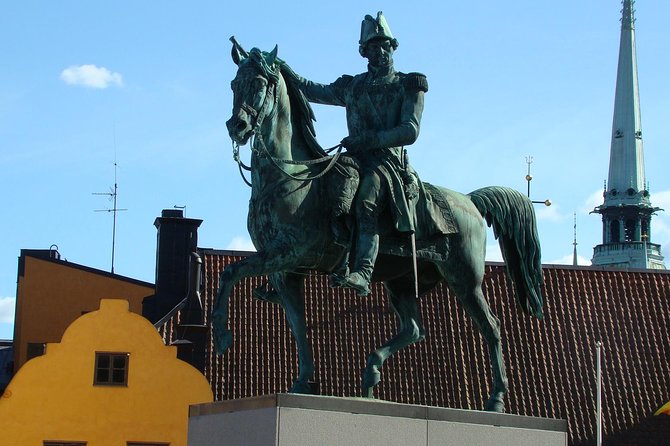
Below the statue of Carl XIV Johan, the tour moves into the 19th and 20th centuries. He was the first Bernadotte king, brought from France at the beginning of the 19th century in the hope that he might help Sweden recover territory lost to Russia.
Instead, his efforts turned toward diplomacy, infrastructure, and education. The guide uses this shift to explain Sweden’s long period of peace. In 2014, the country marked 200 years of peace, a fact that helps explain why modern Swedish identity is so different from the image created by its earlier warrior kings.
The final part of this city walk covers industrialization, natural resources, Swedish inventions, and the growth of a welfare state. Entrepreneurs continued that development in the 20th and 21st centuries.
This section gives the tour a clear arc. Sweden begins as a collection of settlements and competing powers, becomes a centralized kingdom, reaches military strength, loses its empire, and then builds influence through education, industry, diplomacy, and public institutions. You may not leave with every date fixed in your mind, but you will have a framework for understanding the country.
Crossing to Djurgården by public ferry
At Skeppsbron 26, you board the Djurgårdsfärjan for the short trip to Djurgården. The ferry is included in the tour, and the crossing breaks up the walking with a change of scenery.
This is also practical. Djurgården holds several of Stockholm’s major attractions, so the ferry takes you directly into an area where you can continue exploring after the tour. The route ends at the Viking Museum, but you can later walk to the Vasa Museum, ABBA Museum, Gröna Lund amusement park, or Skansen. Those attractions are not included, so plan and budget separately if you want to visit them.
The ferry portion lasts about 10 minutes. It is not a sightseeing cruise, but it gives you a pleasant connection between the Old Town and Djurgården, plus a different view of Stockholm’s waterways.
What happens inside the Viking Museum
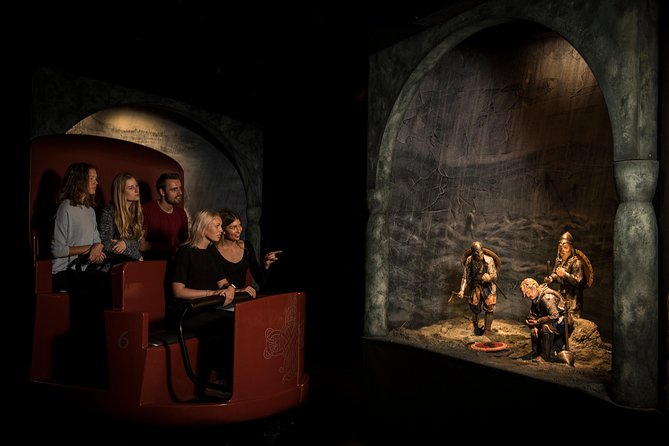
The Viking Museum is the final stop, and admission is included. Your guide introduces the museum and points out some of its attractions before the guided tour ends.
This museum is presented as a small-scale experience that combines historical information with elements from the performing arts. That makes it different from a traditional display-only museum. You can expect a presentation built around both documented Viking-era material and theatrical storytelling.
The guided portion lasts about 30 minutes. That is enough for an introduction, but not enough for an exhaustive museum visit. The useful part is having Bengt Nykvist, or another guide from the operator, explain what you are seeing and provide context after the city walk.
You are welcome to remain in the museum once the guided tour finishes. This is important when judging the value of the experience. The three-hour schedule does not have to mean you get only 30 minutes with the museum. If your schedule allows, you can stay longer, then continue to another Djurgården attraction.
The guide and the small-group advantage
The guide can make or break a history walk, and Bengt Nykvist is the name most closely associated with this experience. He is praised for clear English, an engaging way of explaining Swedish history, and a congenial manner.
One unusual possibility is an extremely small group. The maximum is 10 people, but the tour can operate with just one participant. That means you may receive a highly personal explanation rather than a fixed speech delivered to a crowd.
A small group also helps at busy sights. You can ask why Gustav Vasa matters, how the Riksdag changed, or what happened to Sweden after Poltava without feeling you are holding up a large party. The guide may have more flexibility to respond to your interests.
The tradeoff is that the experience depends heavily on the individual guide and the day’s group size. The information provided highlights Bengt’s expertise and warmth, but another departure may feel somewhat different. Still, the small-group limit gives this format a better chance of feeling personal than a standard city coach tour.
Is the $118.96 price fair?
At $118.96 per person, this is not a budget walking tour. The price includes roughly three hours with a guide, the ferry from Skeppsbron to Djurgården, and admission to the Viking Museum.
The value improves if you want an efficient first look at Stockholm and plan to keep exploring Djurgården afterward. You are paying for explanation and organization, not only entry tickets. The guide links the sights together, gets you across town without planning the route yourself, and introduces the museum before you continue independently.
The value is weaker if you prefer to move slowly, enter every major building, or spend a full afternoon at the Viking Museum. The palace, Parliament, Nobel Prize Museum, and other sights are viewed from outside or discussed along the way. You are buying a guided overview, not a collection of long interior visits.
I would see this as a good first-day orientation for someone who wants history with a human voice. It is less suitable for a repeat visitor who already knows Stockholm and wants more time inside individual museums.
Practical details that affect your day
The tour starts at 10:00 a.m. and lasts approximately three hours. Confirmation arrives when you book, and the route begins near public transportation at Gamla Stan.
Wear comfortable shoes and bring clothing suited to an outdoor walk. Much of the history is explained at streets, bridges, squares, and palace viewpoints, so you will spend time outside before reaching the museum.
The finish at Djurgårdsstrand 15 is useful rather than inconvenient if you want to continue sightseeing. From the Viking Museum, you can reach nearby attractions on Djurgården, and you can return toward the city center by ferry or tram.
Free cancellation is available if you cancel at least 24 hours before the 10:00 a.m. start time. Changes or cancellations made inside that window are not accepted for a refund.
Should you book this Stockholm tour?
Book it if you want a friendly, history-led introduction to Stockholm, especially if you are visiting for the first time and like to understand what you are looking at. The route covers an impressive span of Swedish history, the ferry adds a pleasant transition, and the included Viking Museum entry gives you a useful finish.
I would also recommend it to solo visitors and couples who value conversation. With a maximum of 10 people, the experience has the right shape for questions, and it may even become a private tour if no one else books.
Skip it if your priority is a slow museum day, palace interiors, or independent wandering. The pace is purposeful, the Old Town stops are brief, and the tour ends on Djurgården. For the right reader, though, the combination of clear historical storytelling, a small group, and an included museum makes the price reasonable.
FAQ
How long does the Stockholm Old Town and Viking Museum tour last?
The tour lasts approximately three hours, including the Old Town walk, ferry crossing, and guided introduction to the Viking Museum.
What time does the tour begin?
The tour starts at 10:00 a.m.
Where does the tour start?
The stated starting address is Munkbrogatan 8 in Stockholm. The meeting directions specify Gamla Stan Metro station, inside or below ground, in front of the Pressbyrån kiosk. Check the final meeting details before departure.
Is admission to the Viking Museum included?
Yes. Entry to the Viking Museum is included in the tour price, and the guide introduces you to the museum and some of its attractions.
Can I stay at the Viking Museum after the tour?
Yes. The guided tour ends at the museum, but you are welcome to stay there afterward.
What is the maximum group size?
The tour has a maximum of 10 participants. It can also operate with a much smaller group, including only one participant.
Can I cancel for a full refund?
Yes, if you cancel at least 24 hours before the experience start time. Cancellations or changes made less than 24 hours before the start are not eligible for a refund.
More Museums in Stockholm
- Stockholm: Skansen Open-Air Museum Admission Ticket
★ 4.5 · 3,427 reviews - Stockholm Pass: Save up to 50% – Includes Vasa Museum Ticket
★ 4.1 · 2,392 reviews - Stockholm: Nobel Prize Museum and Exhibition Entry Ticket
★ 4.3 · 994 reviews - Stockholm: Fotografiska Museum Entrance Ticket
★ 4.5 · 702 reviews
More Viking History Days
- Stockholm: The Viking Museum Exhibition and Viking Ride
★ 4.5 · 667 reviews - Entrance ticket to The Viking Museum
★ 4.0 · 301 reviews - Viking History, Runes & Countryside 9h Tour to Sigtuna & Uppsala
★ 4.5 · 283 reviews - Viking History and Swedish Countryside Tour to Sigtuna & Uppsala
★ 4.5 · 162 reviews
Just added around Stockholm
- Beautiful Stockholm Small Group Walking Tour★ 5.0 · 3 reviews
- Private Golden Hour Photo Walk in Stockholm★ 5.0 · 3 reviews
- ROYAL Castle Skokloster and Viking Sigtuna (private tour)★ 4.5 · 3 reviews
- Stockholm Port to Stockholm Arlanda Airport (ARN) – Departure Private Transfer★ 3.5 · 3 reviews
- Swedish Beer Tasting Tour in Stockholm Old Town Pubs★ 5.0 · 3 reviews
- Stockholm Ghost Hunt: Self-Guided Tour and Puzzle Adventure★ 4.5 · 3 reviews
- Private Photography workshop in Stockholm★ 5.0 · 3 reviews
- Private blood, ghosts and folklore Old Town 2h Stockholm tour★ 4.0 · 3 reviews
Stockholm Tours, compared.

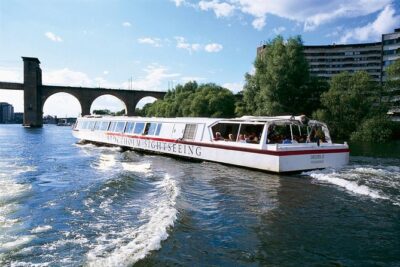
Stockholm: City Archipelago Sightseeing Cruise with Guide
Read our review →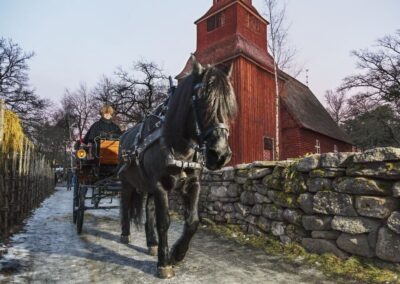
Stockholm: Skansen Open-Air Museum Admission Ticket
Read our review →
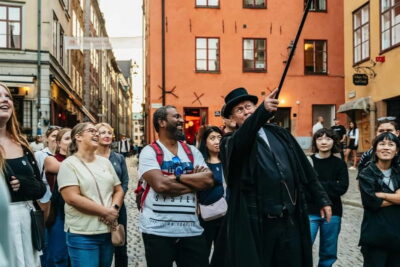
The Original Stockholm Ghost Walk and Historical Tour – Gamla Stan
Read our review →
Browse the lists this tour appears in