
Reviewed · STOCKHOLM TOURS
Stockholm: Skansen Open-Air Museum Admission Ticket
Skansen is part museum, part zoo, and part walk through old Sweden. You can enter a 19th-century home, watch traditional work in progress, then walk on to see moose, brown bears, lynx, and reindeer. The mix of living history and animals gives this place more variety than a standard museum.
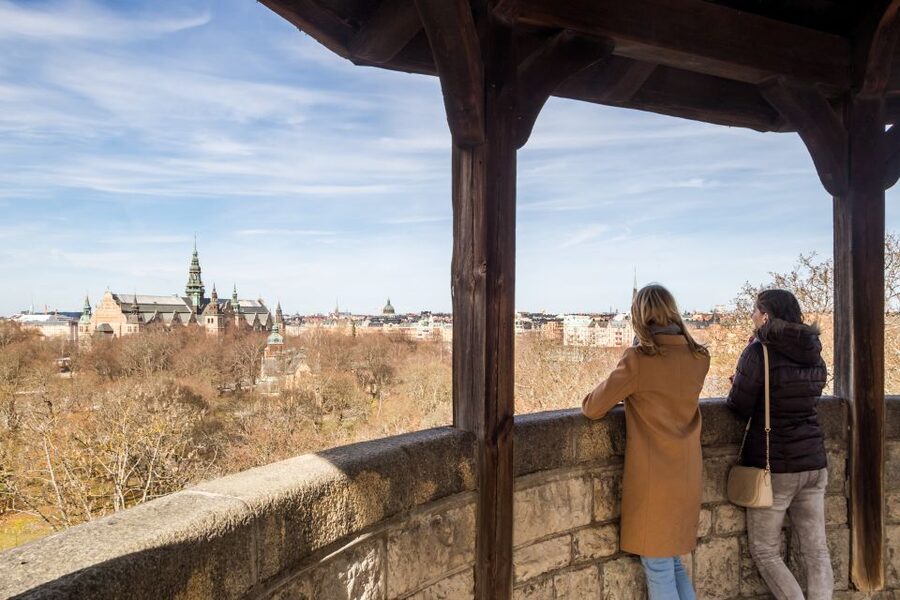
I especially like the old farmsteads and workshops, where buildings from different parts of Sweden show how work and home life once fit together. I also like the views across Stockholm, particularly when you stop for lunch at one of the restaurants. The main drawback is size: two hours is not enough, and the paths can be quite hilly.
Key points to know before you go
- Plan on half a day or more: Skansen is large, with as many as 150 historic buildings, animal areas, trails, shops, and restaurants.
- Old Sweden feels hands-on here: Watch demonstrations of trades such as printing, glassblowing, and baking.
- Nordic animals are a major draw: Look for moose, brown bears, lynx, wolverines, seals, reindeer, and rare domestic breeds.
- The aquarium may cost extra: It adds Baltic Sea displays and a walk-through lemur area, but check the current admission terms.
- Expect slopes and walking: Comfortable shoes matter, and a funicular can help with the first large hill for an additional fee.
- Season changes the mood: Winter brings snow and a Christmas market, while summer can include Midsummer celebrations and more demonstrations.
Why Skansen feels like more than a museum
Skansen was created as an open-air museum of Sweden, and its basic idea remains wonderfully clear: instead of placing objects behind glass, it places historic buildings in a large outdoor setting. You walk from one region and period to another, seeing how people lived, worked, cooked, worshipped, and spent their free time.
The collection includes as many as 150 houses and farmsteads brought from different parts of the country. Some are simple rural buildings. Others show town life, crafts, shops, or the homes of people with different incomes. That social range matters. You are not seeing one idealized version of Sweden. You are seeing contrasts between workers, farmers, tradespeople, and better-off households.
The museum covers the 16th century through the first half of the 20th century. That gives you a long view of change, but the experience is not built around dates alone. Seasonal work, celebrations, household chores, and local customs help explain what daily life felt like.
More museums in Stockholm
- Stockholm Pass: Save up to 50% – Includes Vasa Museum Ticket
★ 4.1 · 2,392 reviews - Stockholm: Nobel Prize Museum and Exhibition Entry Ticket
★ 4.3 · 994 reviews - Stockholm: Fotografiska Museum Entrance Ticket
★ 4.5 · 702 reviews
Entering Skansen and getting your bearings
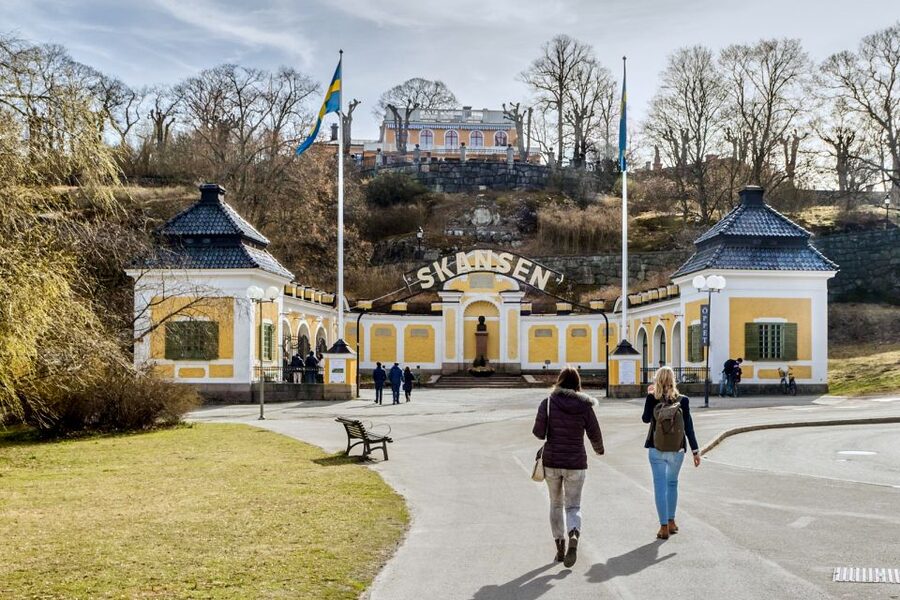
The meeting point is at Djurgårdsslätten 49-51 on the island of Djurgården. You can show your admission QR code at the entrance, and the selected timeslot is only a reference. You may arrive at any time during the museum’s opening hours.
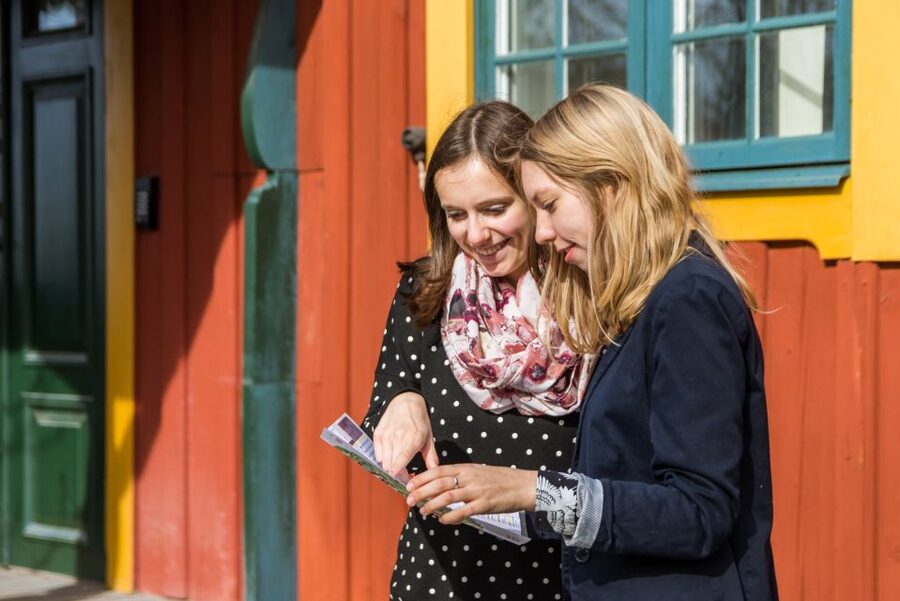
Skansen is broad and uneven, so take a moment to study the map before setting off. It is easy to wander happily and then discover that you have missed an entire group of buildings or animal areas. If your time is limited, choose your priorities first: historic homes, Nordic animals, the aquarium, seasonal events, or a restaurant stop.
The opening area includes a sizeable uphill walk. A funicular is available for an extra charge and can make the first climb easier. After that, you should still expect plenty of walking, with paths that may feel demanding if you have mobility concerns. The museum is wheelchair accessible, but the hilly setting means you should plan your route with care.
Historic homes that explain everyday Swedish life
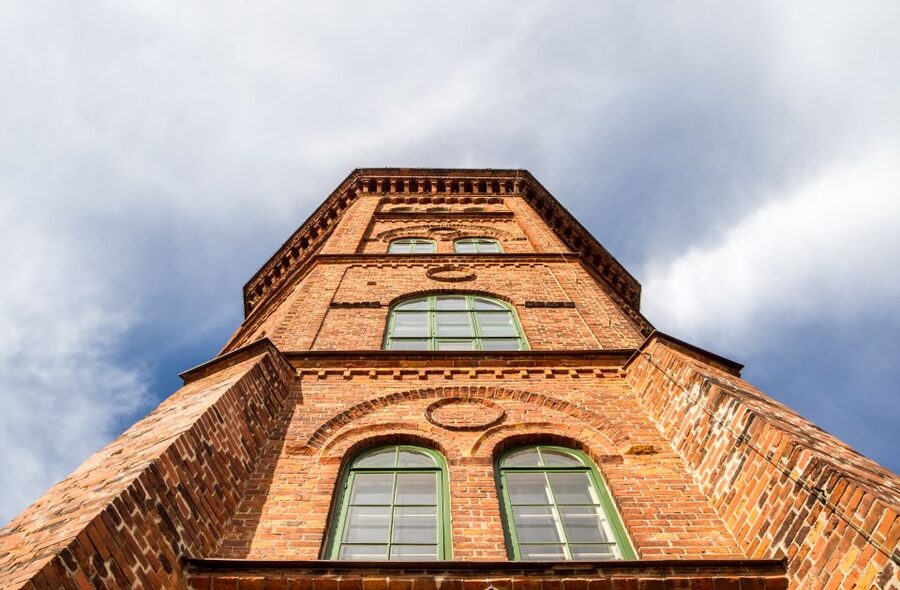
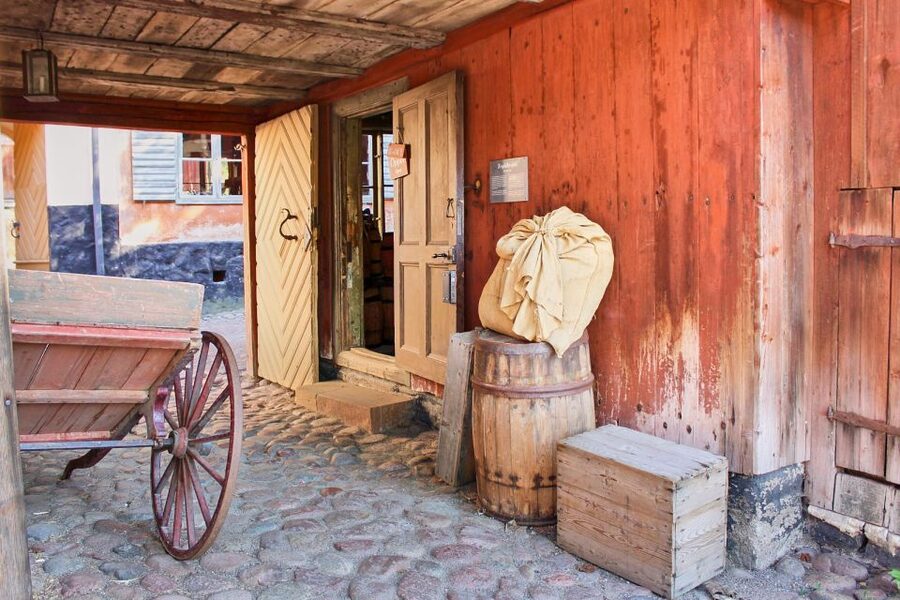
The buildings are Skansen’s heart. Each one gives you a physical sense of scale and routine that written displays rarely manage. A small kitchen, workshop, barn, or bedroom can show more about ordinary life than a long list of historical facts.
Look closely at the materials and layout. Timber construction, work areas, storage, heating, and furniture all tell you what people valued and what they had to do by hand. The farmsteads also show how closely home life depended on the seasons. Food, tools, clothing, and celebrations changed with the calendar.
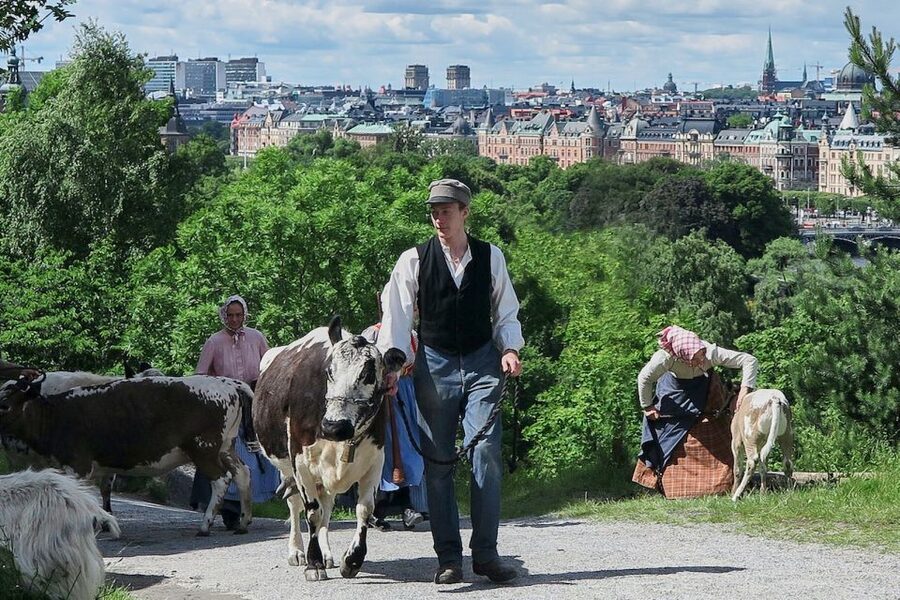
Some buildings are staffed by people dressed in period clothing or presenting traditional roles. They can explain the work done there and help turn a silent building into a working scene. On some days, you might see a printer making items, a baker preparing food, or a glassblower demonstrating a demanding craft.
That activity is one reason Skansen works well for families. Children can watch a process rather than simply read a label. Adults get useful context about labor, class, and technology. The quality of the day can depend on which buildings and demonstrations are operating, so do not assume every stop will be active at every hour.
Sunday and winter visits may have fewer people in period roles, and some buildings or activities may be closed. That does not remove the value of the setting, but it changes the experience. If live demonstrations are your main reason for going, check the day’s program before you arrive.
Workshops, food, and the pleasure of small details
The working trades are often the most memorable part of the historic section. A printing demonstration, for example, can make the old neighborhood feel practical rather than decorative. You might even get the chance to make a small item such as a bookmark.
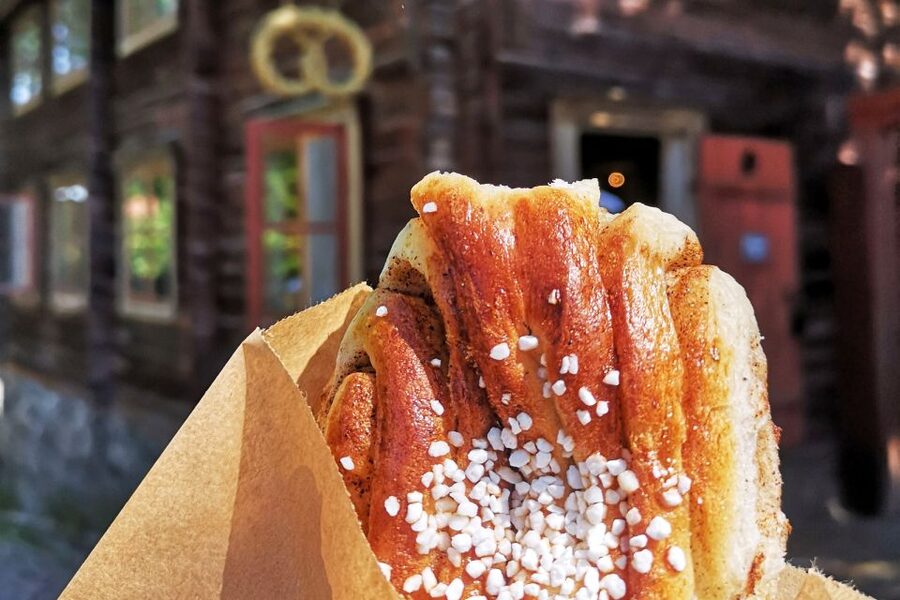
Traditional baking and glassblowing have also been highlights for visitors. These displays help you understand the patience, heat, repetition, and skill behind objects that are easy to take for granted in a modern shop. You may also find historic shops selling baked goods, tools, glassware, handicrafts, and other traditional items.
The museum shop is worth a stop if you want a useful souvenir rather than a generic mascot. It carries Swedish-designed products and traditional handicrafts. Prices vary, but the selection fits the place and gives you a chance to take home something connected to Swedish design or older craft traditions.
Food and drinks are not included in the $27 admission. Several restaurants offer meals, and some have fine views over Stockholm. A restaurant stop can make sense because the site is large and a full day outside can be tiring, but budget for it separately. One practical point: early arrivals may find that cafés and stands are not all open right away. Food service can begin later in the morning, around 11 in one reported experience, so do not count on an immediate coffee at opening time.
More Stockholm outings to compare
- Stockholm: Avicii Experience Skip-the-Line Entrance Ticket
★ 4.8 · 763 reviews - Fotografiska Stockholm Admission Ticket
★ 4.0 · 330 reviews - Vasa Museum Guided Tour, Including Ticket & Guide
★ 5.0 · 330 reviews - Entrance ticket to The Viking Museum
★ 4.0 · 301 reviews
The Nordic animal areas
Skansen’s animal collection adds a second reason to visit. The site is home to about 75 animal species, including Nordic wild animals, rare domestic breeds, and familiar farm animals.
The large animals are the main attraction. Moose are especially popular, and you might also see brown bears, lynx, wolverines, reindeer, grey seals, and wolves when those enclosures are open. The moose and wolverines have been particular favorites, while the bears give you a strong reminder of the scale of Sweden’s wild animals.
The displays are not simply a collection of exotic creatures. The Nordic animals fit the museum’s wider purpose by showing the wildlife connected to Scandinavian forests, mountains, and farms. The domestic breeds also support the story of rural life, since farm animals were central to food, work, and household survival.
Animal viewing is never fully predictable. An enclosure may be closed for maintenance, and individual animals may be out of sight. Reindeer, wolves, and other species have not always been available, so do not treat every animal on the published list as guaranteed.
There is also a children’s zoo with domestic animals such as cats, rabbits, and guinea pigs. This area is a sensible pause for families, especially if younger children are less interested in old buildings. Peacocks may also wander freely near the paths, creating one of those unplanned moments that photographs cannot quite capture.
The aquarium and Baltic Sea Science Center
The aquarium is a separate consideration. Several visitors have found the extra charge worthwhile, especially for the walk-through lemur area, where the animals move around you at close range. The Baltic Sea Science Center adds an educational look at local marine life and is more than a quick collection of fish tanks.
Because the supplied admission is for Skansen itself and the aquarium has been described as an extra-cost add-on, check the current ticket details before you go. One account described the aquarium as included, while other information identifies an additional fee. The safest advice is to confirm at the entrance or during booking rather than assume it is part of the basic ticket.
If you are traveling with children, interested in Baltic Sea ecology, or want a break from outdoor walking, the aquarium may be a good use of extra money. If your main goal is historic Sweden and Nordic mammals, you can have a satisfying visit without it.
Seasonal Skansen: snow, Midsummer, and Christmas
Skansen changes with the calendar. The same paths can feel entirely different in summer sun, autumn chill, or falling snow. Decorations and activities follow seasonal themes, so the date of your visit affects more than the temperature.
Midsummer celebrations can add music, customs, and a strong sense of Swedish tradition. If you are interested in festivals rather than only buildings, this is one of the best times to see the museum operating as a cultural gathering place.
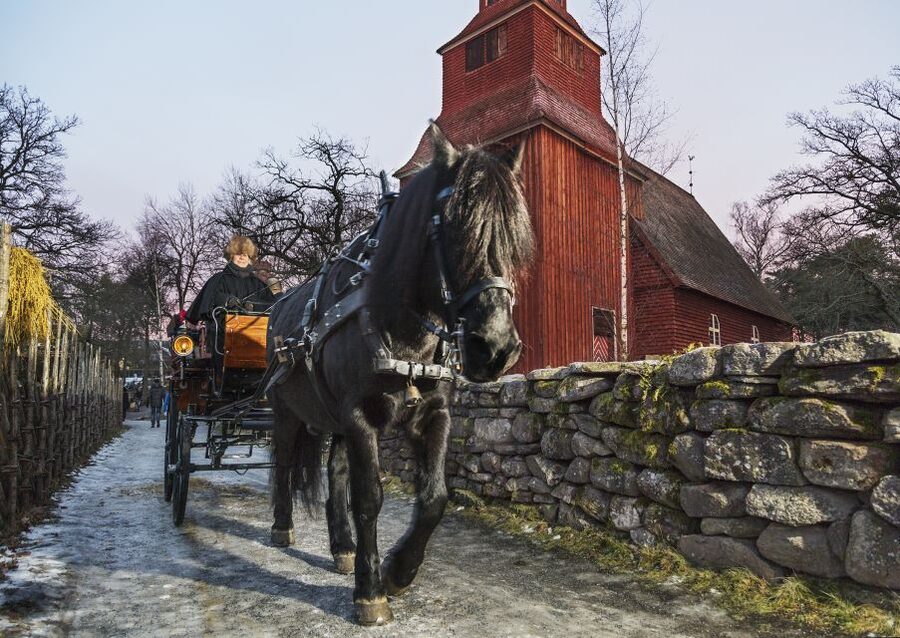
Winter has its own rewards. Snow can make the old homes and paths feel especially atmospheric, and New Year events may bring evening celebrations and dining near the stage. The trade-off is shorter daylight, fewer open buildings, and less activity in some areas.
The historic Christmas market is a long-running Skansen tradition, dating to 1903. During the stated season, it runs Friday through Sunday from November 26 to December 19. You can browse handicrafts, sweets, homemade candles, and Christmas gifts. The market gives the visit a festive purpose, but it also means the site may feel busier and more focused on shopping and food.
How long you really need

The ticket is valid for one day from first activation, and I would use that flexibility. Skansen is not a quick photo stop. You can cover a few major sections in two or three hours, but you will miss much of the site.
A half-day is a reasonable minimum if you want historic buildings and several animal areas. A full day makes more sense if you want the aquarium, lunch, demonstrations, the shop, and time to follow the paths without rushing.
Several people have spent four to five hours and still found more to see. One visitor planned only two hours and had to leave large sections unexplored. That is the key planning lesson: do not squeeze Skansen into a tight schedule simply because the admission is easy to use.
Opening times for the full grounds and staffed historic houses may differ. A useful detail is that guides inside some houses may leave around 3 p.m. even when other parts of the park remain open for at least another hour. Arriving earlier gives you the best chance of seeing demonstrations and speaking with the people presenting the buildings.
Is the $27 ticket good value?

At $27 per person, the admission is fair if you plan to stay for several hours. You are paying for a large site with historic buildings, outdoor paths, animal areas, seasonal features, and access to a full day of exploration. It is not a cheap museum for a short visit, but it can be good value compared with buying several separate attractions.
The value is strongest for families and curious adults who like variety. You can spend time with history, nature, architecture, crafts, food, and views without changing locations. The ticket is less compelling if you dislike walking, want a tightly guided historical narrative, or have only an hour or two in Stockholm.
Food, drinks, the funicular, and possibly the aquarium cost extra. Add those costs before deciding. Still, the basic ticket gives you enough to do that you do not need every add-on for a worthwhile day.
Who should visit Skansen?
I would recommend Skansen to families, first-time visitors who want an overview of Swedish culture, and anyone who enjoys museums with room to move. Children have animals and hands-on sights, while adults can focus on buildings, work traditions, and social history.
It also suits photographers. Snow, old timber houses, Stockholm views, animals, and working workshops provide plenty of visual variety. Couples and solo visitors can enjoy a quieter walk, especially outside the busiest seasonal periods.
I would be more cautious if you have limited mobility or do not enjoy hills. The museum is wheelchair accessible, but the terrain is not flat. Ask about the easiest route and consider the funicular for the initial climb.
Practical tips for a better day
Wear comfortable walking shoes. The paths are longer and hillier than many first-time visitors expect, and you will enjoy the historic sections more if you are not watching every step.
Arrive early if you want the best choice of demonstrations and a quiet start. Begin with the staffed buildings, then see the animals and aquarium later if you have time.
Do not plan your whole day around seeing one species. Enclosures can close, and animals may not appear on schedule. Treat the wildlife section as part of the visit rather than a guarantee of a particular sighting.
Bring a little extra money for lunch, drinks, the shop, and optional attractions. If you are visiting in winter, check opening times carefully and allow for fewer active buildings.
Admission is wheelchair accessible, and you can cancel up to 24 hours before the visit for a full refund. You can also reserve now and pay later, which helps if your Stockholm plans are still shifting.
Should you book Skansen?
Book it if you can spare at least half a day and want a broad, approachable look at Sweden. The strongest parts are the historic homes, working crafts, Nordic animals, and the chance to connect rural life with the seasons and customs that shaped it.
Skip it if your schedule is too tight for more than a quick stop, or if steep paths and outdoor walking would make the day uncomfortable. For most visitors with enough time, the $27 ticket earns its keep, especially when you treat Skansen as a full outing rather than a single museum exhibit.
FAQ
How long is the Skansen admission ticket valid?
The ticket is valid for one day from first activation.
Can I arrive at a different time from my selected timeslot?
Yes. The selected timeslot is only a reference, and you can arrive at any time during opening hours.
Is food included in the admission price?
No. Food and drinks are not included. Restaurants and other food outlets are available on site.
Is Skansen wheelchair accessible?
Yes, Skansen is wheelchair accessible. However, the grounds are hilly, so route planning may be useful.
Does the ticket include the aquarium?
The basic information identifies the aquarium as an extra-cost option, while one account described it as included. Check the current admission terms before visiting.
Can I see moose, bears, lynx, and reindeer?
These animals are part of Skansen’s animal collection, but individual enclosures may be closed and animals are not guaranteed to be visible on every visit.
Does Skansen have a Christmas market?
Yes. The stated Christmas market dates are Friday through Sunday from November 26 until December 19, with handicrafts, sweets, homemade candles, and Christmas gifts.
Just added around Stockholm
- Beautiful Stockholm Small Group Walking Tour★ 5.0 · 3 reviews
- ROYAL Castle Skokloster and Viking Sigtuna (private tour)★ 4.5 · 3 reviews
- Private Golden Hour Photo Walk in Stockholm★ 5.0 · 3 reviews
- Stockholm Port to Stockholm Arlanda Airport (ARN) – Departure Private Transfer★ 3.5 · 3 reviews
- Stockholm Ghost Hunt: Self-Guided Tour and Puzzle Adventure★ 4.5 · 3 reviews
- Swedish Beer Tasting Tour in Stockholm Old Town Pubs★ 5.0 · 3 reviews
- Private Photography workshop in Stockholm★ 5.0 · 3 reviews
- Private blood, ghosts and folklore Old Town 2h Stockholm tour★ 4.0 · 3 reviews
Stockholm Tours, compared.

Stockholm: City Archipelago Sightseeing Cruise with Guide
Read our review →

The Original Stockholm Ghost Walk and Historical Tour – Gamla Stan
Read our review →
Stockholm: Nobel Prize Museum and Exhibition Entry Ticket
Read our review →Browse the lists this tour appears in