
Reviewed · STOCKHOLM TOURS
Stockholm: Sigtuna and Uppsala Viking History Day Tour
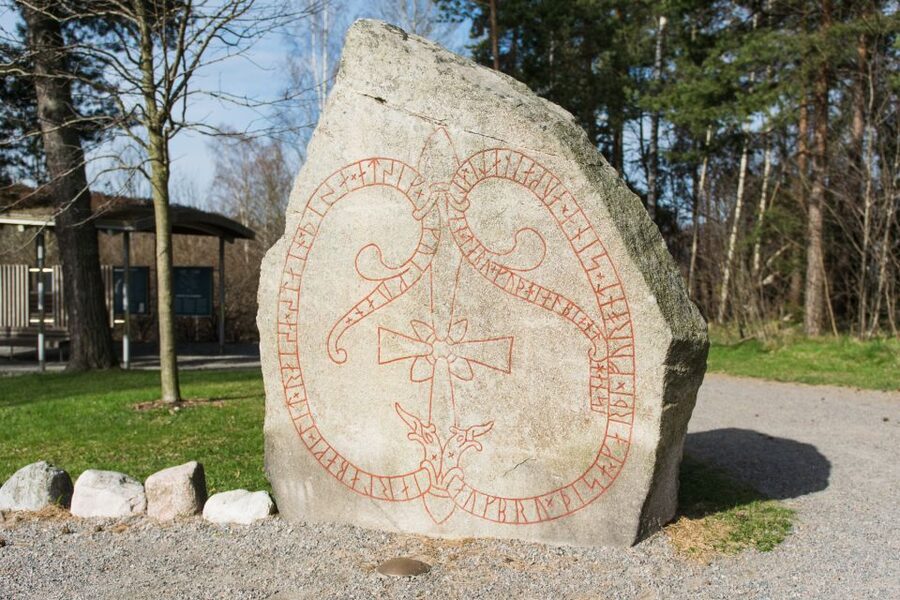
The most rewarding part of this day is seeing Viking evidence in ordinary places: a roadside bridge, a churchyard, a farm, and grassy burial mounds. Jarlabanke’s runestones and Granby’s longhouse foundations make the past feel tied to the countryside, not locked away in a museum.
I like the smart route, which links several small Viking sites with the bigger sights of Sigtuna and Uppsala. I also like the personal service, with central Stockholm pickup and drop-off and guides such as Urban, who is patient, friendly, and ready to answer questions. The main drawback is that the day is not Viking-only. Sigtuna and Uppsala add welcome variety, but anyone expecting a full day of reconstructed Viking life may find the focus broader than expected.
Key points to know
- Jarlabanke’s Bridge gives you an early lesson in Viking power: The runestones connect the bridge to the chieftain Jarlabanke and his family.
- Granby offers some of the clearest physical remains: You see runic writing and the foundations of Viking houses, then stop for Swedish fika at Hökeriet.
- Sigtuna is the most pleasant walking break: Its cobbled streets, old church, town hall, shops, and lake views provide 90 minutes at an easy pace.
- Uppsala adds Sweden’s grand historical scale: The route takes in the cathedral, university area, gardens, castle, and the royal burial mounds at Gamla Uppsala.
- This is a long but efficient day: Eight and a half hours with transport included lets you reach places that are awkward to connect by public transit.
- Comfortable shoes matter: You will walk around historic sites, old streets, church grounds, and open areas.
Why these Viking sites matter
Sweden’s Viking past is not presented here as a single dramatic monument. Instead, you piece it together from runestones, churches, gathering places, burial mounds, and the layout of old settlements.
That is useful context. The Viking Age did not end with one battle or one royal decree. Across Scandinavia, trade, local power, law, and Christianity gradually changed daily life. This tour lets you see several stages of that change in one day, from pagan-era memorial stones to medieval churches and Sweden’s early towns.
Your guide provides the thread connecting the sites. English is the tour language, and Urban is one guide associated with the experience. He has been praised for answering questions, explaining the locations in detail, and staying patient when the day does not run perfectly. One practical note: his accent is not British, so listeners who are still building confidence in English may need to concentrate.
The tour uses a van, with hotel pickup and drop-off available at accommodations in central Stockholm. That matters because the sights are spread across Stockholm County and beyond. A rental car would give you freedom, but driving, parking, and finding obscure runestones would eat into your day.
More Historical Tours in Stockholm
- Stockholm: Ghost Walk and Historical Tour
★ 4.7 · 2,206 reviews - The Original Stockholm Ghost Walk and Historical Tour – Gamla Stan
★ 4.5 · 1,165 reviews - Stockholm: Old Town Historical Walking Tour
★ 4.9 · 344 reviews
Jarlabanke’s Bridge and the language of power
After roughly 30 minutes in the van, the first stop is Jarlabanke’s Bridge. The name refers to Jarlabanke, an 11th-century chieftain whose family used runestones to record their influence and accomplishments.
The bridge is more than a place for a quick photograph. The stones help explain how Viking-age leaders wanted to be remembered. Runic inscriptions could mark a grave, honor a relative, claim land, record construction work, or announce a person’s social rank. Here, the writing connects public works with family power.
You get about 30 minutes for a guided visit and photographs. Listen closely to the explanation rather than treating the stones as scenery. The inscriptions are not long stories in the modern sense, but even a few translated lines can reveal who paid for a bridge, who belonged to a family, and what kind of reputation mattered.
This is one place where a guide adds real value. Without context, a runestone can look like a weathered slab covered in scratches. With context, it becomes a piece of public messaging from a society that had no newspapers, official portraits, or social media.
Arkils Tingstad, where communities made decisions
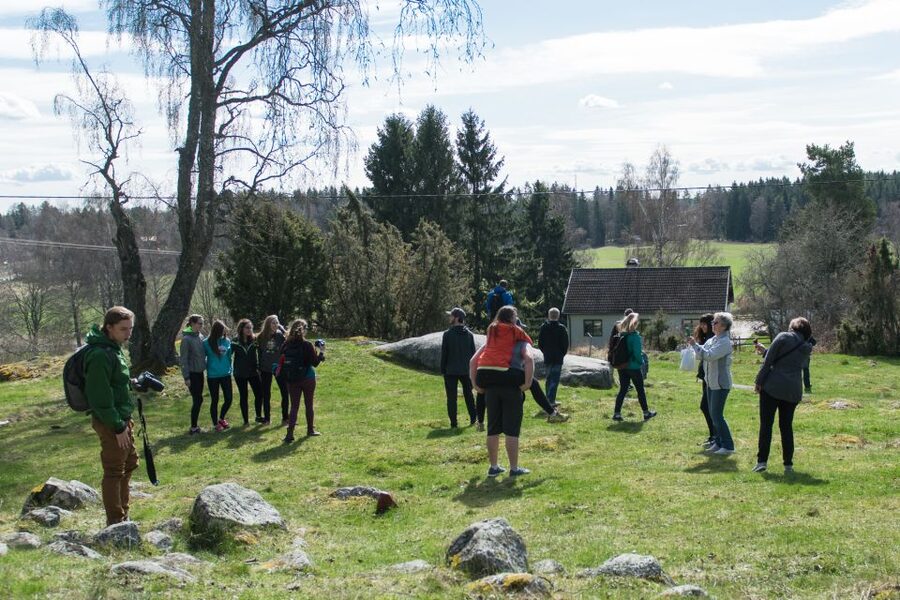
A short van ride brings you to Arkils Tingstad, an old assembly site. The word ting refers to a gathering where people could settle disputes, make decisions, and establish laws.
The site offers a useful correction to the usual image of Vikings as raiders and warriors. Local communities also needed rules, negotiation, property agreements, and systems for resolving conflict. Arkils Tingstad gives you a glimpse of that side of Scandinavian life.
You spend about 30 minutes here with a guide. The remains may require imagination, since an assembly site is not a fully reconstructed hall or fortress. That can be a limitation if you prefer large, intact monuments. The reward is learning how early Scandinavian society worked at the local level.
I would pay attention to the setting and the explanation of how the assembly functioned. This is one of the tour’s more important stops for understanding governance, even if it is less visually dramatic than Uppsala Cathedral or Gamla Uppsala’s burial mounds.
Vallentuna Church and Sweden’s Christian turn
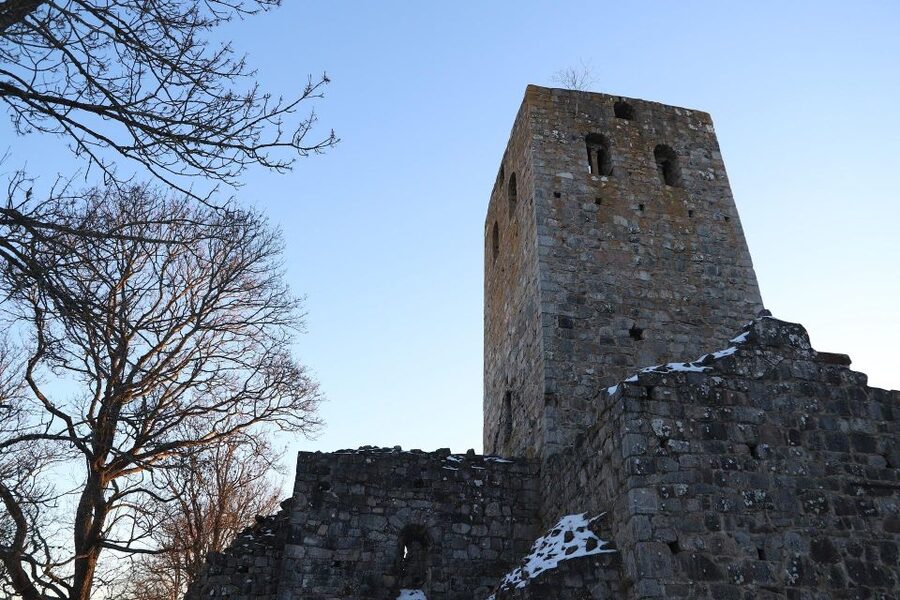
The next stop is Vallentuna Church, a 12th-century building with Romanesque, Gothic, and Baroque elements. You have about 20 minutes for a guided visit and photographs.
The church helps mark the shift away from the Viking Age. Sweden’s conversion to Christianity did not erase earlier beliefs overnight. New churches appeared in places where people already lived, gathered, and held power, creating a visible link between older local society and medieval Sweden.
Architectural details from different periods also show that the building changed over time. The mix of styles means you are not looking at a church built in a single moment, but at a place shaped by later repairs and additions.
This is a short stop, so expect an introduction rather than a long architectural study. If the church is open for the planned visit, you can focus on the building and the historical explanation. The stop works best as part of the larger story: Viking-era local authority, Christianization, and the growth of organized medieval communities.
More viking history days
- Stockholm: The Viking Museum Exhibition and Viking Ride
★ 4.5 · 667 reviews - Entrance ticket to The Viking Museum
★ 4.0 · 301 reviews - Viking History, Runes & Countryside 9h Tour to Sigtuna & Uppsala
★ 4.5 · 283 reviews - Viking History and Swedish Countryside Tour to Sigtuna & Uppsala
★ 4.5 · 162 reviews
Granby Stone, house foundations, and a Swedish fika
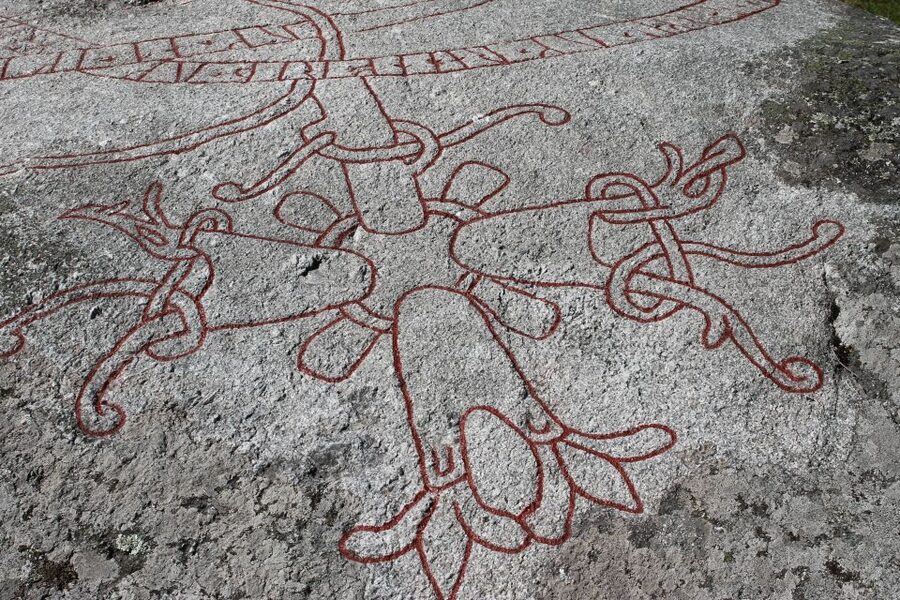
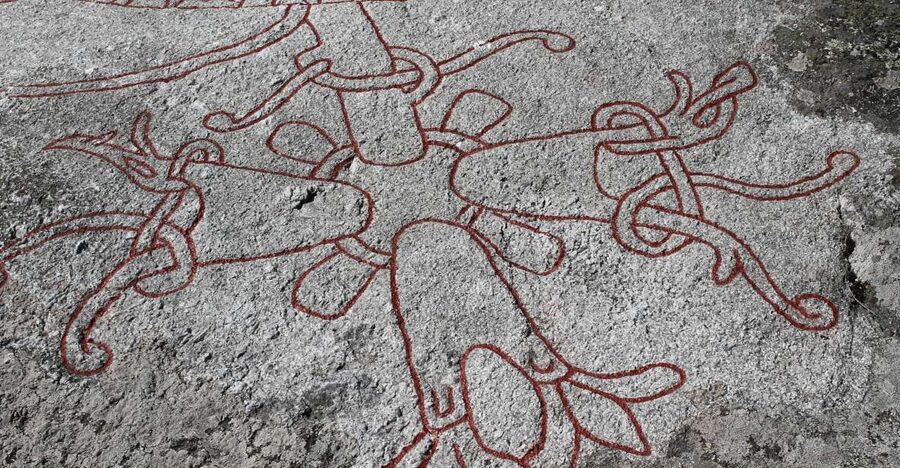
The 45-minute stop at Orkesta-Granby is one of the day’s strongest sections. It combines a runestone, archaeological remains, a coffee break, local snacks, and time at Hökeriet, a traditional provision shop at Granby Farm.
The Granby Stone is notable for its detailed Viking text. Runestones often give only a short memorial message, so a more substantial inscription can offer a fuller glimpse of family, land, and local events. Your guide helps you make sense of the writing and the people behind it.
Nearby are what are described as the best-preserved Viking house foundations in the area. Foundations are not as instantly impressive as a standing longhouse, but they can be more honest. You see where a building once stood and learn about the practical shape of Viking domestic life without a polished modern reconstruction taking over the story.
Hökeriet adds a different kind of experience. Swedish fika means a coffee break with something to eat, and here it is tied to a farm shop offering regional handcrafts and Viking-themed souvenirs. Meals and drinks are not included in the tour price, so budget for anything you buy at the stop.
This is a useful place to purchase a small souvenir if you want one with a direct connection to the day. Just remember that the tour does not permit large bags or luggage, so shopping should stay modest and manageable.
Sigtuna, Sweden’s oldest town
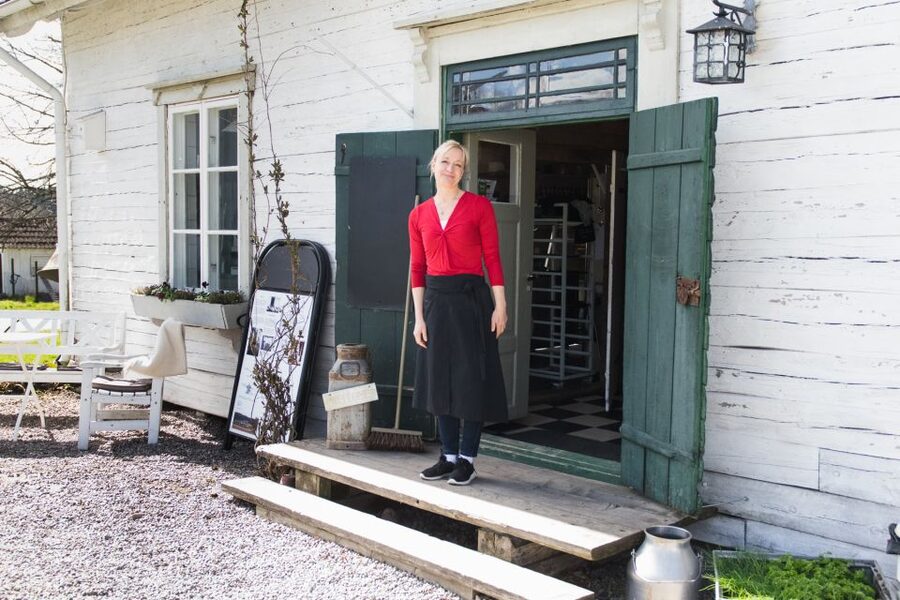
After about 35 minutes on the road, you reach Sigtuna for roughly 90 minutes. Founded in AD 980, it is identified as Sweden’s oldest town, and it gives you a welcome change of rhythm after the scattered countryside sites.
Sigtuna is made for walking. You can follow cobbled streets, look around the old town center, see the town hall, visit St. Mary’s Church, and take in views toward the lake. There is also time for shopping and independent wandering, which makes this the least tightly guided part of the day.
I like this stop because it lets you experience history at street level. You are not simply looking at one relic. The town’s plan, old buildings, church remains, and position by the water help you picture why an early settlement developed here.
The 90-minute allowance is enough for a focused walk and some browsing, but it is not enough for every attraction at length. If the Sigtuna Museum is a priority, ask your guide how best to fit it in. You may need to choose between the museum, church, shops, and a relaxed stroll.
Sigtuna is also where the tour’s Viking focus broadens. The town began near the end of the Viking Age and continued into Sweden’s Christian and medieval periods. That makes it historically useful, but it may disappoint you if you want only Viking artifacts and reconstructions.
Uppsala’s cathedral, university, and royal connections
The drive from Sigtuna to Uppsala takes about 30 minutes, followed by around 90 minutes in the city. Uppsala brings together religious, academic, and royal associations, giving the afternoon a larger urban scale.
The route takes you past Uppsala Cathedral, botanical gardens, historic university buildings, and Uppsala Castle. The cathedral is the visual heavyweight, while the university area explains why Uppsala has long mattered as a center of learning.
You receive a guided introduction and sightseeing time rather than a full interior tour of every major building. That keeps the schedule moving, but you should set expectations accordingly. This is an overview of Uppsala’s key sights, not an exhaustive city tour.
For me, Uppsala works because it adds a broader Swedish context after the local Viking sites. You can see how early power centers developed into religious and academic institutions. The transition from scattered runestones to a major cathedral and university town is one of the day’s clearest signs of change over time.
Gamla Uppsala and the three royal mounds
The final major historical stop is Old Uppsala, or Gamla Uppsala. Its three prominent burial mounds date from the 6th and 7th centuries and are traditionally linked with legendary Swedish kings.
The mounds are simple in appearance, but their scale and setting make them memorable. They are not Viking-age houses or battle sites. They belong to an earlier period, yet they help explain the long line of Scandinavian power and ritual that shaped later Sweden.
Your guide can place the mounds within the wider story of kingship, burial, and legend. This is another stop where interpretation matters more than a large collection of objects. You are looking at earthworks, so the experience rewards curiosity and patience.
Gamla Uppsala also helps keep the day from becoming too narrow. The tour is about Viking-age Sweden, but it also traces the older roots and later consequences of that era. If you enjoy historical connections, this final stop adds plenty. If you want only runestones, it may feel like a side trip.
The pace, transport, and group experience
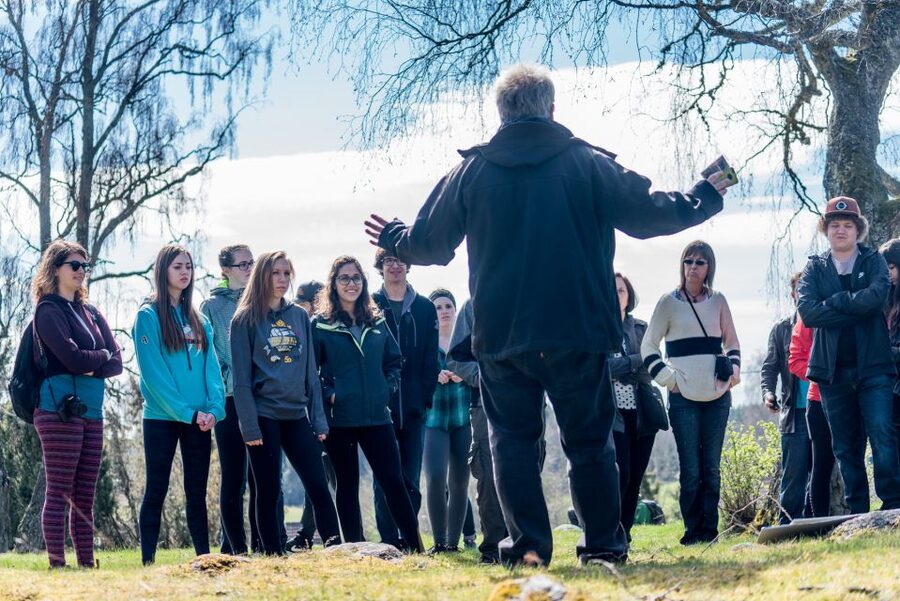
The full day lasts 8.5 hours, including the return to Stockholm. The schedule includes several short stops, a 45-minute break at Granby, 90 minutes in Sigtuna, and 90 minutes in Uppsala.
That is a lot of ground. You should expect regular van rides, with the longest listed stretches being about 35 minutes to Sigtuna and one hour back to Stockholm. The travel time is not wasted, since it allows the tour to connect rural sites that would be cumbersome to visit independently.
The vehicle is described as clean, and the small-group format is a useful advantage. A smaller group makes it easier to hear the guide, ask questions, and keep the day moving. It also means the experience feels more like a guided outing than a large coach excursion.
Wear comfortable shoes. You will walk on old streets and around historic sites, and the day includes outdoor stops. Bring clothing suited to changing Swedish weather, although the only stated requirement is comfortable footwear.
Pets, luggage, large bags, alcohol, and drugs are not allowed. Central Stockholm pickup and drop-off are included, which is especially helpful after a long day outside the city.
Is $255 a fair price?
At $255 per person, this is not a cheap sightseeing day. The value depends on how much you want to see and how comfortable you are arranging transport yourself.
The price includes a live English-speaking guide, transportation, and hotel pickup and drop-off. It also saves you the work of connecting Jarlabanke’s Bridge, Arkils Tingstad, Vallentuna, Granby, Sigtuna, Uppsala, and Gamla Uppsala on your own. Public transport may reach some of these places, but linking all of them in one day would be difficult.
Meals and drinks are extra. You should allow for your fika purchase at Hökeriet and any food you want during the day. Shopping in Sigtuna and at Granby is also separate.
I think the price makes the most sense for first-time visitors who want a guided overview of Sweden’s early history without renting a car. It is less compelling if you are already comfortable driving in the region, have several days available, or want to spend an entire day inside Uppsala or Sigtuna.
The tour has a 4.7 rating from 41 reviews, with particularly strong praise for the guides, personal pickup, clean vehicle, and the number of places reached in one day. One lower rating points to the central tradeoff: the history is interesting, but the tour is not as narrowly Viking-focused as some people expect, and the guide’s style may feel dry to some listeners.
Who should book this day?
You should consider it if you enjoy runes, old churches, burial sites, early towns, and the story of how Sweden changed from local Viking communities into a Christian kingdom. It also suits anyone who wants a small-group day with transport handled.
Families with older children may appreciate the variety, though the amount of spoken history could be demanding for very young children. History-minded visitors will get the most from it, especially if they enjoy asking questions and comparing different types of evidence.
You may want another tour if your main goal is a living-history Viking show, a reconstructed village, or a museum packed with artifacts. This day offers real sites and careful explanation, but many remains are partial, outdoors, or understated.
Booking is made more flexible by free cancellation up to 24 hours before departure and a reserve-now, pay-later option. Starting times vary, so check availability for your date.
Should you book the Sigtuna and Uppsala Viking History Day Tour?
Book it if you want to connect runestones, assembly sites, churches, early towns, and royal mounds in one well-planned day. The strongest moments are Jarlabanke’s Bridge, Granby’s house foundations, and the clear contrast between rural Viking remains and the grand scale of Uppsala.
Skip it if you want a pure Viking attraction with reconstructed buildings and hands-on activities. The tour is really a broad history day centered on the Viking period, with Sigtuna and Uppsala adding major Swedish sights.
For most visitors without a car, the convenience and range justify the price. Go with comfortable shoes, budget for your own food and drinks, and choose this day for thoughtful historical context rather than theatrical Viking spectacle.
FAQ
How long does the tour last?
The tour lasts 8.5 hours, including transportation from central Stockholm and the return journey.
Is hotel pickup included?
Yes. Pickup and drop-off are available from accommodations in central Stockholm.
What language is the tour conducted in?
The live tour guide speaks English.
Does the price include transportation?
Yes. Transportation by van is included.
Are meals and drinks included?
No. Meals and drinks are not included. A fika stop is planned at Hökeriet, where you can purchase coffee, snacks, and other items.
Which Viking sites are visited?
The tour visits Jarlabanke’s Bridge, Arkils Tingstad, Vallentuna Church, Granby and the Granby Stone, and the Viking house foundations at Granby.
Does the tour visit Sigtuna?
Yes. You have about 1.5 hours in Sigtuna, including sightseeing, free time, shopping, and views around Sweden’s oldest town.
Does the tour visit Uppsala?
Yes. The Uppsala portion lasts about 1.5 hours and includes sights such as Uppsala Cathedral, historic university buildings, botanical gardens, and Uppsala Castle.
What should I bring?
Bring comfortable shoes. You will visit outdoor historical sites and walk around cobbled streets.
Can I cancel for a full refund?
Yes. You can cancel up to 24 hours in advance for a full refund. The tour also offers a reserve-now, pay-later option.
More Sigtuna Day Trips
- From Stockholm: Uppsala and Sigtuna Viking Sites Tour
★ 4.7 · 157 reviews - Viking History Small Group Tour from Stockholm: Half Day Including Sigtuna
★ 4.5 · 111 reviews - Private Full Day Viking History Tour from Stockholm Including Sigtuna and Uppsala
★ 5.0 · 51 reviews - Private Half Day Tour: Viking History Trip from Stockholm Including Sigtuna
★ 5.0 · 26 reviews
Just added around Stockholm
- Beautiful Stockholm Small Group Walking Tour★ 5.0 · 3 reviews
- Private Golden Hour Photo Walk in Stockholm★ 5.0 · 3 reviews
- ROYAL Castle Skokloster and Viking Sigtuna (private tour)★ 4.5 · 3 reviews
- Stockholm Port to Stockholm Arlanda Airport (ARN) – Departure Private Transfer★ 3.5 · 3 reviews
- Stockholm Ghost Hunt: Self-Guided Tour and Puzzle Adventure★ 4.5 · 3 reviews
- Swedish Beer Tasting Tour in Stockholm Old Town Pubs★ 5.0 · 3 reviews
- Private Photography workshop in Stockholm★ 5.0 · 3 reviews
- Private blood, ghosts and folklore Old Town 2h Stockholm tour★ 4.0 · 3 reviews
Stockholm Tours, compared.

Stockholm: City Archipelago Sightseeing Cruise with Guide
Read our review →
Stockholm: Skansen Open-Air Museum Admission Ticket
Read our review →

The Original Stockholm Ghost Walk and Historical Tour – Gamla Stan
Read our review →
Browse the lists this tour appears in