
Reviewed · STOCKHOLM TOURS
From Stockholm: Uppsala and Sigtuna Viking Sites Tour
The best part of this day is its range. You move from weathered Viking runestones and old meeting places to Sigtuna’s medieval streets, the burial mounds at Gamla Uppsala, and Sweden’s grandest cathedral. It is a full journey through the shift from pagan Norse society to Christian Sweden, not just a quick photo stop at one rune stone.
I like the small maximum group of 17, which keeps the discussions lively without turning the day into a coach excursion. I also like the traditional fika at Granby Farm, a simple coffee and pastry break that gives the long day a pleasant local touch. The main drawback is the pace: nine hours, many stops, and a great deal of historical information can feel tiring, especially in poor weather or during the short days of winter.
Key points to know
- A full Viking-era circuit: Visit Jarlabanke Bridge, Arkils Tingstad, Vallentuna Church, Sigtuna, Gamla Uppsala, and Uppsala Cathedral in one day.
- Guides who teach, not just drive: Urban, Olof, Carl, and Calle have led tours, with history and storytelling at the heart of the experience.
- Small-group transport: The vehicle holds no more than 17 people, and an audio whisper system helps you hear the guide outside and inside.
- A real Swedish pause: Fika at Granby Farm includes coffee and homemade pastries.
- Time in Sigtuna: You get about an hour to eat lunch at your own expense, shop, walk, or simply rest.
- Come prepared for the outdoors: You only need moderate mobility, but you will walk a few hundred meters, stand for periods, and spend time outside.
Why this is more than a Viking photo tour
Stockholm itself has plenty of museums, but the Viking world makes more sense when you leave the city. This tour takes you into the countryside where runestones remain near the roads and churches occupy sites tied to Sweden’s early religious and political life.
I especially like the way the day connects separate eras. A carved stone is not treated as an isolated relic. Your guide explains the people named on it, the social world that produced it, and the way Christianity gradually changed the region. At Gamla Uppsala, the burial mounds lead into stories of pagan ceremony, royal power, and the later construction of a church.
The teaching is at an academic level, so you should want more than a few Viking helmets and battle stories. Urban is the main name associated with this experience, while Olof, Carl, and Calle have also guided groups. The strongest feature across the guiding is the willingness to answer questions and place Swedish events alongside wider European history.
That makes this a good choice if you like asking why things happened. It is less suited to you if you want a relaxed countryside drive with only occasional commentary.
More viking history days
- Stockholm: The Viking Museum Exhibition and Viking Ride
★ 4.5 · 667 reviews - Entrance ticket to The Viking Museum
★ 4.0 · 301 reviews - Viking History, Runes & Countryside 9h Tour to Sigtuna & Uppsala
★ 4.5 · 283 reviews
Jarlabanke Bridge and the first runestones
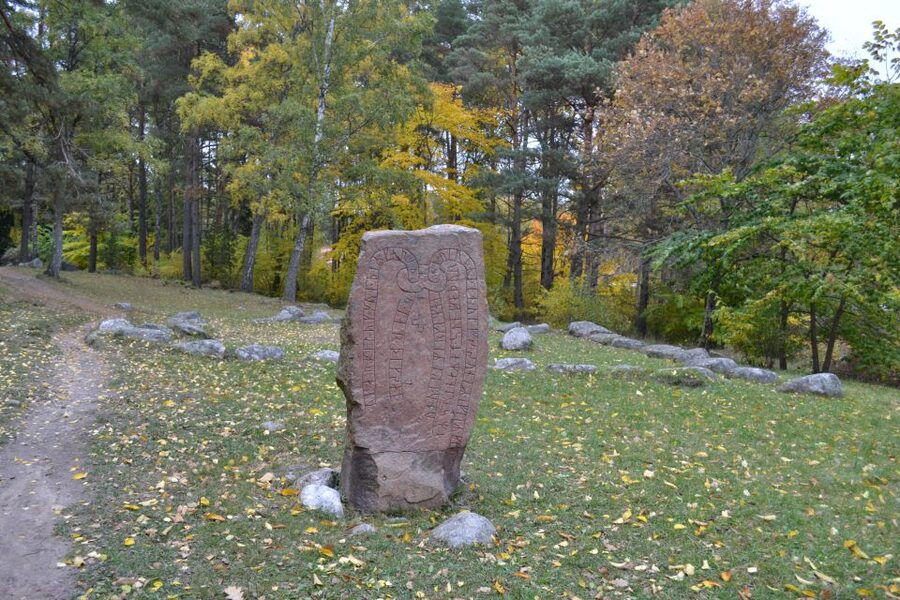
After pickup in Stockholm, the drive to the first site takes about 30 minutes. The opening stop is Jarlabanke Bridge, where the guide begins introducing the world of Viking-era eastern Sweden.
The name refers to Jarlabanke, a powerful local figure known through runic inscriptions. The point here is not simply to admire old writing. You learn how runestones could announce family connections, landholding, public works, and religious change.
The site gives you an early lesson in reading the evidence. Much of Viking history comes from short inscriptions, archaeology, later stories, and comparison with other regions. A good guide must explain what is known and what remains uncertain. This is where Urban’s broad historical approach is useful, since he places the local evidence within the larger story of Scandinavia.
You have about 30 minutes with a guided visit. That is enough time to hear the main explanation, take photographs, and ask questions, but not enough for a long independent walk.
Arkils Tingstad and the Viking meeting place
A short five-minute ride brings you to Arkils Tingstad. The word ting refers to an assembly or meeting place, where people could gather to discuss disputes, decisions, and matters affecting the community.
This stop helps correct the popular image of Viking society as only warriors and kings. The period also depended on law, negotiation, family alliances, trade, and public decisions. At Arkils Tingstad, your guide can show how social order was created through gatherings and spoken agreements.
You spend about 30 minutes here. The visit involves standing outside, so good shoes and weather-ready clothing matter. On a wet day, you will want a waterproof jacket rather than relying on an umbrella. On a bright summer day, the open setting gives you room for photographs and a clearer sense of the countryside around these old sites.
Vallentuna Church and the Christian turn
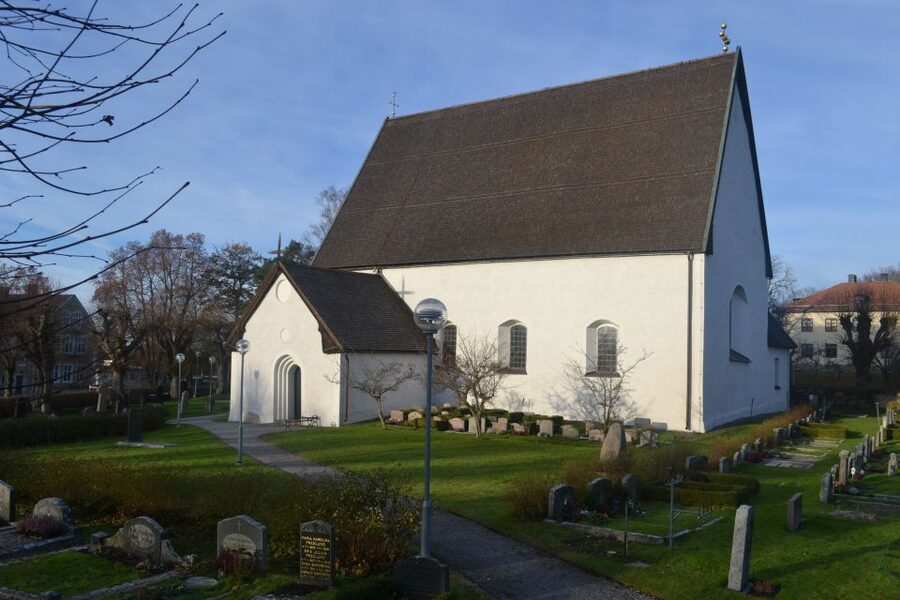
The tour then moves to Vallentuna Church for another 30-minute guided visit. Medieval churches are especially valuable on this route because they show what happened after the old pagan order began to change.
The tour does not present Christianization as an instant switch. Instead, the church helps you follow a long transition. Local power, burial customs, religious practice, and political authority changed over time. Some people adopted the new faith for spiritual reasons, while others saw advantages in joining a wider Christian network of rulers and institutions.
The church also provides shelter and a break from the weather. One particularly useful feature of this day is the mix of outdoor sites with original medieval buildings. If rain arrives, your guide may explain parts of the history indoors rather than forcing the group to stand outside for the whole talk.
More Sigtuna day trips
- Viking History and Swedish Countryside Tour to Sigtuna & Uppsala
★ 4.5 · 162 reviews - Viking History Small Group Tour from Stockholm: Half Day Including Sigtuna
★ 4.5 · 111 reviews - Private Full Day Viking History Tour from Stockholm Including Sigtuna and Uppsala
★ 5.0 · 51 reviews - Stockholm: Sigtuna and Uppsala Viking History Day Tour
★ 4.7 · 41 reviews
Swedish fika at Granby Farm
After another 15-minute drive, the group stops at HÖKERIET at Granby Farm for about 45 minutes. This is the day’s fika break, with coffee and homemade pastries.
Fika is more than a snack. It is a pause built into Swedish daily life, and here it prevents the schedule from becoming one long chain of dates and names. You can sit, eat, talk with the group, and give your feet a rest before the next major stop.
The farm setting also changes the mood. Up to this point, the focus is on stones, assemblies, and churches. The fika stop gives you a small taste of the modern Swedish countryside and a chance to ask your guide questions in a less formal setting.
Do not expect a full meal here. You still need to plan for lunch in Sigtuna. The pastries and coffee are included, which is a welcome detail on a long day.
Sigtuna, Sweden’s early town
A 30-minute drive takes you to Sigtuna, founded in the late Viking era. You get around an hour of free time, followed by a 15-minute guided visit.
Sigtuna is one of the most pleasant parts of the day because it gives you time to slow down. You can eat lunch at your own expense, browse shops, walk the picturesque streets, or sit and rest. After several guided outdoor stops, that freedom matters.
The town also shows how the Viking age led into an urban medieval Sweden. Rather than picturing Viking life only in rural farms or remote burial grounds, Sigtuna helps you think about trade, government, Christian institutions, and the growth of towns.
The guided portion includes the ruins of Saint Olaf Church. Olaf was a Norwegian Viking warrior who converted to Christianity and later became a saint. His story captures the complicated religious world of the period: a warrior could become a Christian ruler, and a figure linked to Viking power could later be honored within the church.
The one-hour free period is useful, but you should keep an eye on time. Sigtuna is not the place for an unhurried museum visit and a long lunch. If you want to eat, shop, and stroll, choose your priorities before you arrive.
Gamla Uppsala and the great burial mounds
After Sigtuna, the drive to Gamla Uppsala takes about 40 minutes. You get roughly 45 minutes with a guide among the famous burial mounds.
These mounds date from the first centuries AD through the end of the Viking era. They are among the most memorable sights on the tour because the scale makes the old center of power easier to imagine. You can see the shapes of the mounds while your guide explains the rulers, rituals, and beliefs connected with the site.
Gamla Uppsala was the spiritual center of the Viking world in Scandinavia. Midwinter blot festivals were held here, and the site became associated with pagan worship and royal authority. Later tradition says the pagan temple was burned in 1087. A church was built on the site, eventually becoming the country’s main cathedral and the seat of Sweden’s first archbishop.
The exact details of early religious buildings can be difficult to prove, and this is another place where careful explanation matters. Your guide separates legend, written tradition, and archaeological evidence while still telling a memorable story.
Gamla Uppsala is also where the tour’s subject becomes widest. You are no longer looking only at local runestones. You are considering how religion, kingship, burial, and national identity came together in one place.
One practical caution: the burial mounds are outdoors, and winter darkness can affect what you see. A November or January visit may feel atmospheric, but you should not expect the same visibility as on a long summer afternoon.
Uppsala Cathedral and the university quarter
The final major stop is present-day Uppsala, reached after about 15 minutes. You spend approximately 40 minutes at Uppsala Cathedral.
The cathedral is a strong finish because it shows the Christian Sweden that followed the Viking era. The building’s size and details can feel surprising after a day focused on runestones and earthworks. Your guide points out historical features and explains why the cathedral became so important to the country.
One past visitor found the cathedral far more interesting than expected, largely because the guide drew attention to details that are easy to miss on a quick self-guided visit. That is the value of having an expert beside you inside a major building: you are not left guessing which tomb, carving, or architectural feature matters.
As the group leaves Uppsala, you also receive a brief guided look at the university areas. The university setting adds another layer to the day. Gamla Uppsala represents ancient religious power, while modern Uppsala represents education, scholarship, and national institutions.
The return drive to Stockholm takes about an hour. It is a useful time to rest, continue the conversation, or ask questions that came up during the day.
How the small bus changes the experience
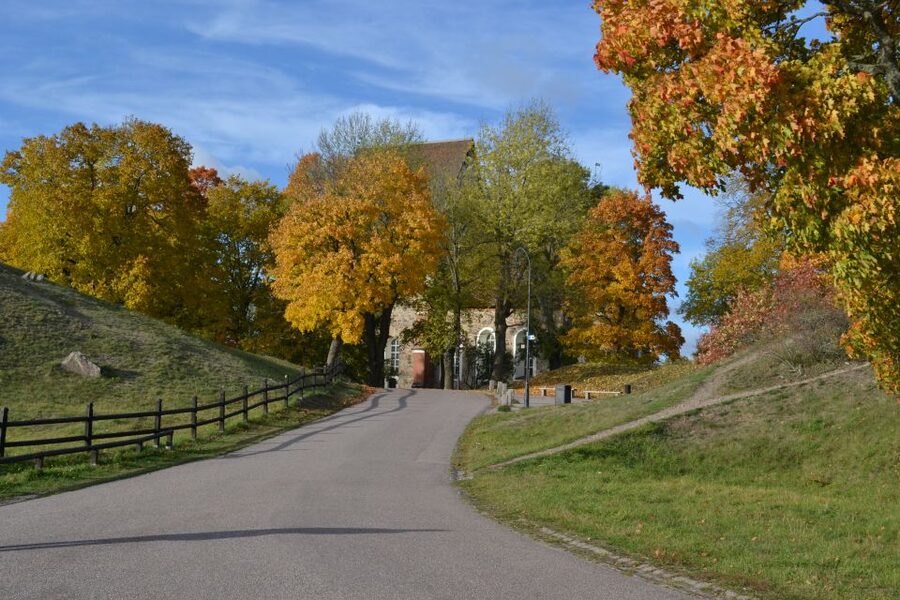
Hotel pickup and drop-off are offered when possible from a long list of central hotels. If you are staying outside the center, the usual meeting point is the Radisson Blu Waterfront Hotel, at the upper street on Klarabergsgatan near the hotel entrance.
Pickup is a real convenience, especially for an early start. Confirm your hotel location in advance, since central Stockholm has a non-driving area for some non-electric cars from 2025. If pickup cannot be arranged, the Waterfront meeting point is close to Stockholm Central Station.
The group limit is 17 people. Some departures may be much smaller, even close to a private outing, though you should book expecting a maximum-sized group. The modern bus is described as comfortable, and the included whisper audio system helps you follow the guide when standing outside or moving through a church.
A few past participants noted headset issues, so check your audio early and tell the guide if you cannot hear. That small step can make a big difference on a talk-heavy day.
Is $235 a fair price?
At $235 per person, this is not a budget sightseeing bus. The price makes more sense if you value a full day of transport, a small group, hotel pickup when available, guided access to several sites, the fika stop, and a guide who can handle detailed historical questions.
You are also covering a route that would be awkward to arrange independently in one day. Jarlabanke Bridge, Arkils Tingstad, Vallentuna Church, Granby Farm, Sigtuna, Gamla Uppsala, and Uppsala Cathedral are spread across the region. Public transport could get you to some of them, but combining all the stops would take planning and would leave you without the continuous historical explanation.
Lunch is not clearly included in the standard inclusions, so budget separately for your meal in Sigtuna. The tour does include coffee and homemade pastries at Granby Farm.
I would call the price fair for a history-focused visitor who wants depth and convenience. It may feel high if you care mostly about seeing Sigtuna and Uppsala, since you could visit those towns separately with more free time.
Who will enjoy this nine-hour day?
You should book this tour if you:
- Like history presented through places, inscriptions, churches, and archaeology.
- Want to see several Viking-era sites beyond Stockholm’s museums.
- Prefer a guide-led day with plenty of chances to ask questions.
- Enjoy small-group transport rather than a large coach.
- Are happy spending part of the day outdoors.
- Want to connect Viking religion with the later Christian and academic traditions of Sweden.
You may want another plan if you need a slow schedule. The itinerary has many stops, and each one adds information. You also get limited independent time outside Sigtuna, with no stated museum visit at Gamla Uppsala.
The English level is reasonable for an English-speaking tour, but the subject is presented at an academic level. If you prefer light commentary, this may be too dense. If you enjoy history and ask follow-up questions, it is one of the tour’s main strengths.
Weather, walking, and the best season
You should dress for the forecast, not the calendar. The tour includes outdoor activities at runestones, assembly sites, and burial mounds. Comfortable shoes, a waterproof outer layer, and warm clothing in the cooler months are sensible choices.
You do not need to be in peak physical condition. You should be able to walk a couple of hundred meters and stand for a while. The day is not described as strenuous, but uneven ground and outdoor waiting may bother you if you have limited mobility.
Summer gives you the longest daylight and the easiest conditions for photographs. Autumn can be especially attractive around the countryside, but rain is possible. Winter remains worthwhile for the churches, Sigtuna, and the guide’s explanations, though early darkness can mean that some outdoor sites are less visible.
The schedule continues in poor weather, with indoor explanations used when possible. Still, a rainy day will feel less comfortable than a dry one. That is not a reason to cancel, but it is a reason to pack properly.
My verdict on Urban Turism’s Viking route
This is a serious, well-planned history day rather than a theme-park version of the Vikings. Its best moments come from the links between sites: runestones show personal and public messages, the ting shows community decisions, Vallentuna Church marks religious change, Sigtuna shows early town life, Gamla Uppsala recalls pagan authority, and the cathedral represents Christian Sweden.
The guide is the key variable, but the experience has a strong record of guides such as Urban and Olof explaining the subject with humor, patience, and wide historical knowledge. I would ask questions throughout the day rather than waiting until the end. The tour is designed for discussion.
The main tradeoff is time. You cover a lot of ground, and the nine-hour schedule can feel packed. You will not have hours to explore every church or museum independently. In return, you see a broad section of Stockholm County without arranging multiple trains, buses, and local connections.
Should you book this Viking tour?
Book it if you want the Viking story in its Swedish setting and you are willing to give it a full day. The small group, included fika, comfortable transport, and strong guide-led interpretation make the $235 cost reasonable for a visitor who values context.
Skip it if your priority is shopping, leisurely café time, or a short visit to Uppsala. For everyone else, especially anyone fascinated by runestones, the Christianization of Scandinavia, and the old power center at Gamla Uppsala, this is a rewarding way to move beyond central Stockholm.
FAQ
How long does the tour last?
The tour lasts nine hours, including travel between Stockholm, the Viking sites, Sigtuna, Uppsala, and the return to Stockholm.
What language is the tour conducted in?
The live tour and included audio guide are in English. You need a reasonable level of English because the commentary is detailed and presented at an academic level.
Is hotel pickup included?
Hotel pickup and drop-off are included when possible. Pickup is offered from a list of Stockholm hotels. If you stay outside the center, the meeting point is generally the Radisson Blu Waterfront Hotel.
Where is the meeting point at the Radisson Blu Waterfront Hotel?
The meeting point is on the upper street, Klarabergsgatan, by the entrance of the hotel.
How many people can join the tour?
The tour group is limited to a maximum of 17 people. Some departures may be smaller, but you should plan for the stated maximum.
Is food included?
A Swedish fika break at Granby Farm is included, with coffee and homemade pastries. Lunch in Sigtuna is free time and should be arranged and paid for separately.
How much walking is required?
You should be able to walk a couple of hundred meters and stand for a while. The tour includes outdoor sites, churches, and burial mounds, but it is not described as highly strenuous.
What should I wear?
Dress for the weather and bring suitable clothing for outdoor activities. Comfortable walking shoes and protection from rain or cold are sensible choices.
Can I cancel the booking?
You can cancel up to 24 hours before the tour for a full refund. The reserve-now, pay-later option lets you book without paying immediately.
Just added around Stockholm
- Beautiful Stockholm Small Group Walking Tour★ 5.0 · 3 reviews
- Private Golden Hour Photo Walk in Stockholm★ 5.0 · 3 reviews
- ROYAL Castle Skokloster and Viking Sigtuna (private tour)★ 4.5 · 3 reviews
- Stockholm Port to Stockholm Arlanda Airport (ARN) – Departure Private Transfer★ 3.5 · 3 reviews
- Swedish Beer Tasting Tour in Stockholm Old Town Pubs★ 5.0 · 3 reviews
- Stockholm Ghost Hunt: Self-Guided Tour and Puzzle Adventure★ 4.5 · 3 reviews
- Private Photography workshop in Stockholm★ 5.0 · 3 reviews
- Private blood, ghosts and folklore Old Town 2h Stockholm tour★ 4.0 · 3 reviews
Stockholm Tours, compared.

Stockholm: City Archipelago Sightseeing Cruise with Guide
Read our review →
Stockholm: Skansen Open-Air Museum Admission Ticket
Read our review →
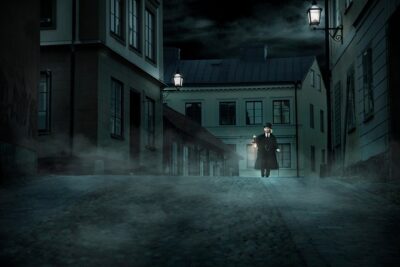
The Original Stockholm Ghost Walk and Historical Tour – Gamla Stan
Read our review →
Browse the lists this tour appears in