
Reviewed · STOCKHOLM TOURS
Jewish Gamla Stan and Jewish Museum Stockholm Private Tour
Stockholm’s Jewish story is easy to miss unless someone points it out. This private walk connects Gamla Stan’s churches, squares, synagogues, museums, and memorials with the lives of Jewish families who settled in Sweden and the courage of Raoul Wallenberg, who helped save tens of thousands of Jewish people during World War II.
I like the personal format, which lets you ask direct questions and set a comfortable pace. I also like the route’s mix of places and ideas, from the oldest surviving synagogue in Stockholm to the Holocaust memorial in Berzelii Park. The main caution is that the Jewish Museum is not included on the two-hour option, and it is closed on Mondays, so check the day before booking.
Key points
- Follow Jewish history in Gamla Stan: See sites linked with Stockholm’s first Jewish families and early Jewish life.
- Visit a synagogue turned museum: The Jewish Museum occupies Stockholm’s oldest surviving synagogue building on the longer tour options.
- Hear Wallenberg’s story: Learn how a Swedish diplomat protected Jewish people during the Holocaust.
- Connect major Stockholm landmarks: The walk includes the Royal Palace, Storkyrkan, the German Church, and the Nobel Prize Museum area.
- Choose a private pace: Guides such as Cedric and Tal can answer questions and adjust the walk for slower walkers.
- Add car transfers if needed: The four-hour option includes pickup and drop-off at your accommodation.
Why Stockholm’s Jewish story needs a guide
Gamla Stan is packed with famous sights, but its Jewish past does not always announce itself. You can walk along Västerlånggatan, pass churches and grand civic buildings, and see little that explains the Jewish families who arrived in Sweden during the 17th century.
That is where this tour earns its keep. Your guide supplies the links between places that may otherwise seem unrelated. A church becomes part of the story of early Jewish arrivals. A museum square becomes a place to discuss Jewish Nobel Prize winners. A park monument becomes the setting for one of the most moving chapters in Stockholm’s wartime history.
This is not a synagogue service or a broad survey of Swedish religion. It is a focused history walk, built around Jewish heritage, the Holocaust, and the people who helped shape Stockholm’s Jewish community.
The private format matters here. You can stop to ask how Jewish families lived, why the first synagogue was established, or how Sweden responded during World War II. A fixed group tour often has to keep moving. On this walk, your guide can spend more time on the subjects that matter most to you.
More old town walks in Stockholm
- Walking Tour of Stockholm Old Town
★ 5.0 · 1,175 reviews - The Original Stockholm Ghost Walk and Historical Tour – Gamla Stan
★ 4.5 · 1,165 reviews - Stockholm: Old Town Walking Tour with Local Guide
★ 4.7 · 719 reviews
Starting at Järntorgsbrunnen in Gamla Stan
The meeting point is Järntorgsbrunnen, the fountain at Västerlånggatan 83. This puts you in the middle of Gamla Stan, Stockholm’s historic Old Town, where narrow streets and major landmarks create a natural setting for a walking tour.
The meeting point is easy to identify, but allow time to find it if you are new to Stockholm. The tour is on foot, and comfortable shoes are important. The Old Town route requires steady walking, and the cobbled streets may be tiring if you have mobility concerns.
Your guide speaks the language selected at booking. Available languages are English, Swedish, French, German, Italian, Russian, and Spanish. The group is private, with one guide for up to 25 people. If your party is larger than that, you may need more than one guide and the price will rise.
I would keep the group small if possible. A private tour is most useful when you can hear the guide clearly and ask questions without waiting for a large crowd to move along.
Storkyrkan, the German Church, and the first Jewish families
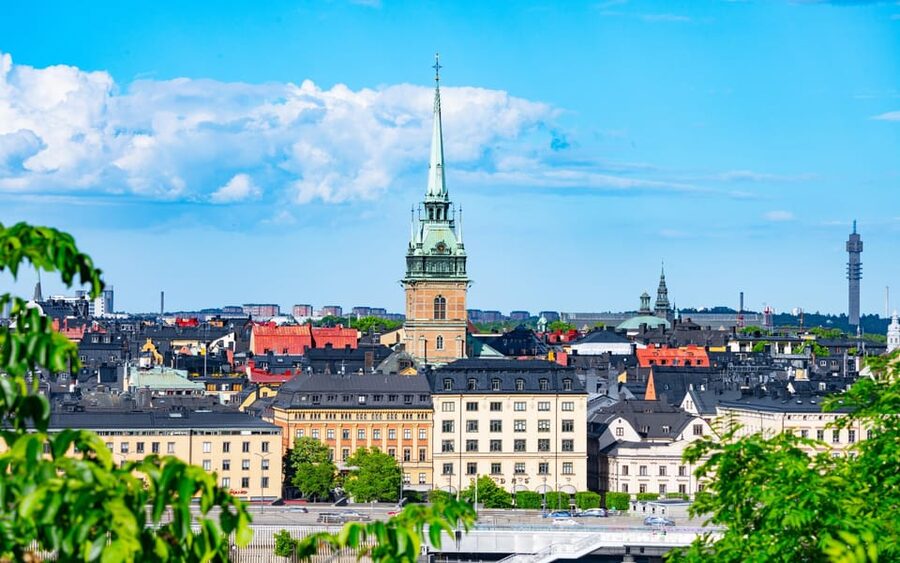
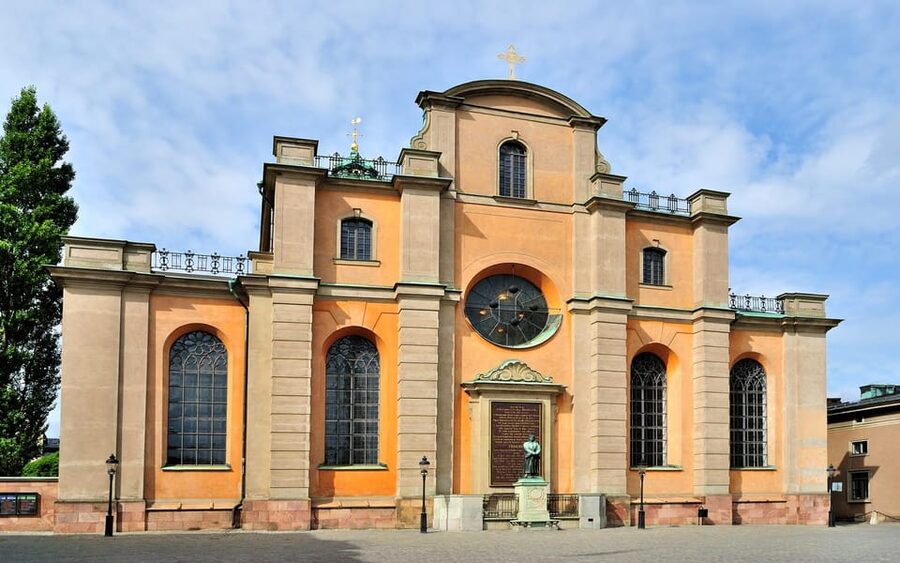
The opening part of the walk places Jewish history inside the wider story of Stockholm. You see the German Church and Storkyrkan, the city’s cathedral, while your guide explains the first Jewish families who arrived in Sweden in the 17th century.
The important point is not simply that these churches are attractive. They help explain the religious setting that confronted Jewish newcomers. The first Jewish families who arrived in Sweden were baptized, and the cathedral becomes part of that difficult early chapter.
This is a useful reminder that Jewish history in Sweden did not begin with a fully established community and its own institutions. Families had to find a place in a society shaped by Christian law and custom. The guide’s commentary gives those early events a human scale, rather than leaving them as a date in a history book.
You should expect interpretation more than a long interior visit at every landmark. The value lies in the connections your guide makes between the buildings and the community’s development.
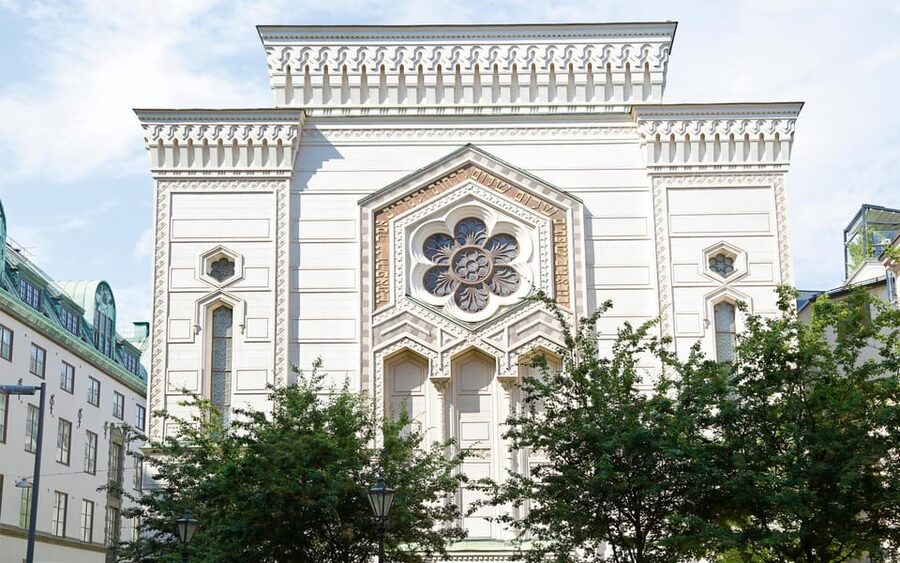
The former synagogue that now houses the Jewish Museum
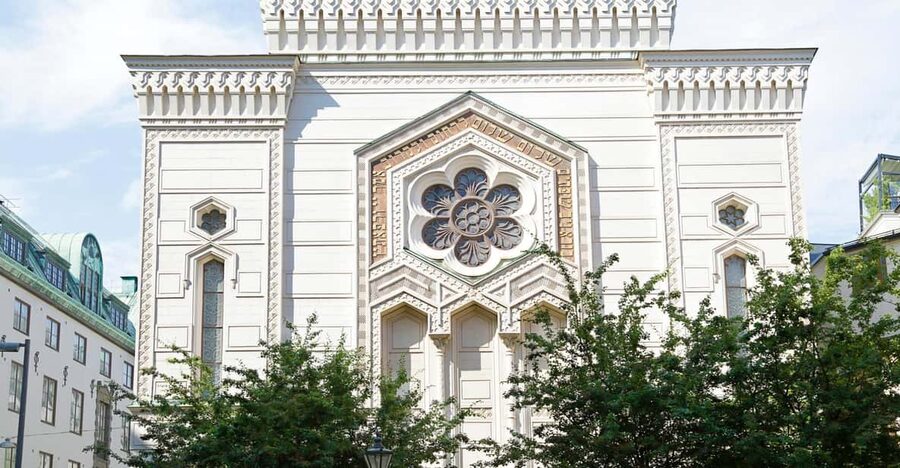
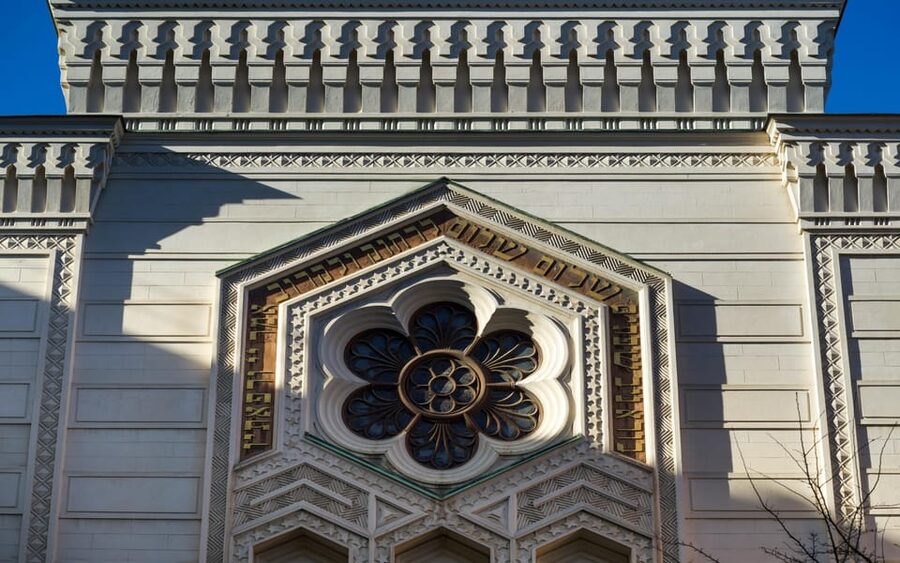
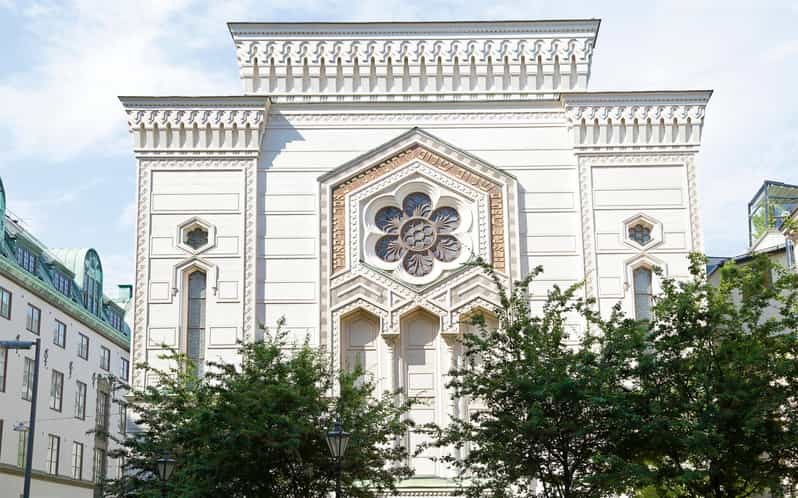
The Jewish Museum is the main reason to choose the three-hour option, or the longer option with transfers. It occupies the building of Stockholm’s first synagogue and the city’s oldest surviving synagogue structure, giving the museum unusual weight as both a collection and a historic site.
Inside, you learn more about the first Jewish people who came to Sweden and the effort required to establish a Jewish place of worship in the capital. Exhibits also cover Jewish culture and traditions, so the visit is not limited to persecution and wartime history.
That balance matters. A tour focused only on the Holocaust can leave you with a narrow picture of Jewish life. The museum adds the everyday foundations of a community: religious practice, cultural identity, traditions, and the work of building a permanent home.
Your guide accompanies the museum visit on the longer option and explains the exhibits. You can ask questions as you go, which is especially useful if you want to understand how the synagogue building functioned and why it remains such an important marker of Jewish life in Stockholm.
There are two practical catches. Museum admission is included only with the three-hour and four-hour options. On the two-hour walk, you can see the outside or discuss the site, but the ticket is not included. Also, the museum is closed on Mondays. One booking did not include the museum because of this closure, which left the tour feeling less focused on Jewish history. Check the opening situation before you commit to a Monday date.
Admission to the synagogue itself is not included. The museum is housed in a former synagogue, but that does not mean a synagogue visit is part of the package.
More museums in Stockholm
- Stockholm: Skansen Open-Air Museum Admission Ticket
★ 4.5 · 3,427 reviews - Stockholm Pass: Save up to 50% – Includes Vasa Museum Ticket
★ 4.1 · 2,392 reviews - Stockholm: Nobel Prize Museum and Exhibition Entry Ticket
★ 4.3 · 994 reviews - Stockholm: Fotografiska Museum Entrance Ticket
★ 4.5 · 702 reviews
The Nobel Prize Museum and Jewish laureates
Near the Nobel Prize Museum, your guide discusses Jewish Nobel Prize winners. This is a short but worthwhile part of the route because it connects Stockholm’s Jewish story with science, literature, peace work, and public achievement.
The stop is not described as a museum visit, so do not expect an included Nobel Prize Museum ticket. Instead, you receive context outside the nearby museum. That keeps the tour moving while adding a modern reminder that Jewish contributions to public life extend far beyond the wartime story.
I like this kind of stop because it broadens the route. The Jewish Museum offers community and tradition. The Nobel Prize discussion shows individual achievement. Together, they make the subject feel less like a memorial lesson and more like a continuing part of Swedish society.
The Royal Palace and the city around it
The route passes the Royal Palace before continuing toward Berzelii Park. The palace gives your guide another chance to place Jewish history within the political story of Sweden.
You are not paying for a palace tour here, and palace admission is not included. Think of it as a landmark along the walking route, useful for orientation and for understanding the city’s civic center.
This section also helps break up the heavier material. A good history walk needs changes of setting. Moving from narrow Old Town streets to major public buildings makes the story easier to follow and gives you a sense of how Jewish life fitted into the wider city.
Berzelii Park and Raoul Wallenberg’s courage
The most powerful section comes near Berzelii Park, where you see the Rememberene Path and a Holocaust monument dedicated to Raoul Wallenberg.
Wallenberg was a Swedish diplomat who helped save tens of thousands of Jewish people from the Holocaust. Your guide explains his efforts and the danger involved, giving you a direct connection to one of Sweden’s most important wartime figures.
This stop is more than a memorial photo opportunity. It asks you to consider what one person could do inside a system built on fear, deportation, and murder. The monument gives the story a physical place in central Stockholm, while the guide supplies the facts and human detail that a quick walk-by cannot provide.
The tour also places Wallenberg’s work beside the longer story of Swedish Jewish life. You first hear about Jewish families arriving in the 17th century, then see the community’s synagogue and museum, and finally confront the Holocaust and the actions of a Swedish rescuer. The sequence gives the walk a clear shape.
Allow time for this part. It is not the sort of stop to rush through simply because the park is on the way to the next sight.
What the private guide adds

The quality of this experience depends heavily on the guide. Cedric led more than one private walk and is described as patient, attentive, and full of detailed answers. On a rainy day, he took his time rather than rushing, which matters on a tour where much of the content is delivered outdoors.
He also adjusted the route for a person having difficulty walking, pointing out alternate paths and extending the tour so the group could see everything at a slower pace. That does not remove the need for good walking shoes, but it shows why a private guide can be more practical than a large scheduled group.
Tal is another named guide associated with the experience. The walk with Tal focused on Stockholm’s history and received strong praise for the quality of the guiding.
One small warning: an expert guide may have a lot to say. Cedric was described as entertaining and very attentive, but also somewhat verbose. I see that as a possible plus if you enjoy detail and a minor drawback if you prefer a brisk sightseeing walk. Tell your guide early if you want shorter explanations or more time at specific sites.
Two hours, three hours, or four hours

The two-hour option is the basic walking tour. It covers Jewish history in Gamla Stan, the early Jewish community, the churches connected with the first arrivals, the Nobel Prize Museum area, the Royal Palace, and the Wallenberg memorial sites.
It does not include Jewish Museum admission or private car transfers. Choose it if your schedule is tight, you mainly want an outdoor overview, or you have already visited the museum.
The three-hour option adds the Jewish Museum. This is the best fit for most people who are booking specifically for Jewish history because the museum gives you time with objects, traditions, and the story of the first synagogue.
The four-hour option includes the museum and round-trip private car transport from your accommodation. The supplied details describe a four-hour transfer option even though the headline duration is listed as two to three hours, so confirm the exact option and timing at booking.
The extra time is valuable if you want the museum without hurrying through the outdoor route. Transfers are useful if you are staying outside the Old Town or want to avoid navigating Stockholm before and after the walk. They are less important if you are already near Gamla Stan.
Is $205 per person a fair price?
At $205 per person, this is not a budget sightseeing walk. You are paying for a private guide, a focused subject, language choice, and, on selected options, museum admission or car transport.
The price makes the most sense for couples, families, and small groups who want a tailored history lesson rather than a general Old Town tour. If several people share the private booking, the cost can feel more reasonable because you are buying the guide’s time for your own party.
The value is weaker if you choose the two-hour option but want a substantial museum experience. In that case, you pay a premium private-tour price and still need to arrange museum admission separately. I would compare the options carefully instead of assuming the shortest tour is the best deal.
The four-hour version may be worthwhile for people who value door-to-door convenience. For a centrally located hotel, however, you may prefer to spend the extra money on the longer museum visit rather than transport.
Free cancellation up to 24 hours in advance and the option to reserve now and pay later make planning less risky. Still, the Monday museum closure is the detail I would check first.
Who will appreciate this walk most?
I would recommend this experience if you have a serious interest in Jewish history, World War II, Holocaust remembrance, or the story of Raoul Wallenberg. It also suits anyone who has already seen Stockholm’s main sights and wants a more focused way to understand the city.
Families with older children may find the route useful because the stories connect real places with major historical events. The private setting lets you adjust the level of detail and ask questions without worrying about a large public group.
The tour is also a good choice for visitors who prefer a guide who can respond to the pace of the group. A private walk helped one person with limited walking ability see the full route, though you still need to be in reasonable condition for several hours on foot.
I would not choose it if you want a light, fast Old Town introduction or a dedicated synagogue service. The Holocaust material is serious, and much of the tour’s value comes from listening closely to historical explanation.
Should you book the Jewish Gamla Stan and Jewish Museum tour?
Book it if you want Stockholm’s Jewish past explained through real places rather than presented as a list of dates. The route brings together early Jewish settlement, the first synagogue, Jewish culture, Nobel Prize connections, and Wallenberg’s wartime rescue work.
For the strongest version, choose the option that includes the Jewish Museum, avoid Monday, and allow enough time for the memorial stop in Berzelii Park. The two-hour walk is a useful overview, but the museum adds the community story that makes the outdoor route feel complete.
The price is high for a short city walk, yet the private format and strong guide support give it real value for the right audience. If Cedric or Tal is available, expect a detailed, question-friendly tour, and speak up if you prefer a faster pace. For anyone seeking a thoughtful, specific look at Stockholm beyond its postcard sights, this is a worthwhile booking.
FAQ
How long is the Jewish Gamla Stan and Jewish Museum tour?
The walking options last two or three hours. A four-hour option is also described, including the Jewish Museum and private car transfers.
What is included in the two-hour option?
The two-hour option includes a private Jewish history walking tour with a licensed guide and historical commentary. Jewish Museum admission and private car transfers are not included.
Is the Jewish Museum included?
Museum admission is included with the three-hour and four-hour options. It is not included with the two-hour option.
Where does the walking tour meet?
Meet the guide in front of Järntorgsbrunnen at Västerlånggatan 83, 111 29 Stockholm, Sweden.
Is the museum open on Mondays?
The Jewish Museum is closed on Mondays. Check the museum schedule before booking if you plan to visit it as part of the tour.
Does the tour include synagogue admission?
No. Admission to the synagogue is not included. The Jewish Museum is housed in Stockholm’s oldest surviving synagogue building.
Is private transport included?
Round-trip private car transport with pickup and drop-off at your accommodation is included only with the four-hour option.
Which languages are available?
The live guide is available in English, Swedish, French, German, Italian, Russian, and Spanish.
Is the tour wheelchair accessible?
The activity is listed as wheelchair accessible. It is also a walking tour, and comfortable shoes are recommended.
Just added around Stockholm
- Beautiful Stockholm Small Group Walking Tour★ 5.0 · 3 reviews
- Private Golden Hour Photo Walk in Stockholm★ 5.0 · 3 reviews
- ROYAL Castle Skokloster and Viking Sigtuna (private tour)★ 4.5 · 3 reviews
- Stockholm Port to Stockholm Arlanda Airport (ARN) – Departure Private Transfer★ 3.5 · 3 reviews
- Swedish Beer Tasting Tour in Stockholm Old Town Pubs★ 5.0 · 3 reviews
- Stockholm Ghost Hunt: Self-Guided Tour and Puzzle Adventure★ 4.5 · 3 reviews
- Private Photography workshop in Stockholm★ 5.0 · 3 reviews
- Private blood, ghosts and folklore Old Town 2h Stockholm tour★ 4.0 · 3 reviews
Stockholm Tours, compared.

Stockholm: City Archipelago Sightseeing Cruise with Guide
Read our review →
Stockholm: Skansen Open-Air Museum Admission Ticket
Read our review →
The Original Stockholm Ghost Walk and Historical Tour – Gamla Stan
Read our review →
Browse the lists this tour appears in