
Reviewed · STOCKHOLM TOURS
Walking Tour of Stockholm’s City Center
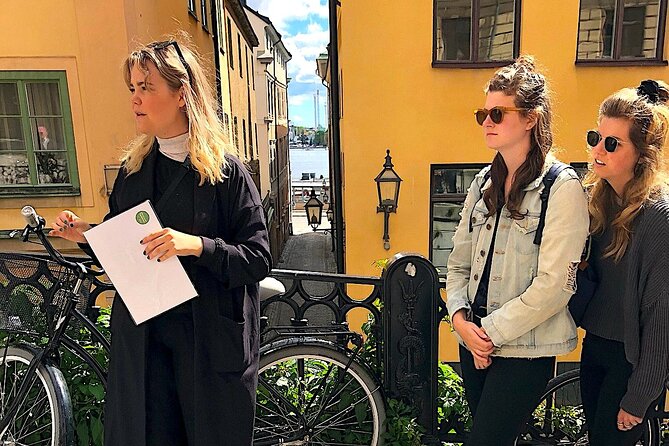
Stockholm’s city center tells its story outdoors, one square, statue, waterfront view, and grand façade at a time. This two-hour walk takes you from Central Station toward City Hall, Parliament, the Opera, royal landmarks, and the Royal Dramatic Theatre, giving you a useful first look at modern Swedish life and the city’s layout.
I like the low price, which makes this an easy way to get your bearings before paying for museums or palace visits. I also like the human touch: guides such as Stefan, Amon, Karl, and Sophia have brought in local culture, wartime stories, Swedish habits, and practical suggestions for the rest of your stay.
The main drawback is that the route can feel uneven. One section from the station toward City Hall has been described as long, and city traffic can make the guide hard to hear. This is a public group walk, not a private outing, and the tour does not include indoor visits.
Key points to know before you book
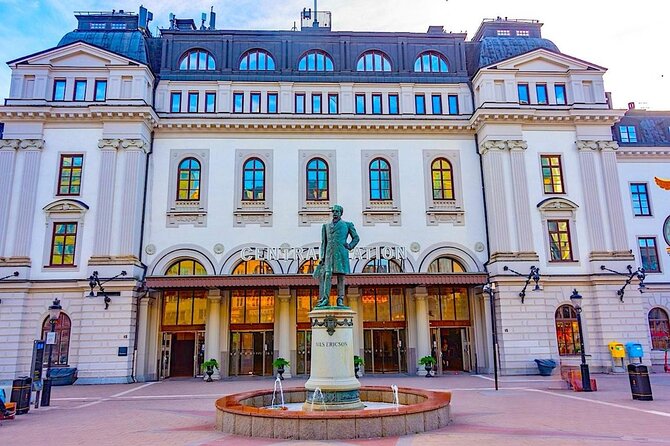
- A useful first-day orientation: The route connects Central Station with major civic, royal, and cultural sights.
- Only about $3.55 per person: The price is unusually low for Stockholm, but tips are not included.
- A public tour capped at 27 people: Group size may be comfortable, but it is not the same as a private walk.
- Outdoor sightseeing only: You see the exteriors and public spaces, with no included entry to City Hall, the Opera, Parliament, or the Royal Dramatic Theatre.
- Experienced guides can make the difference: Stefan, Amon, Karl, and Sophia are among the guides named in past tour feedback.
- Good ending point: The walk usually finishes by the Royal Dramatic Theatre, near Nybroplan.
What this Stockholm city walk is really about
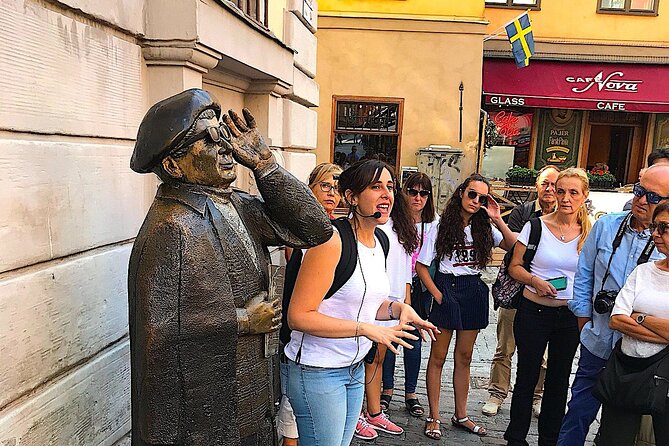
This is not a museum tour or a focused walk through Gamla Stan’s medieval lanes. It is a broad introduction to central Stockholm, with an emphasis on the city’s civic buildings, modern streets, public parks, monuments, and performing arts venues.
That makes it useful at the beginning of a visit. You get a sense of how the station, City Hall, Parliament, the Royal Palace area, Kungsträdgården, and Östermalm relate to one another. You also hear the kind of background that can help later, when you return to a building for an indoor visit.
The description calls attention to contemporary Stockholm, but the route mixes old and new. You will see 17th-century church architecture, 18th-century royal statues, 19th-century monuments, and 20th-century cultural buildings. The guide’s storytelling is therefore important. A strong guide can connect these pieces. A weak one may simply point at façades and recite dates.
Past guides have included Stefan, Amon, Karl, and Sophia. Stefan was praised for explaining the city’s layout and current Swedish life, while Amon was described as entertaining and good at adding fun facts. Karl received praise for answering questions and keeping the walk moving. Sophia was noted for a friendly introduction to Stockholm and Gamla Stan.
Guide quality can vary. One person found the commentary dry, and another had trouble hearing because of street noise or a microphone problem. I would treat this as a good-value orientation walk, not a guaranteed polished theatrical performance.
More City Tours in Stockholm
- Stockholm: City Archipelago Sightseeing Cruise with Guide
★ 4.3 · 10,798 reviews - Stockholm: City Sightseeing Hop-On Hop-Off Bus Tour
★ 3.9 · 682 reviews - Stockholm: Guided City Sightseeing Open Electric Boat Tour
★ 4.8 · 516 reviews
Starting outside Stockholm Central Station
The meeting point is Centralplan 15, outside Stockholm Central Station, at 11:00 am. This is a practical place to begin if you arrive by train or are staying near Norrmalm, though a major station is not the most atmospheric first stop.
The opening stop is the bronze statue of Nils Ericson, located outside the station. Ericson was a Swedish engineer associated with the modernization of Sweden’s railways and canals. Sculptor John Börjeson created the statue in 1893, and its position by the station makes the subject easy to understand: transport helped shape the country’s modern growth.
You spend about five minutes here. That is enough for an introduction, a photograph, and a quick explanation of why the station area matters. Do not expect a long stop or a visit inside the station.
From here, the route goes toward Stockholm City Hall. This is the part of the walk that deserves some patience. One past account found the journey from Central Station through the City Hall section too long, with roughly 45 minutes before reaching the second major stop. Another described a mainly waterside route with plenty of interesting buildings along the way.
The exact feel will depend on the guide and route used that day. You might enjoy seeing how Stockholm opens around its waterways and civic buildings, but you should know that this first stretch may not offer a landmark every few minutes.
Stockholm City Hall and the civic center
Stockholm City Hall is one of the city’s most recognizable buildings. Its red-brick exterior, completed in 1923, is topped by a tower with the Three Crowns symbol. The building hosts the Nobel Prize banquet as well as official events, which gives the stop more weight than a simple photo opportunity.
The tour allows about ten minutes here. You will see the exterior and hear about the building’s role, but the Blue Hall, Golden Hall, mosaics, and tower views are not part of this experience. City Hall’s interior requires a separate visit.
That limitation matters. If City Hall is high on your list, use this stop to decide if you want to return for a proper tour. The outdoor introduction gives you context, but it cannot replace seeing the grand rooms.
You then reach Drottninggatan, Stockholm’s main pedestrian shopping street. It runs from Gamla Stan toward Observatorielunden and mixes shops, cafés, restaurants, older buildings, and newer storefronts. The ten-minute stop gives you a look at ordinary city life rather than another ceremonial monument.
I like this contrast. After City Hall’s formal brickwork, Drottninggatan shows you the everyday center of Stockholm. It is also a useful place to note for later shopping or a casual meal. The street can be noisy, and that is one reason some people have found it difficult to hear the guide.
Parliament, royal power, and the Opera
The next major sight is the Parliament Building, or Riksdagshuset, on Helgeandsholmen. The monumental building was constructed between 1897 and 1905 and combines neo-Gothic features with the practical needs of a working parliament.
The planned stop lasts about 15 minutes. Admission is not included, and the walk does not promise an interior visit. Your guide can explain the building’s place in Swedish democracy, but you should not arrive expecting to enter.
From Parliament, the route continues to Gustav II Adolf’s statue in Gustav Adolfs Torg. The king, known as the Lion of the North, played an important role in the Thirty Years’ War and in the development of modern military organization. His statue, unveiled in 1796, presents him in a commanding pose.
This is a short five-minute stop. It works best when the guide adds political or military context rather than treating the monument as a quick name-and-date exercise.
The Royal Swedish Opera follows, with about ten minutes outside the building. Founded in 1773, the current opera house opened in 1898. Its design draws on neo-classical forms and French Baroque influence, and it remains one of Sweden’s key performance venues.
Entry is not included. The value here is seeing how Stockholm’s cultural institutions fit into the central city. If you want a performance or a guided interior visit, you will need to arrange that separately.
More Walking Tours in Stockholm
- Stockholm: Ghost Walk and Historical Tour
★ 4.7 · 2,206 reviews - Walking Tour of Stockholm Old Town
★ 5.0 · 1,175 reviews - The Original Stockholm Ghost Walk and Historical Tour – Gamla Stan
★ 4.5 · 1,165 reviews - Stockholm: Old Town Walking Tour with Local Guide
★ 4.7 · 719 reviews
Sankt Jacobs Church and Berzelii Park
Sankt Jacobs kyrka, or Saint James’s Church, brings a more intimate scale to the route. The red exterior and mix of Gothic and Renaissance details make it easy to spot near Kungsträdgården. The church dates from the 1600s and is associated with Saint James, the patron saint of pilgrims.
The stop lasts around ten minutes, and admission is listed as free. The interior, organ, and religious art may add interest if the church is open, but the tour does not guarantee an indoor visit. Since the experience is designed around outdoor sightseeing, plan on hearing about the church rather than settling in for a full interior tour.
Next comes Berzelii Park, a small green public space established in 1853. It is named for chemist Jöns Jacob Berzelius, whose monument was unveiled in 1858. The park sits near Norrmalm and the Royal Dramatic Theatre, offering a pause from the traffic and stone façades.
The scheduled time here is 15 minutes, one of the longer stops. That gives the guide room to discuss urban planning, public monuments, and the city’s cultural district. It also gives you a moment to rest, which is welcome on a two-hour walk.
Do not mistake the park stop for a major garden tour. It is a compact urban pause, not a large botanical attraction. Its value comes from the setting and from the way it links the city’s scientific, cultural, and public life.
Royal stables and Kungsträdgården
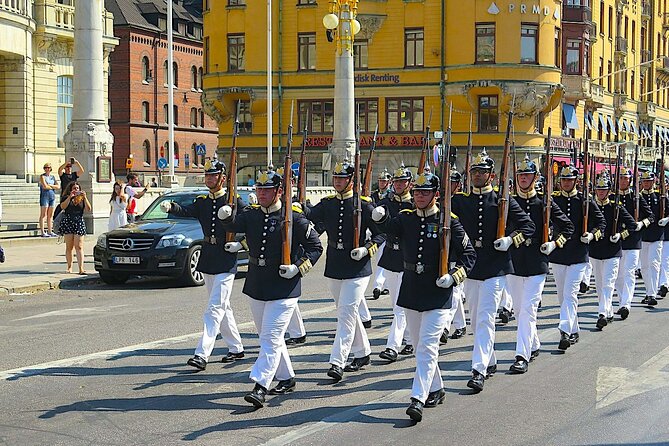
The Royal Stables, known as H.M. Konungens Hovstall, are near Östermalm. The site preserves royal carriage traditions, with carriages, ceremonial harnesses, and horses connected to state occasions.
The tour allows about ten minutes here. The carriage museum and stable interiors require a separate guided visit, so this stop is mainly an exterior introduction. That is still worthwhile if you are interested in royal ceremony, transport, or the practical side of monarchy.
The route then moves into Kungsträdgården, one of central Stockholm’s best-known public spaces. The supplied route information labels this stop Kungstradgarden Opera and gives it ten minutes, but the description focuses on the park and its connection to Stockholm’s opera tradition. Treat this as a cultural and urban stop rather than a ticketed opera-house visit.
Next is Karl XII’s statue and square. The square was established in 1854, and the statue of Charles XII was erected in 1868. The monument recalls Sweden’s military past and remains part of a public meeting place used for events.
The stop lasts ten minutes. This is a good place to ask questions, especially if you want to understand how Swedish national memory handles powerful royal figures. The walk gives you the setting and broad explanation, but it will not provide the same depth as a specialist military-history tour.
Ending at the Royal Dramatic Theatre
The final stop is the Royal Dramatic Theatre, or Dramaten, at Nybroplan. Sweden’s leading spoken-drama institution was founded in 1788, while the present Art Nouveau building dates from 1908. The theatre has links to major Swedish actors, including Greta Garbo, and remains an important part of the country’s stage culture.
The scheduled stop is about ten minutes, and admission is not included. The usual endpoint is close to the theatre, which is convenient for continuing into the surrounding central districts or returning by public transport.
Ending here gives the walk a clear cultural finish. You begin with railways and civic infrastructure, pass through parliament and royal monuments, and finish with theatre. It is a sensible arc for a tour about Stockholm as a working capital rather than only a historic old town.
How the group and guide affect the experience
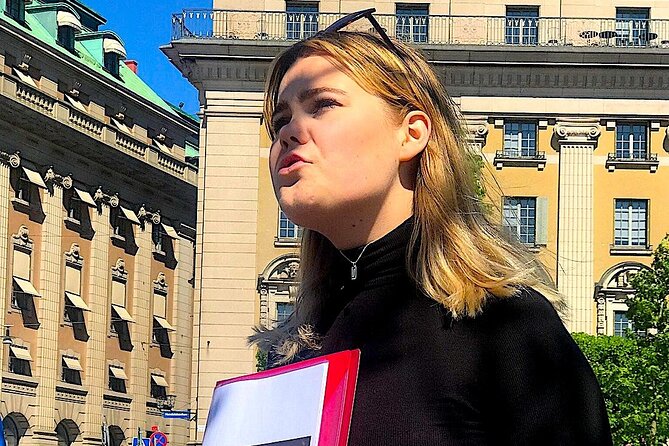
This is a public tour with a maximum of 27 participants. That cap keeps the group from becoming enormous, but 27 people is still enough to affect how easily you hear and how quickly everyone can gather at each stop.
Some groups have been small and comfortable, with plenty of time for questions. That is a real strength. Guides have been praised for being on time, friendly, clear, and willing to explain Swedish culture, daily habits, and current life.
At other times, street noise has made the commentary difficult to follow. One guide used an iPad to show images, but bright sunlight made the screen hard to see. If hearing every detail matters to you, stay near the guide and avoid drifting to the back of the group.
The walk is described as about two hours. It is not a race, but you will be on your feet across busy streets, squares, and public spaces. One person found it tiring despite not covering a huge distance, so comfortable shoes are a sensible choice.
The route is not designed as a fully private experience. You may ask questions, but the guide also needs to keep a mixed group moving. Karl, in particular, was described as firm about limiting side conversations while he was speaking. That can feel strict, but it also helps the rest of the group hear the explanation.
Is $3.55 a good value?
At about $3.55 per person, this is one of the least expensive ways to get a guided introduction to central Stockholm. The low price makes sense when you remember what is included: an English-speaking guide, an outdoor route, and no admissions.
Tips are not included. One past participant understood the low booking price as part of a voluntary-tip model and considered tipping appropriate. You should decide what the walk was worth to you, but do not assume the small upfront price covers entry tickets or a full private guiding service.
The value is strongest if you are new to Stockholm and want orientation, basic cultural context, and a list of places to revisit. It is weaker if you want detailed architecture, long indoor visits, or a carefully paced specialist tour.
Free cancellation is available if you cancel at least 24 hours before the 11:00 am start time. Within 24 hours, the payment is not refunded, and the tour also requires a minimum number of participants to operate.
Who should book this walk?
I would choose this tour for a first morning or first full day in Stockholm. It gives you a practical map of the center and helps you decide which places deserve more time later.
It suits you best if you:
- Want a short introduction before exploring alone
- Like civic buildings, royal sites, public art, parks, and theatre
- Prefer outdoor sightseeing to museum interiors
- Are happy in a public group of up to 27 people
- Want to ask a guide about Swedish culture and daily life
- Value a very low booking price
I would look elsewhere if your main goal is Gamla Stan’s medieval streets, since the route is centered on the contemporary city center and major public institutions. I would also choose another experience if you need guaranteed indoor access, advanced historical detail, or a quiet private walk.
Should you book the Stockholm City Center walk?
Book it if you want an inexpensive orientation with a human guide and can accept some variation in route pacing and commentary. The best guides turn the city’s statues and façades into useful stories about Sweden’s government, culture, transport, monarchy, and public life.
Go in with the right expectations. You will see many important exteriors, not tour their interiors. The route can include a slow opening stretch, and traffic may affect how clearly you hear. Still, at this price, the walk offers a sensible introduction, especially when guides such as Stefan, Amon, Karl, or Sophia bring warmth, questions, and local context to the outing.
FAQ
How long does the Stockholm City Center tour last?
The tour lasts approximately two hours.
Where does the tour begin?
The meeting point is Centralplan 15, 111 20 Stockholm, Sweden, outside Stockholm Central Station.
What time does the tour start?
The scheduled start time is 11:00 am.
Where does the tour end?
The walk usually ends near the Royal Dramatic Theatre, Dramaten, at Nybroplan, 111 47 Stockholm.
Is this a private tour?
No. It is a public group tour with other participants, and the maximum group size is 27 people.
Is an English-speaking guide included?
Yes. An English-speaking guide is included and is assigned to the group.
Are entrance tickets included?
No. Indoor admission is not included. The tour is designed as an outdoor walking experience, and admission is specifically not included for Parliament, the Royal Swedish Opera, and the Royal Dramatic Theatre.
Can I cancel for a full refund?
Yes, if you cancel at least 24 hours before the experience start time. Cancellations or changes made within 24 hours are not refunded.
Just added around Stockholm
- Beautiful Stockholm Small Group Walking Tour★ 5.0 · 3 reviews
- Private Golden Hour Photo Walk in Stockholm★ 5.0 · 3 reviews
- ROYAL Castle Skokloster and Viking Sigtuna (private tour)★ 4.5 · 3 reviews
- Stockholm Port to Stockholm Arlanda Airport (ARN) – Departure Private Transfer★ 3.5 · 3 reviews
- Stockholm Ghost Hunt: Self-Guided Tour and Puzzle Adventure★ 4.5 · 3 reviews
- Swedish Beer Tasting Tour in Stockholm Old Town Pubs★ 5.0 · 3 reviews
- Private Photography workshop in Stockholm★ 5.0 · 3 reviews
- Private blood, ghosts and folklore Old Town 2h Stockholm tour★ 4.0 · 3 reviews
Stockholm Tours, compared.

Stockholm: City Archipelago Sightseeing Cruise with Guide
Read our review →
Stockholm: Skansen Open-Air Museum Admission Ticket
Read our review →
The Original Stockholm Ghost Walk and Historical Tour – Gamla Stan
Read our review →
Browse the lists this tour appears in