
Reviewed · STOCKHOLM TOURS
Stockholm Must See – Old Town, boat + Vasa Museum 3h small group
Stockholm’s great historical surprise is waiting at the end of this tour: the Vasa warship, a nearly intact 17th-century vessel that sailed about 1,200 meters before sinking. Before you reach it, you’ll walk through Gamla Stan, hear stories of kings, executions, trade, and the Stockholm Bloodbath, then cross the water by ferry to Djurgården.
I like the way this tour links the city’s past to the Vasa rather than treating the museum as a separate stop. I also like the small-group limit of 15 people, the central meeting point, and the chance to hear local guides such as Peter, Åsa, Karin, and Christopher explain details you might miss on your own.
The main caution is time. Three hours is enough for a sharp introduction, not a leisurely museum day. The 4 p.m. departure can feel rushed when the Vasa Museum closes early, so I’d choose the 9:30 start if the ship is a priority.
Key points to know before booking
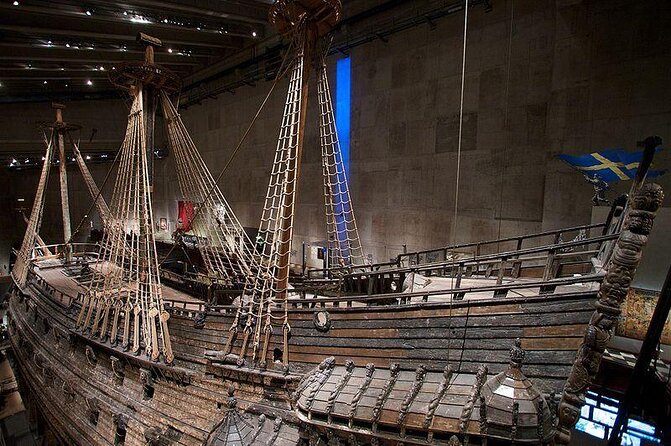
- The Vasa is the grand finale: You’ll see a 17th-century ship with about 98 percent of its original wood still in place.
- Gamla Stan gets real historical context: The route covers Stortorget, the Royal Palace, Riddarholmen, Järntorget, and narrow medieval lanes.
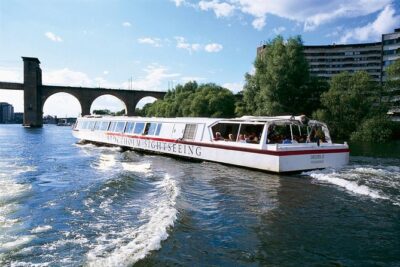
- The ferry is part of the sightseeing: Your one-way crossing to Djurgården gives you a useful change of pace and views of Stockholm’s waterways.
- Guides shape the experience: Past tours have featured Peter, Åsa, Karin, Tobias, Christopher, Emma, and others, with a strong focus on Swedish history.
- The morning departure is the safer choice: The 9:30 tour ends at the Vasa Museum, while the 4 p.m. version starts there and may allow only about 50 minutes to an hour inside during shorter opening hours.
- Expect city walking: You need moderate fitness, comfortable shoes, and clothing suited to rain or shine.
Starting beneath Gustav III’s obelisk
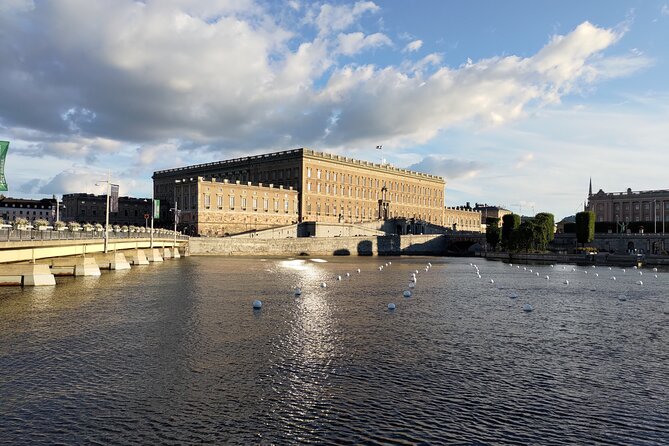
The morning tour meets at 9:30 at the foot of the Gustav III obelisk on Slottsbacken, beside the Royal Palace. It is a central place to begin, though you should arrive with enough time to find the monument near the palace rather than simply aiming for the palace doors.
Your guide opens with the day’s plan and a story about King Gustav III, including his killing at the Royal Opera. That is a good early reminder of this tour’s style. You are not just being pointed toward buildings. You are given the political dramas and personal stories that make the stonework easier to remember.
The itinerary lists a brief look at Stockholm’s Finnish church before moving through the palace area. The Royal Palace itself is treated from the outside, with a short explanation of the monarchy and the building’s place in Swedish history. Admission to the palace is not part of the tour, so you should not expect an interior visit.
This opening section is compact. You will hear useful background, but you will not have time to explore every palace courtyard or royal room. If the palace interior is high on your list, plan a separate visit.
More Boat Tours in Stockholm
- Stockholm: City Archipelago Sightseeing Cruise with Guide
★ 4.3 · 10,798 reviews - Stockholm: Archipelago Boat Tour
★ 4.4 · 3,110 reviews - Stockholm: Highlights Boat Tour
★ 4.3 · 2,542 reviews
Stortorget and the darker side of Gamla Stan
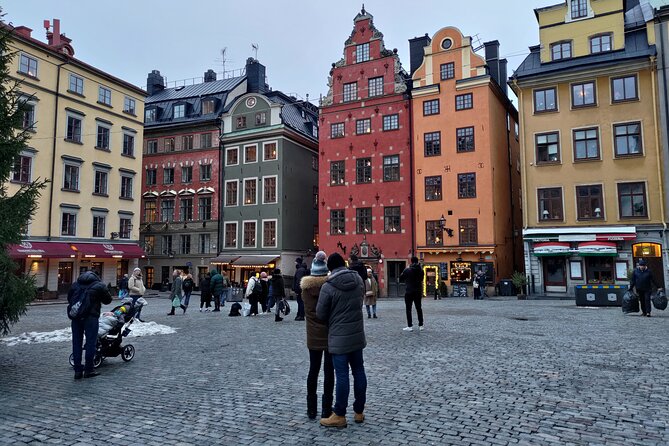
From the palace, the walk reaches Stortorget, Stockholm’s best-known square. Its colorful 17th-century façades make it an obvious photo stop, but the guide gives you a grimmer reason to pay attention: the Stockholm Bloodbath.
The square’s appearance can feel cheerful, yet its past includes executions and political violence. That contrast is one of the tour’s strengths. You are encouraged to look beyond the painted façades and think about how this small square functioned as a center of power.
Nearby, you pass the Nobel Prize Museum and hear about Alfred Nobel and the development of Stortorget. The museum is not entered, and admission is not included. Still, the stop helps connect an older medieval and royal district with a modern Swedish institution known around the world.
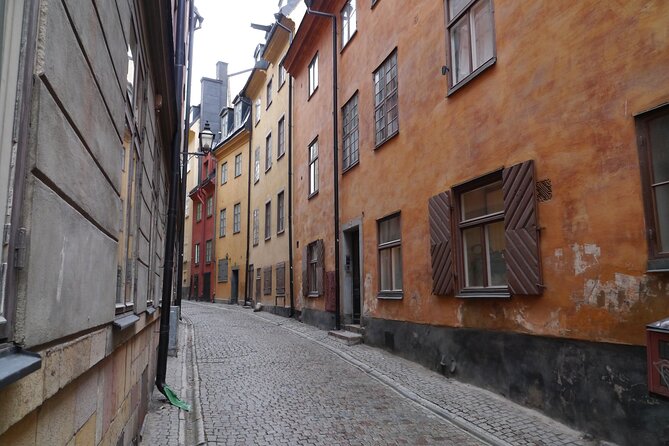
You also see an old runestone, followed by a walk along Prästgatan. The narrow lane carries the old nickname Alley of Hell, tied to Stockholm’s executioners. This is exactly the sort of detail that is easy to walk past without a guide. The lane is short, but its name gives the old town a sharper edge.
A brief stop near Storkyrkan, Stockholm’s main church, adds another layer. The focus is on the church’s place in old Stockholm and what recent archaeological finds reveal about daily life. The church is not presented as a full interior tour, so you should treat this as a historical orientation rather than a church visit.
Riddarholmen, Järntorget, and the narrowest lane
The route continues to Riddarholmen, often called the island of the Nobels in the tour’s storytelling. Here the guide discusses monks, death, fires, and destruction. You also see the House of Knights, another reminder that Stockholm’s old center was shaped by religion, aristocracy, and royal government.
At Järntorget, or Iron Square, the subject changes to trade. You learn about commercial networks and the German influence in the Old Town. This is valuable because it explains why Stockholm was more than a royal capital. Its location among waterways made it a trading center, and the streets still reflect those connections.
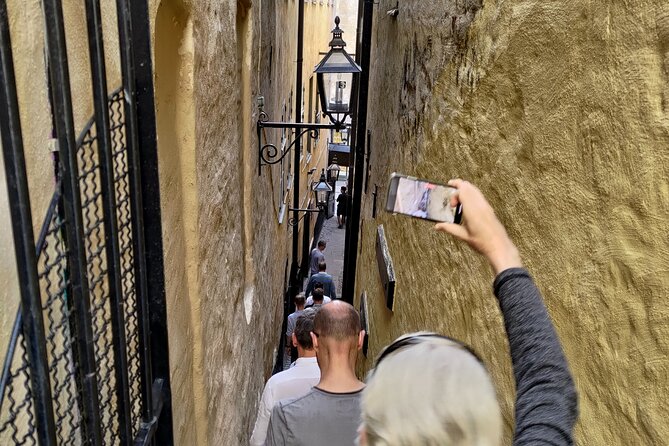
The walk then reaches Mårten Trotzigs gränd, famous as Stockholm’s narrowest alley. The passage is a quick stop, but the story of the person who gave the alley its name adds a human touch. You will likely spend more time listening than walking here, so keep your group close and be ready for a pause in a tight space.
This part of the route is best for people who enjoy small clues. A runestone, an alley name, a trading square, and a church excavation may seem minor beside the Royal Palace or Vasa. Together, they show how the old town developed block by block.
Waiting at the harbor and crossing to Djurgården
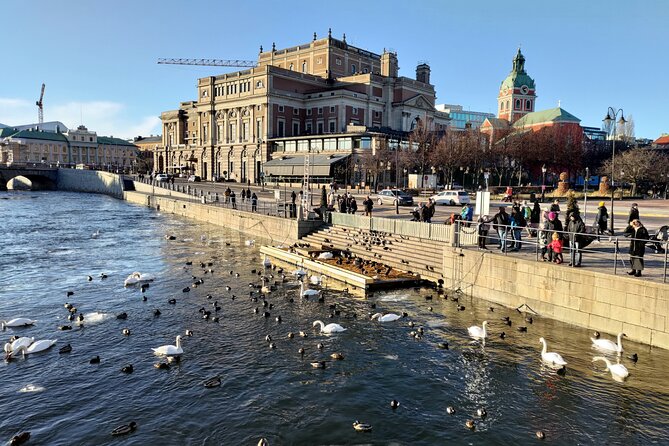
At Skeppsbrokajen, the group pauses near the old harbor while waiting for the ferry to Djurgården. The guide discusses Stockholm’s trade routes, waterways, and harbor life. The stop is short, but it also gives your feet a break after the Old Town walk.
The one-way ferry ticket is included. This is not just a practical transfer. It changes your view of Stockholm from tight lanes and stone squares to open water and waterfront buildings. The crossing also keeps the tour from feeling like a nonstop pavement march.
There is one practical point to keep in mind: ferry timing can affect the pace. The schedule is built around the crossing, so you may have a little waiting time. I consider that a reasonable trade for seeing the city from the water, especially on a first visit.
Before leaving the waterfront, the tour includes the Statue of St. George and stories about medieval battles connected with the figure. It is another short stop, but the statue gives the guide a chance to connect legend, religion, and warfare.
More old town walks in Stockholm
- Walking Tour of Stockholm Old Town
★ 5.0 · 1,175 reviews - The Original Stockholm Ghost Walk and Historical Tour – Gamla Stan
★ 4.5 · 1,165 reviews - Stockholm: Old Town Walking Tour with Local Guide
★ 4.7 · 719 reviews - Walking Tour of Stockholm’s Old Town, Gamla Stan
★ 5.0 · 451 reviews
Djurgården, from royal hunting grounds to museum island
After the ferry, you take a shorter walk on Djurgården. This island was once royal hunting ground and later served naval and military purposes. Today it is known for parks and museums, including the Vasa Museum.
The tour passes the Vrak and Viking museums, including a note about the unusual wartime structures associated with them. You also see modern runestones near an entrance and hear about the Viking Age. These are outside observations, not full museum visits, so you should not book this tour expecting admission to those museums.
At Galärvarvet, the guide explains the former naval base and its later relocation. You then pass the Nordic Museum, with its collections covering Sweden and the Nordic region from the 1500s to the present, along with material connected to Nordic life since the 1800s. Again, this is an exterior introduction. The museum admission is not included.
This Djurgården section matters because it gives the Vasa a setting. The ship is not an isolated attraction dropped into a modern district. It belongs to a waterfront area shaped by royal use, naval activity, and Stockholm’s museum culture.
The Vasa Museum and its extraordinary failure
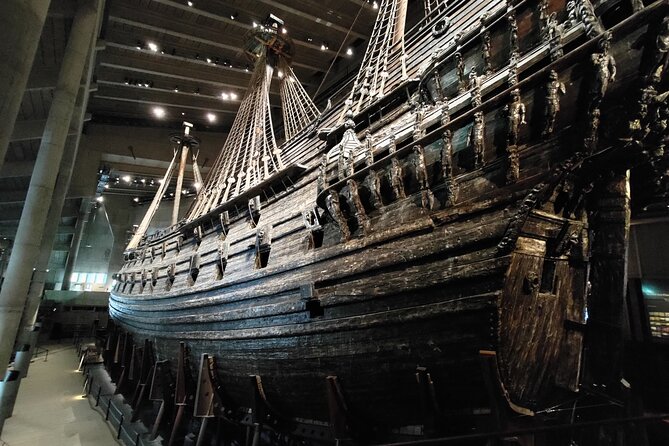
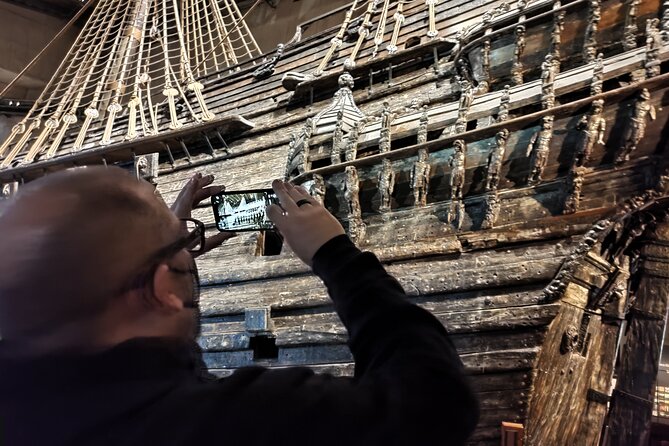
The final stop is the Vasa Museum, where the tour spends about 40 minutes with the guide. The ship was built as a mighty war vessel but sank on its maiden voyage after sailing roughly 1,200 meters. It was recovered centuries later and is displayed with about 98 percent of its original wood.
That failure is what makes the museum so memorable. You are looking at a huge object that reveals the ambition, technology, politics, and mistakes of its own time. The ship’s survival also lets the guide explain why the museum is so important, rather than leaving you with only the basic fact that it sank.
The strongest praise for this tour centers on the guides’ Vasa explanations. Peter is described as having worked at the museum and bringing especially detailed historical references. Christopher, Nicholas, Karin, and others have also been singled out for making the ship’s story clearer and more engaging.
Your guide’s approach may vary. Some guides add pictures and tailored details. Others give a brisk overview of the ship and its setting. The common thread is that the museum is handled as the climax of the route, not as a rushed afterthought on the 9:30 departure.
Admission needs careful attention. The tour information says Vasa Museum tickets are not included, while also promising skip-the-line access. In plain terms, you should budget separately for the museum ticket, then use the tour’s access arrangement to avoid the regular entry wait. Confirm the exact ticket procedure when booking, since the wording distinguishes entry from line access.
Morning versus late afternoon
The 9:30 departure is the better fit for most people. You begin in Gamla Stan, take the ferry, walk through Djurgården, and finish at the museum. That order gives you the full final visit without needing to hurry toward closing time.
The 4 p.m. option begins at the anchor outside the Vasa Museum rather than at the obelisk. It is designed to work backward through the schedule, but the museum can close at 5 p.m. during the shorter season. That leaves roughly 50 minutes to an hour inside, and delays can reduce it further.
One past group lost additional museum time while waiting for people who did not arrive. The operator later acknowledged that the guide should move on more quickly in that situation. You cannot control a late or absent group member, but you can choose the morning tour and reduce the risk.
If the boat ride is less important to you than the ship, the late tour may still work. If you want time to study the Vasa, read the displays, and enjoy the building without watching the clock, book the morning departure.
Price, group size, and walking demands
At $135.69 per person, this is not a cheap orientation walk. The value comes from combining a local guide, a long Old Town route, a ferry crossing, and a guided Vasa visit in about three hours. Paying separately for several short tours and arranging the ferry yourself would take more planning, though you would gain more control over your time.
The group maximum is 15 people, and at least three people must be booked for the tour to run. Some departures may be smaller, and a group of two couples can feel almost private. Do not count on that, though. The advertised format is a shared small group.
You need moderate physical fitness. The route involves city walking, standing at historic sites, moving through narrow lanes, and boarding a ferry. Comfortable walking shoes are a smart choice, and the tour operates in all weather, so bring clothing that can handle rain.
The meeting point is central and easy to reach by public transportation. The tour ends at the Vasa Museum, not back at the starting point. That is convenient if you want to continue on Djurgården, but you should account for it if you need to return to a hotel or catch a departure.
Free cancellation is available up to 24 hours before the start time. Changes made inside that window are not accepted, and the local-time cutoff applies. If the minimum number is not met and the tour is canceled, you are offered another date or experience, or a full refund.
Who will get the most from this tour
I would choose this for a first visit, a short stay, or a day when you want Stockholm’s main historical themes without planning every step. It is especially useful if you like stories about rulers, trade, religion, crime, and war, and want those subjects tied to real streets and buildings.
It also suits cruise passengers and anyone with limited time. The start and end points are different, but that can work in your favor. You get an efficient route from the palace district to Djurgården instead of retracing the same streets.
Families and mixed-age groups may appreciate the variety. The tour moves from squares to alleys, from a church to the harbor, from a ferry to a large ship. The guide commentary keeps the route active, though younger children who dislike standing may find the history stops long.
You should look elsewhere if you want a full Royal Palace visit, an unhurried Vasa Museum session, or a tour focused mainly on architecture. You can also explore the same places independently, but you will need to build your own historical thread and manage the ferry and museum timing.
Should you book Stockholm Must See?
Book it if you want a well-shaped first look at Stockholm and the Vasa Museum is near the top of your list. The guides are the central strength, with people such as Peter, Åsa, Karin, Emma, Tobias, and Christopher praised for humor, care, and strong command of Swedish history.
Choose the 9:30 departure, wear good shoes, and budget for the Vasa ticket separately. At $135.69, the tour makes the most sense when you value efficient routing and expert explanation more than free time.
Skip it if you prefer to linger at every museum or dislike group pacing. For everyone else, this is a compact way to connect Gamla Stan’s stories, Stockholm’s waterways, Djurgården, and one of Europe’s most remarkable museum ships.
FAQ
How long does the tour last?
The tour lasts approximately three hours.
Where does the morning tour begin?
The 9:30 tour begins at the foot of Gustav III’s obelisk on Slottsbacken 1 in Stockholm.
Where does the tour end?
The tour ends at the Vasa Museum on Galärvarvsvägen 14, on Djurgården.
Is the ferry ticket included?
Yes. A one-way ferry ticket to Djurgården is included.
Are Vasa Museum admission tickets included?
No. Vasa Museum tickets are listed as not included, although skip-the-line access is provided.
How large is the group?
The tour has a maximum of 15 travelers.
What happens if the tour does not meet its minimum number?
The tour requires at least three people to run. If it is canceled because the minimum is not met, you are offered a different date or experience, or a full refund.
More Museums in Stockholm
- Stockholm: Skansen Open-Air Museum Admission Ticket
★ 4.5 · 3,427 reviews - Stockholm: Nobel Prize Museum and Exhibition Entry Ticket
★ 4.3 · 994 reviews - Stockholm: Fotografiska Museum Entrance Ticket
★ 4.5 · 702 reviews - Stockholm: The Viking Museum Exhibition and Viking Ride
★ 4.5 · 667 reviews
More Vasa Museum Visits
- Stockholm Pass: Save up to 50% – Includes Vasa Museum Ticket
★ 4.1 · 2,392 reviews - Vasa Museum Guided Tour, Including Ticket & Guide
★ 5.0 · 330 reviews - Stockholm Pass: Save up to 50% – Includes Vasa Museum
★ 3.5 · 225 reviews - Stockholm Old Town and the Vasa Museum, a Small Group Walking Tour.
★ 5.0 · 113 reviews
Just added around Stockholm
- Beautiful Stockholm Small Group Walking Tour★ 5.0 · 3 reviews
- Private Golden Hour Photo Walk in Stockholm★ 5.0 · 3 reviews
- ROYAL Castle Skokloster and Viking Sigtuna (private tour)★ 4.5 · 3 reviews
- Stockholm Port to Stockholm Arlanda Airport (ARN) – Departure Private Transfer★ 3.5 · 3 reviews
- Swedish Beer Tasting Tour in Stockholm Old Town Pubs★ 5.0 · 3 reviews
- Stockholm Ghost Hunt: Self-Guided Tour and Puzzle Adventure★ 4.5 · 3 reviews
- Private Photography workshop in Stockholm★ 5.0 · 3 reviews
- Private blood, ghosts and folklore Old Town 2h Stockholm tour★ 4.0 · 3 reviews
Stockholm Tours, compared.

Stockholm: City Archipelago Sightseeing Cruise with Guide
Read our review →
Stockholm: Skansen Open-Air Museum Admission Ticket
Read our review →



The Original Stockholm Ghost Walk and Historical Tour – Gamla Stan
Read our review →
Browse the lists this tour appears in