
Reviewed · STOCKHOLM TOURS
From Stockholm: Viking Culture and Heritage Small Group Tour
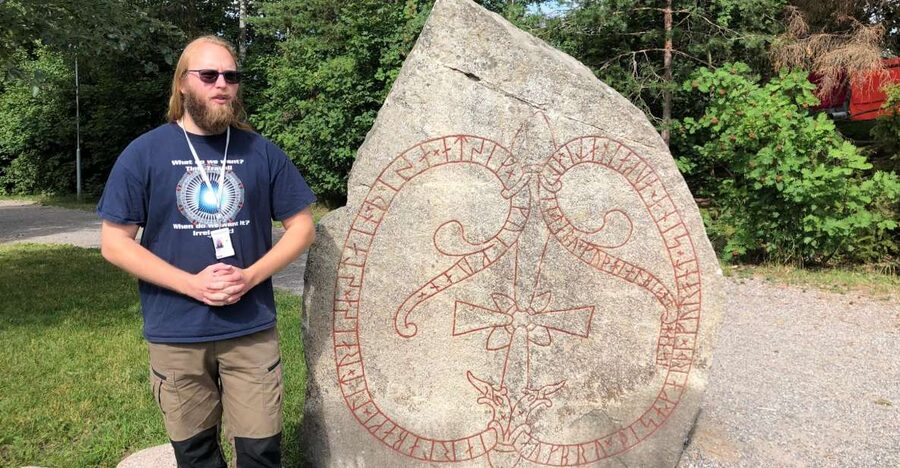
The most striking part of this outing is that you meet the Vikings through real stones, graves, roads, and meeting places, not through a museum display or a television costume drama. In the Uppland countryside, runestones still mark the people who raised them, and old causeways show how communities connected across the land.
I like the visit to Broby bro, where stories of the Viking woman Estrid bring a personal face to the past. I also like the small group size, capped at 16, and the way the three-hour route links burial customs, road building, family power, and law.
The main drawback is the weather. Several stops are outdoors, and a winter visit can mean snow, ice, and severe cold. One visitor needed proper winter boots and warm clothing at minus 10 degrees Celsius, so pack for the season rather than for Stockholm’s cafés.
Key points to know before you go
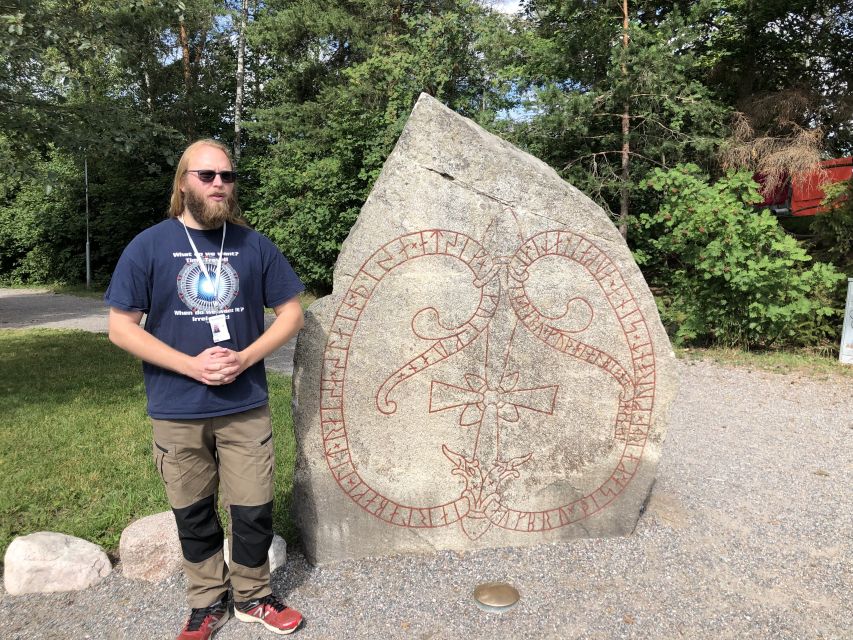
- Broby bro reveals Viking burial customs: See an old burial ground and runestones connected with Estrid, while learning about pagan and Christian traditions.
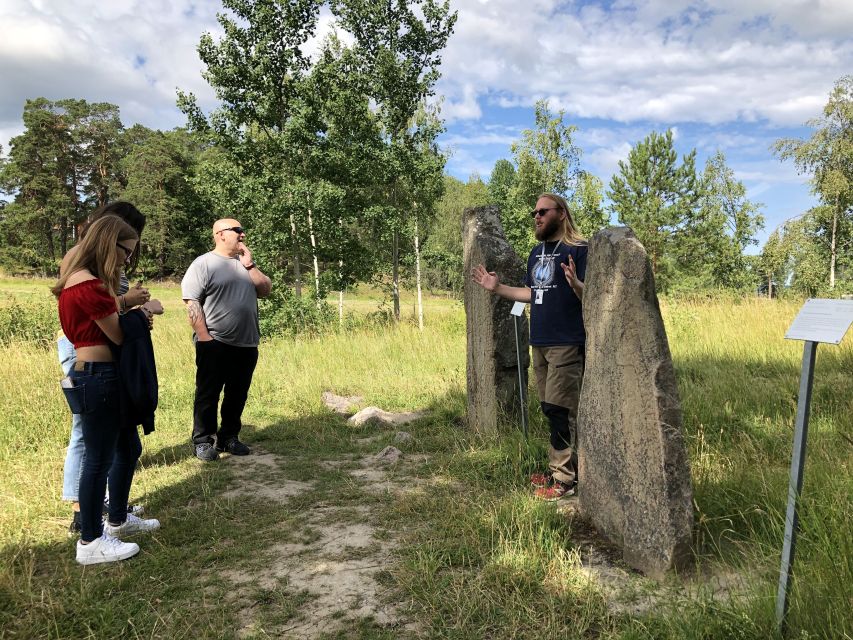
- Jarlabanke’s bridge is more than a photo stop: The reconstructed bridge and raised runestones explain how roads and crossings were built.
- Arkils tingstad shows Viking politics: The remains of this assembly site offer a useful look at how local society worked.
- The countryside changes the mood: A short drive takes you from central Stockholm to quiet villages, woodland, open fields, and old historical sites.
- Guide quality matters: Erik is specifically praised for clear, fact-based explanations and helpful Swedish food suggestions.
- The tour suits a tight schedule: Hotel pickup, transport, guiding, and site costs fit into a focused three-hour outing.
Why this short trip gets beyond Viking clichés
Stockholm has plenty to offer, but its city streets do not always show you where Viking Age life took place. This tour takes you into Uppland, the area north of Stockholm where old roads, burial grounds, runestones, and assembly sites remain part of the countryside.
I like the approach because it replaces vague Viking mythology with physical evidence. A carved stone can tell you who paid for a bridge, who belonged to a family, or who wanted to be remembered. A burial ground can show how beliefs changed as Christianity spread. A former parliament site can explain how people settled disputes and organized power.
You are not visiting a reconstructed village filled with actors. The experience is quieter and more archaeological. That means it may feel less dramatic than a staged Viking attraction, but it gives you a clearer sense of how ordinary places carried public meaning 1,000 years ago.
The tour lasts three hours, including the drive from central Stockholm and the return trip. That is long enough to see several important sites without using up a full day. It is a good choice if you want Viking history but also want time left for Stockholm’s museums, palaces, and neighborhoods.
More Historical Tours in Stockholm
- Stockholm: Ghost Walk and Historical Tour
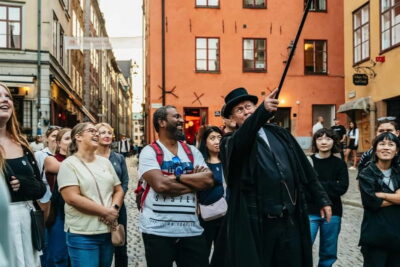
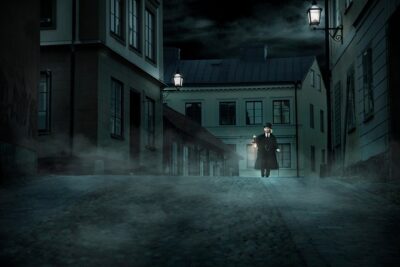
★ 4.7 · 2,206 reviews - The Original Stockholm Ghost Walk and Historical Tour – Gamla Stan
★ 4.5 · 1,165 reviews - Stockholm: Old Town Historical Walking Tour
★ 4.9 · 344 reviews
Leaving Stockholm for Uppland’s old roads
Pickup is available from hotels and accommodations within 5 kilometers of Stockholm Central Station. From there, you travel by vehicle into the countryside with a driver and English-speaking guide.
The transport is an important part of the experience. You do not need to work out rural bus connections or find scattered historical sites on your own. During the drive, your guide can connect the places you are about to see, which helps the stops feel like parts of one story rather than isolated stones in a field.
The exact starting time depends on availability, so check it when booking. The group can include up to 16 people. That is still small enough for a more personal feel than a large coach tour, though it is not a private outing.
The countryside may look especially striking in winter. A January visit was described with snow, a frozen lake, and temperatures around minus 10 degrees Celsius. That kind of weather can make the sites atmospheric, but it can also shorten your patience if you are poorly dressed. Wear warm layers and sturdy winter footwear, especially if the ground is icy or wet.
Broby bro and the story of Estrid
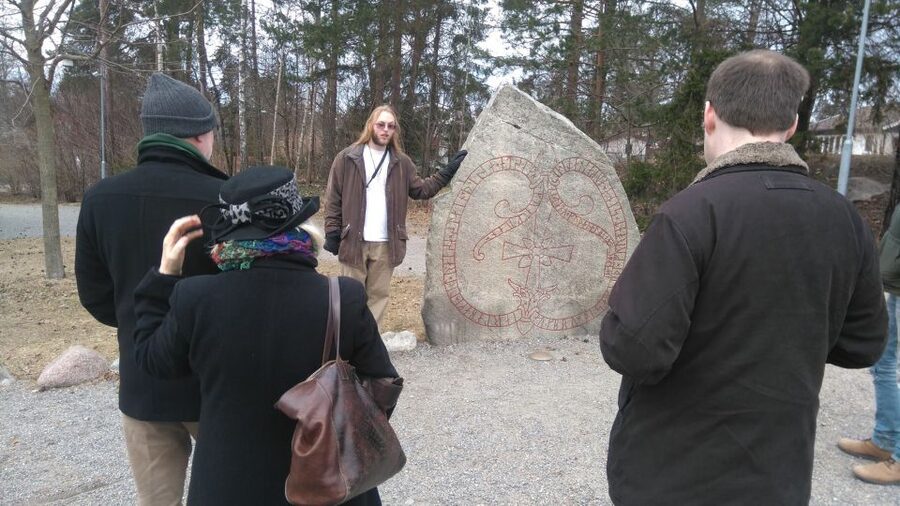
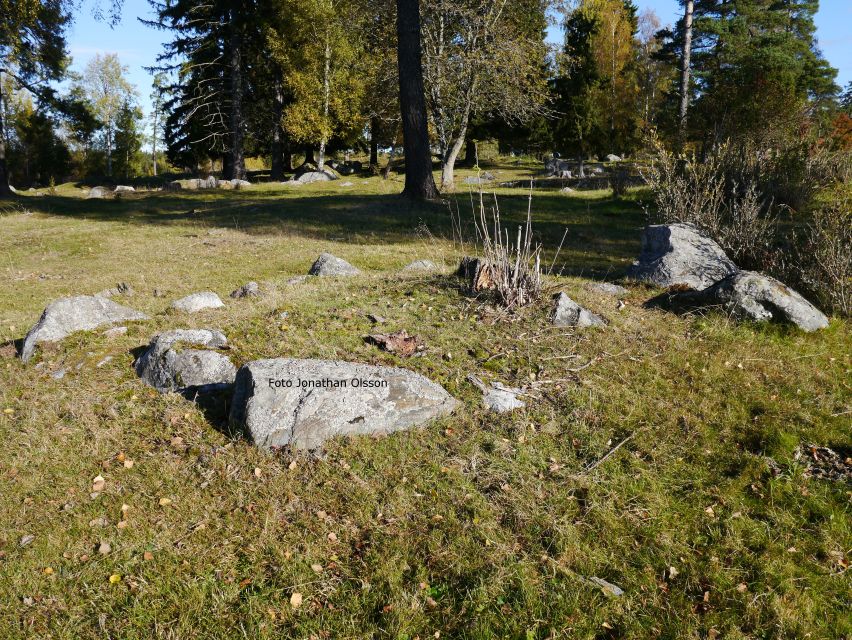
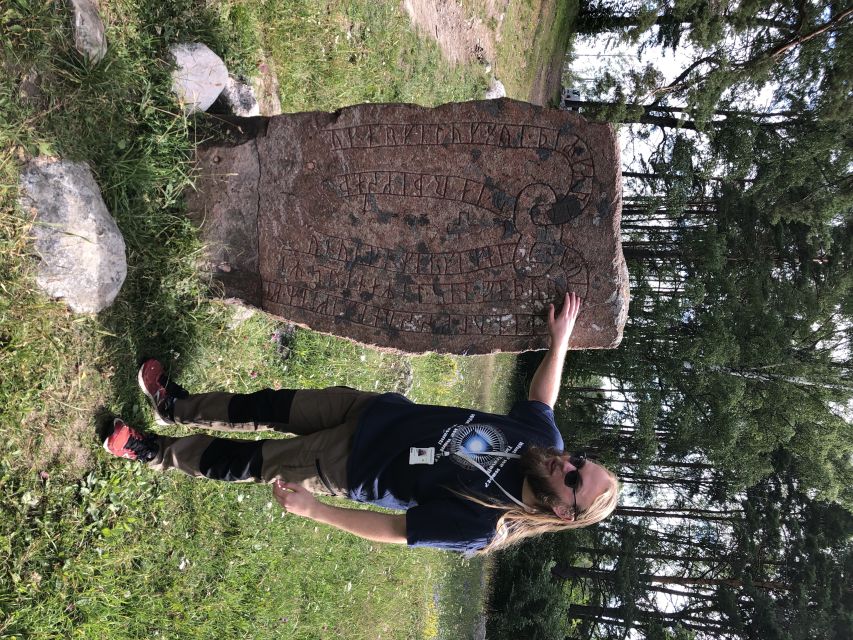
The first major stop is Broby bro, a well-known burial ground in historic Uppland. Here, you see Viking Age graves and runestones connected with the powerful woman Estrid.
This is one of the strongest parts of the route because it puts a person at the center of the story. Viking history is often reduced to warriors and ships. Estrid helps widen the picture. Through her family and memorial stones, you get a sense of status, inheritance, belief, and the role women could play in prominent families.
Your guide explains Viking burial rites and the shift from pagan customs to Christian traditions. That change did not happen as a clean switch from one day to the next. At sites such as this, the past feels more complicated and more human. Customs overlapped, and communities had to adapt as religious ideas changed.
The setting also matters. Broby bro is not presented as a polished indoor exhibit. You are looking at stones and ground in the same kind of countryside where these communities lived. The absence of a large museum building can make the visit feel direct, but it also means you should expect interpretation from the guide rather than a long series of posted signs.
If you enjoy names, family stories, and clues carved into stone, this stop may be the highlight. If you prefer reconstructed buildings or hands-on displays, it may seem spare. Bring curiosity, because the guide’s explanation does much of the work.
Jarlabanke’s bridge and a family’s public message
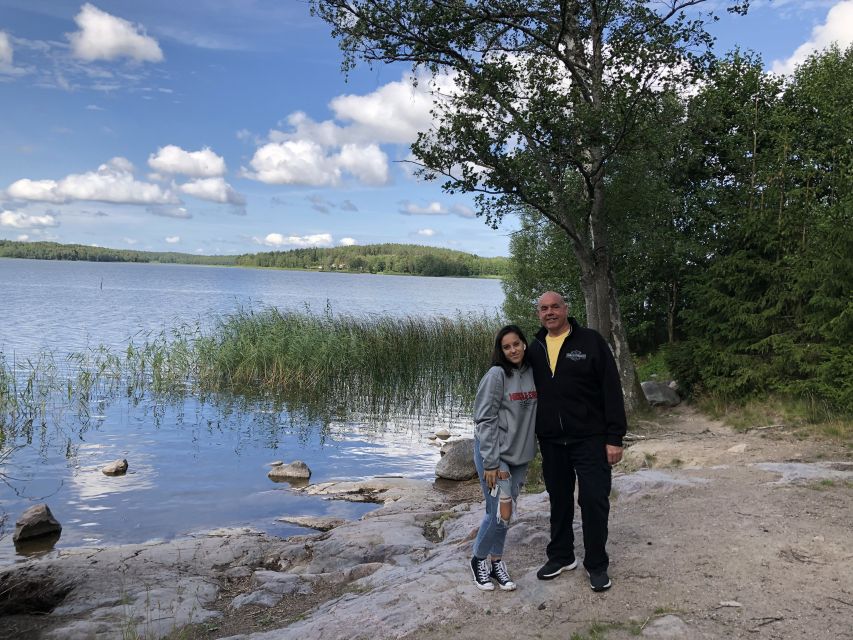
The route continues to Jarlabanke’s bridge, located at the entrance to an old causeway. The bridge has been reconstructed, allowing you to see the basic form of a crossing that once helped people move through the area.
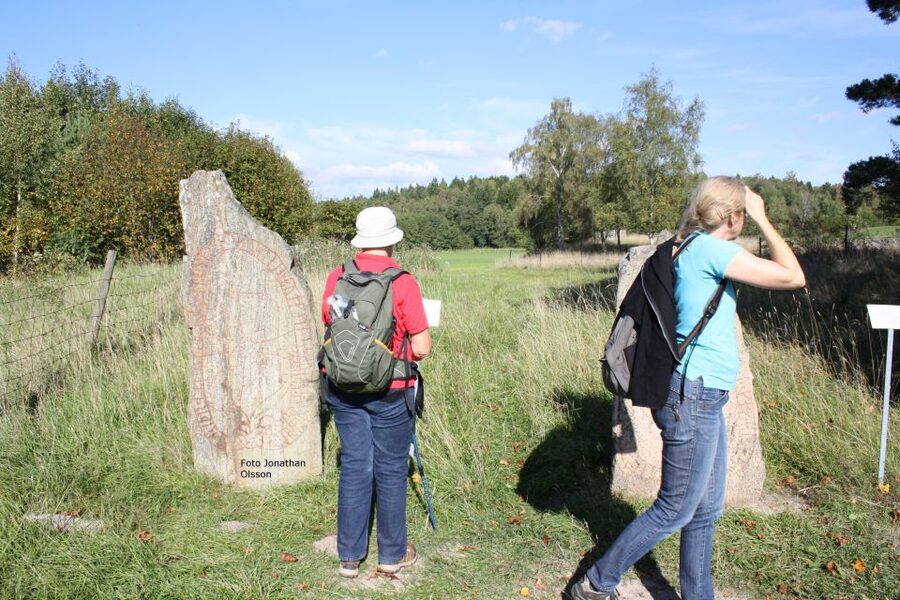
Nearby runestones carry the story of Jarlabanke and his clan. Their placement is important. These stones were not random decorations tucked away in a private corner. They were public statements, placed along routes where people could see them.
Your guide explains how roads and bridges were built and why such projects mattered. Building a crossing required labor, materials, planning, and authority. A person who claimed credit for that work was showing more than generosity. The bridge could also advertise family influence and control over movement through the district.
This is where the tour makes Viking politics easier to understand. Power was not only about fighting. It could involve organizing workers, maintaining roads, marking territory, and making sure your name remained visible to the next generation.
The raised runestones are also useful because they bring writing into the story. You can look at the carvings while hearing how memorials communicated family ties and public achievements. Do not expect to read them on your own unless you already know runic inscriptions. The guide’s explanation gives the stones their context.
The bridge and causeway are outdoor sites, so conditions matter. In dry weather, they should be easy to appreciate. In snow or ice, the visit can be beautiful but physically demanding. Take your time around uneven ground and wear shoes that can handle rural paths.
More viking history days
- Stockholm: The Viking Museum Exhibition and Viking Ride
★ 4.5 · 667 reviews - Entrance ticket to The Viking Museum
★ 4.0 · 301 reviews - Viking History, Runes & Countryside 9h Tour to Sigtuna & Uppsala
★ 4.5 · 283 reviews - Viking History and Swedish Countryside Tour to Sigtuna & Uppsala
★ 4.5 · 162 reviews
Arkils tingstad and the Viking assembly
The final major stop is Arkils tingstad, the remains of a Viking Age parliament or assembly place. The word parliament can sound more formal than the site probably feels, but the basic idea is important: Viking society needed places where people met, discussed disputes, made decisions, and dealt with shared concerns.
This stop helps correct the popular image of Vikings as isolated raiders. Communities needed rules, negotiation, alliances, and recognized leaders. An assembly site shows the civic side of Viking life, even when only traces remain.
Your guide explains how society was organized and how the assembly functioned. I find this part valuable because it connects the earlier stops. Burial grounds show memory and belief. Bridges show public works and family influence. The assembly shows how people handled power and community decisions.
The remains are not a grand building with intact walls. You are visiting an archaeological site, and much of its meaning comes from the explanation. That is worth knowing before you go. The reward is not a dramatic ruin. It is the chance to picture how local society operated in a time before modern government offices and written bureaucracy shaped daily life.
For anyone interested in law, leadership, or the practical side of history, Arkils tingstad adds needed balance. It also keeps the tour from becoming only a procession of runestones.
What the guides add to the experience
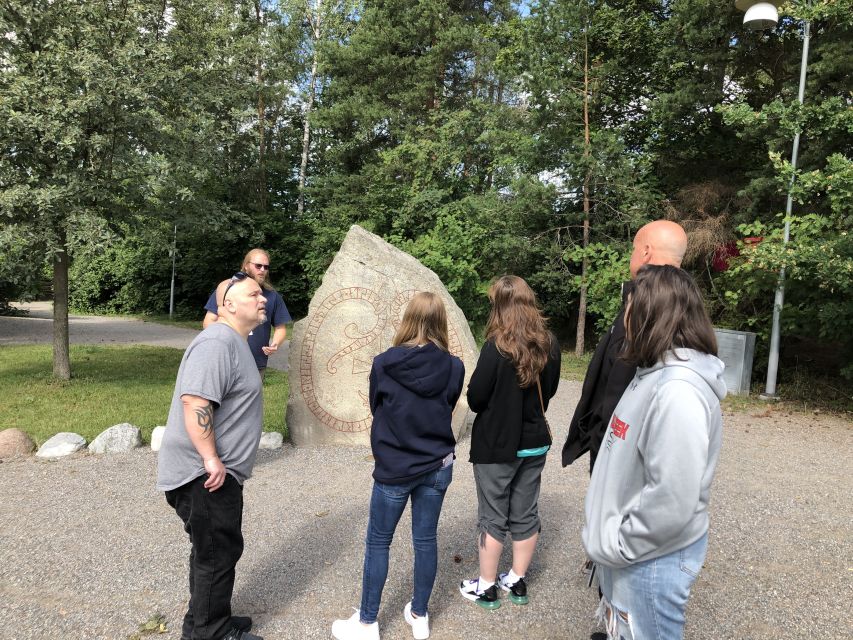
The guide can make or break a short history tour. You have only three hours, so clear storytelling matters. Erik is specifically praised for his strong command of Norse and Viking Age subjects, his focus on facts rather than film and television legends, and his ability to explain local connections.
That fact-based approach suits the sites. Runestones and burial grounds do not need exaggerated drama. They need a guide who can explain what is known, what is inferred, and why a particular stone or location matters.
The drive also gives the guide time to build a narrative before you arrive. You can hear about the area, Viking life, and the people connected with the sites while moving between stops. Erik has also offered Swedish food suggestions, which is a useful extra if you are deciding what to eat after returning to Stockholm.
The tour is offered in English. The small group limit of 16 should make it easier to hear the guide and ask questions than on a large coach excursion. Still, group sizes can vary up to that limit, so do not expect the pace and flexibility of a private guide.
Is $138 a fair price?
At $138 per person, this is not a budget sightseeing outing. The value comes from what is bundled into a short period: central hotel pickup and drop-off within the stated area, a driver, an English-speaking guide, transportation into the countryside, and admission or other listed costs.
The price makes more sense if you want convenience. The sites are outside central Stockholm, and arranging a route among Broby bro, Jarlabanke’s bridge, and Arkils tingstad would take planning. You would also lose the spoken interpretation that ties the places together.
It is less attractive if you only want to see one runestone or take a quick countryside drive. The tour’s strength is the connection between several sites. You pay for the route and the explanation, not for a large attraction with extensive facilities.
Food is not included, and gratuities are separate. Plan to eat before or after the tour, since the three-hour format is focused on transport and historical stops rather than a meal.
Free cancellation is available up to 24 hours before departure, and you can reserve while paying later. Those terms help if your Stockholm plans are still shifting, but you should still confirm the pickup area and available starting time before booking.
Who will get the most from this tour?
I would choose this outing for a first visit to Stockholm if Viking Age Sweden is high on your list and you want to see actual sites rather than only museum objects. It also suits history-minded families, couples, and solo visitors who prefer a guide to explain what they are seeing.
You will get the most from it if you enjoy:
- Runestones and archaeology
- Stories about families and local leaders
- The change from pagan to Christian customs
- Old roads, bridges, and meeting places
- Quiet countryside outside the city
- A compact tour that leaves most of the day free
It may not suit you if you want a full-day historical expedition, a hands-on living-history village, or a tour centered on food. It is also a poor match for anyone who dislikes being outdoors in cold or changeable weather.
The experience is accessible in spirit, but the supplied details do not describe specific access arrangements at each site. Since several stops are outdoors and may involve uneven rural ground, ask the provider about your needs before booking.
Practical advice for a smoother visit
Check the forecast and dress for the countryside, not central Stockholm. In winter, warm layers, gloves, a hat, and solid waterproof boots are sensible. The minus 10 degree visit shows that cold is not a minor concern.
Bring water and plan your meal around the tour because food is not provided. You may also want a small notebook or phone for names such as Estrid and Jarlabanke, since the route introduces several historical connections in a short time.
Keep your expectations realistic. Some sites are remains rather than complete structures, and runestones are easier to understand with the guide than by sight alone. The payoff comes from learning how each place functioned, not from finding a huge monument.
The three-hour length is a practical advantage. You can add it to a Stockholm itinerary without giving up a full day, and hotel pickup within 5 kilometers of Stockholm Central Station keeps the morning or afternoon simple.
Should you book the Viking Culture and Heritage Small Group Tour?
Book it if you want a focused look at Sweden’s Viking past through genuine outdoor sites. The combination of Broby bro, Estrid’s story, Jarlabanke’s bridge, family runestones, and Arkils tingstad gives you more range than a single monument visit.
The tour is especially worthwhile with a guide such as Erik, who brings a fact-based approach and useful local context. Just remember that the experience depends on spoken interpretation, rural remains, and the weather. Dress properly, expect a historical outing rather than a staged show, and allow time for a meal outside the tour.
At $138, it is a convenience-focused purchase, but the price is reasonable for a small group, transport, hotel pickup, and several countryside sites in only three hours. For a compact, authentic introduction to Viking Age Uppland, I would book it.
FAQ
How long does the Viking Culture and Heritage tour last?
The tour lasts 3 hours, including the journey from central Stockholm to the countryside sites and the return trip.
Where can hotel pickup take place?
Pickup and drop-off are available at hotels and accommodations located within 5 kilometers of Stockholm Central Station.
What language is the tour conducted in?
The tour is conducted in English with a live guide.
What sites are included?
The route includes Broby bro and the Jarlabanke runestones, the reconstructed Jarlabanke bridge and causeway, and the remains of the Viking assembly site at Arkils tingstad.
Is food included?
No. Food is not included, so plan to eat before or after the tour.
Is the tour suitable in winter?
The tour operates in winter conditions, but several stops are outdoors. Bring suitable cold-weather clothing and sturdy footwear, especially if temperatures are well below freezing.
How large is the group?
The tour is operated for a small group of no more than 16 people.
Just added around Stockholm
- Beautiful Stockholm Small Group Walking Tour★ 5.0 · 3 reviews
- Private Golden Hour Photo Walk in Stockholm★ 5.0 · 3 reviews
- ROYAL Castle Skokloster and Viking Sigtuna (private tour)★ 4.5 · 3 reviews
- Stockholm Port to Stockholm Arlanda Airport (ARN) – Departure Private Transfer★ 3.5 · 3 reviews
- Stockholm Ghost Hunt: Self-Guided Tour and Puzzle Adventure★ 4.5 · 3 reviews
- Swedish Beer Tasting Tour in Stockholm Old Town Pubs★ 5.0 · 3 reviews
- Private Photography workshop in Stockholm★ 5.0 · 3 reviews
- Private blood, ghosts and folklore Old Town 2h Stockholm tour★ 4.0 · 3 reviews
Stockholm Tours, compared.

Stockholm: City Archipelago Sightseeing Cruise with Guide
Read our review →
Stockholm: Skansen Open-Air Museum Admission Ticket
Read our review →
The Original Stockholm Ghost Walk and Historical Tour – Gamla Stan
Read our review →
Browse the lists this tour appears in