
Reviewed · STOCKHOLM TOURS
Beginner friendly Nordic Ice Skating On lakes in Stockholm
Natural ice skating near Stockholm is less about circling a rink and more about traveling across a frozen lake or stretch of Baltic Sea. You meet at Tideliusgatan 62, gear up, then ride by minibus to the safest ice available that day. The reward is a quiet winter outing far from the city, with hot fika and lunch along the shore.
I like the small group of no more than eight and the fact that the guide handles ice choices, safety gear, transport, and food. I also like the local touch: Jonathan is one named guide, and a French-speaking guide is available on at least some departures. The main concern is that Nordic skates are not ordinary rink skates, so this may feel sporty rather than easy for a first-time skater.
Key points to know before booking
- The ice location is chosen the day before: You may skate on a lake or the Baltic Sea, depending on safe conditions.
- Nordic skates feel different: They attach like cross-country skis and require more comfort than standard rink skating.
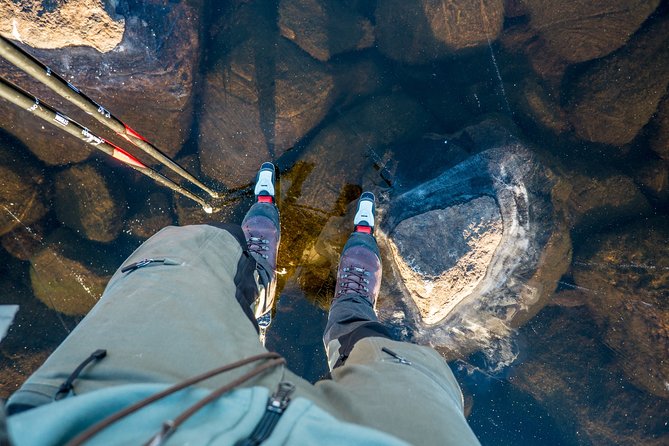
- Safety equipment is included: Skates, boots, poles, ice picks, helmet, pads, and a safety backpack are provided.
- A warm outdoor day is built in: Expect Swedish fika, a hot drink with a snack, and a warm lunch by the shore.
- The group stays small: A maximum of eight people makes it easier to get direct help from the guide.
- There is no guaranteed natural ice: Unsafe conditions may lead to a winter hike or a prepared rink instead.
Crossing Stockholm’s winter ice, not circling a rink
This seven-hour outing gives you a very different view of Stockholm. Instead of spending the day in a city park or indoor arena, you travel into the countryside around the capital and skate over natural ice, if conditions allow.
That setting changes the whole mood. You are not simply practicing laps. You are moving across open ice, stopping for food, and taking in the stillness of the shore. The ice may be on a freshwater lake or on the Baltic Sea. The exact choice is made only the day before, because safe natural ice depends on the weather.
I like that the company does not pretend the destination can be fixed far in advance. That is how this kind of activity works. The best ice is a moving target, and a responsible guide needs room to choose it.
The day begins at the base camp near Tideliusgatan 62 in Stockholm. From there, you travel by minibus with your group and guide. The ride is part of the practical value of the tour. You do not need to work out which frozen lake is safe, rent a car, or carry a full set of winter equipment across town.
More ice skating outings
- Stockholm: Ice Skating in the Moonlight with Hot Chocolate
★ 4.8 · 92 reviews - Introduction to Ice Skating on Natural Ice in Stockholm
★ 4.5 · 41 reviews - Stockholm: Family Friendly Private Ice Skating Tour & Lunch
★ 5.0 · 14 reviews
The right expectations for a beginner
The title presents this as beginner-friendly, and most participants can take part. Still, you should understand what beginner-friendly means here. It does not necessarily mean effortless.
Nordic touring skates differ from the short, fixed-blade skates used at a city rink. They attach to boots in a way similar to cross-country ski bindings. You also use poles, and the supplied safety backpack adds weight that you carry throughout the outing.
One detailed account described the day as more athletic than introductory, with the skates and pack making the experience harder for someone who was not already comfortable on skates. That is useful advice. If you can skate but feel steady only while holding a rink barrier, you may find this demanding. If you are reasonably fit and comfortable learning new equipment, the guide’s safety briefing should give you a workable start.
The tour is not pitched as a race, and the guide leads the group. Still, you will be outside for hours in winter. I would book this if you want an active day and are ready to learn a new skating style, not if you want a soft, low-effort introduction.
Gearing up with Nordic skates and ice picks
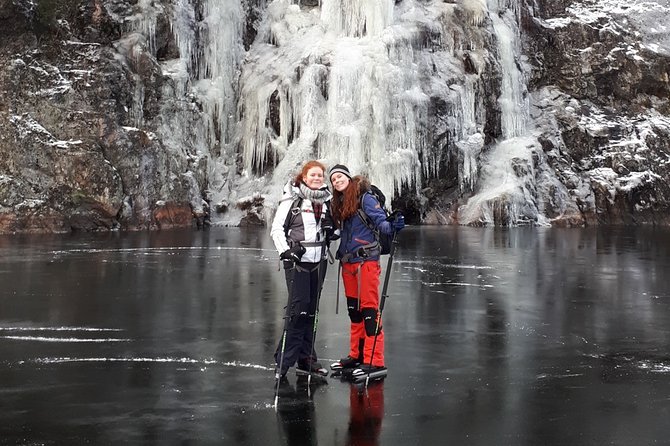
At the base camp, you receive the main equipment needed for the outing. That includes Nordic skates, boots, poles, ice picks, a helmet, protection pads, and a safety backpack. Equipment comes from established outdoor brands, according to the tour details.
The ice picks are an important part of the setup. They are used for self-rescue on natural ice, not as a novelty item. The safety briefing covers how the equipment works and how to behave on natural ice before you begin skating.
Send your EU shoe size in advance, from 37 through 46, so the equipment can be prepared. That small step matters. You do not want to begin a long winter day with boots that fit poorly.
Bring your own winter clothing. The recommended approach is layers rather than one very thick outfit. A hat or beanie, gloves, and one pair of warm socks are required essentials. Ski pants and jackets are suitable, as are thick running tights worn with wool long underwear.
Avoid cotton, especially jeans and cotton T-shirts. Cotton holds moisture and becomes uncomfortable in cold weather. The practical goal is to stay warm without wearing so much bulk that skating becomes awkward.
A flexible route chosen for the conditions
The day’s route cannot be fully known when you book. The guide and company assess the available ice and decide the destination the previous day. You may end up on a lake or on the Baltic Sea.
That uncertainty is both the tour’s strength and its main limitation. On a good ice day, you get the natural setting promised by the experience. On a poor ice day, safety has to win. The company states that there is no ice guarantee, and unsafe conditions can lead to a winter hike instead.
A prepared rink may also be used as an alternative. One account described a free-entry natural-ice rink roughly 15 minutes outside Stockholm, where the experience felt more like skating around in circles than touring across open ice. If the natural ice is unsafe, that substitute may feel disappointing at this price, especially if you could rent skates at a rink yourself.
The honest way to view this is simple: you are paying for a guided winter outing with safety planning, gear, food, and transport, but the natural-ice setting cannot be promised. Ask yourself how you would feel if the ice changed your day’s plan. If that possibility would ruin the booking, choose a fixed rink instead.
Something quite different in Stockholm:
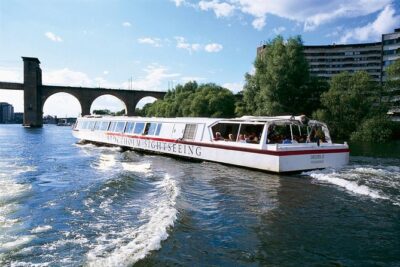
- Stockholm: City Archipelago Sightseeing Cruise with Guide
★ 4.3 · 10,798 reviews - Stockholm: Skansen Open-Air Museum Admission Ticket
★ 4.5 · 3,427 reviews - Stockholm: Archipelago Boat Tour
★ 4.4 · 3,110 reviews - Stockholm: Highlights Boat Tour
★ 4.3 · 2,542 reviews
The safety briefing before the first glide
Once you arrive, the guide gives an easy safety briefing before the group sets off. This is where you learn how to use the skates, poles, ice picks, and other equipment.
The guide’s role is especially important because natural ice is not the same as a maintained rink. You need to follow instructions, stay with the group, and treat the ice as an outdoor surface with changing conditions.
The maximum group size is eight. That is a strong point for a technical activity. You are not lost in a large crowd, and the guide has a better chance of correcting your stance or helping with the equipment. Jonathan is one guide named in the experience details, and the guide team includes a French-speaking option on at least one departure.
The guide also decides how the route fits the day’s ice and conditions. I would expect the pace and exact distance to vary rather than assume a fixed number of skating miles. The advertised duration is about seven hours, but that includes transportation, stops, meals, and gearing up.
Hours on open ice, with shore breaks
The main skating portion lasts several hours. On a lake or the Baltic Sea, the sense of distance is the point. You can look back toward the shore and see how far you have traveled, rather than simply counting rink laps.
The views are likely to be the strongest part of the day when natural ice is available. The supplied description calls the scenery unbelievable, and that enthusiasm makes sense in context: skating away from the shoreline gives you a perspective that a normal Stockholm sightseeing walk cannot provide.
This is also where your fitness and skating comfort matter most. You may need to carry the safety backpack for the whole route, and Nordic skates demand a different rhythm from rink skates. Do not book this expecting to master the technique in five minutes.
There are fika breaks on the shore during the outing. Swedish fika is a hot drink with a snack, and it gives you a chance to warm up, reset your balance, and enjoy the setting without rushing. These stops make the day feel like a Swedish outdoor tradition rather than a pure exercise session.
Warm lunch beside the frozen water
A warm lunch is included. The food is practical rather than decorative: after hours outside, a hot meal is a real part of the experience, not an extra flourish.
I like the way lunch and fika break up the activity. A seven-hour winter excursion would feel punishing if it were nonstop skating. Sitting down by the shore gives you a chance to remove a layer, check your socks and gloves, and take in the quiet.
The food also adds value to the price. At $205.37 per person, you are not paying only for equipment rental. The fee covers a professional guide, minibus transport, lunch, fika, Nordic skating gear, and the planning needed to find suitable ice. That is a reasonable package if you want a managed day outside Stockholm.
The value is weaker if the natural-ice portion is replaced by a simple rink session. In that case, the equipment, food, transport, and guide still have worth, but the central promise feels smaller. This is the key price question to consider before booking.
What the $205.37 price really buys
The price is high compared with renting skates for a few hours at a local rink. That comparison is fair, especially if the alternative destination is a prepared rink near Stockholm.
But the tour offers things you cannot get from a basic rental: a guide, ice-safety equipment, transport to the day’s chosen location, a warm lunch, fika, and a small group. It also removes the need for you to judge ice conditions yourself.
For someone visiting Stockholm without a car, that convenience has real value. You meet centrally, travel with the group, and return to the same point. You do not need to organize winter gear, search for a safe lake, or plan meals outdoors.
I would call the price fair for a natural-ice day with good conditions and a full package. I would call it harder to justify if you mainly want casual skating or if you are unwilling to accept a backup plan.
Dress well, because the cold is part of the deal
Your clothing can make or break this outing. The required basics are simple:
- Warm hat or beanie
- Gloves
- One pair of warm socks
- Layered clothing
- Winter or ski-style jacket and pants
- Wool long underwear or another warm base layer
Do not wear cotton. Jeans and cotton tops are poor choices for a long active day in cold weather.
Layers work better than one giant coat because you will be moving, stopping, warming up, and cooling down. You want freedom of movement for skating and enough warmth for the fika and lunch breaks.
The company supplies the skating and safety equipment, but not your winter clothes. Pack carefully and treat the clothing list as essential, not optional advice.
Who should book this Stockholm outing
I would recommend it to you if you want an active break from museums, cafés, and central Stockholm. It suits people who like outdoor days, can handle winter weather, and are willing to learn Nordic skating equipment.
It is also a good match if you value logistics. The guide chooses the ice, the minibus handles the transfer, and meals are included. A group of no more than eight keeps the outing personal.
You may want to skip it if you need a guaranteed natural-ice route, dislike cold-weather exercise, or are very uncomfortable on skates. The beginner label should not convince you that the activity is effortless.
The excellent guide feedback is worth noting. The instructor was described as professional, and Jonathan was specifically praised for being friendly and focused on making the day enjoyable. That human element matters when you are learning unfamiliar skates in an outdoor setting.
Practical details before you reserve
The experience is offered in English and uses a mobile ticket. The meeting point is near public transportation at Tideliusgatan 62, Stockholm, and the activity ends back there.
It is often booked about 35 days ahead, and departures can sell out. If your Stockholm dates are fixed, I would not leave this until the last minute.
You receive confirmation at booking. Free cancellation is available up to 24 hours before the start time for a full refund. Cancellations or changes made less than 24 hours before the start are not accepted for a refund.
The stated recommendation rate is 97 percent, with a 4.8 rating from 75 reviews. Those figures point to a strong overall experience, but the conditions issue remains important. The best day depends on safe natural ice, and the company cannot control the weather.
Should you book Nordic ice skating in Stockholm?
Book this tour if the idea of skating across a Swedish lake or Baltic Sea appeals to you more than the certainty of a rink. The small group, full safety kit, guide, transport, fika, and warm lunch make the day easy to organize and rewarding when the ice is right.
Go in with realistic expectations. Nordic skates are not standard rink skates, the safety backpack has weight, and beginner-friendly does not mean effortless. Also accept that unsafe ice may lead to a winter hike or prepared rink.
My call: this is a strong choice for an active, well-equipped winter day outside Stockholm, especially if you are comfortable with some uncertainty. If you want guaranteed natural ice or gentle recreational skating, spend your money on a simpler rink visit instead.
FAQ
Where does the tour start and finish?
The tour starts at Tideliusgatan 62, 118 69 Stockholm, Sweden. It ends back at the same meeting point after the minibus returns from the skating location.
How long does the experience last?
The activity lasts approximately seven hours, including transport, preparation, skating, fika breaks, lunch, and the return trip.
Is natural ice guaranteed?
No. The ice location depends on weather and safety conditions. The company may arrange a winter hike or use a prepared rink if natural ice is not safe.
Will I skate on a lake or the Baltic Sea?
The destination is chosen the day before. Depending on conditions, the skating may take place on a frozen lake or on Baltic Sea ice.
Is equipment included?
Yes. The tour includes Nordic skates, boots, poles, ice picks, a helmet, protection pads, and a safety backpack.
What should I bring?
You need your own winter clothing, including a hat or beanie, gloves, and one pair of warm socks. Layers are recommended, and cotton clothing should be avoided.
Do I need to send my shoe size?
Yes. Send your EU shoe size in advance, from 37 through 46, so the equipment can be prepared.
How many people can join the tour?
The maximum group size is eight travelers.
Just added around Stockholm
- Beautiful Stockholm Small Group Walking Tour★ 5.0 · 3 reviews
- ROYAL Castle Skokloster and Viking Sigtuna (private tour)★ 4.5 · 3 reviews
- Private Golden Hour Photo Walk in Stockholm★ 5.0 · 3 reviews
- Stockholm Port to Stockholm Arlanda Airport (ARN) – Departure Private Transfer★ 3.5 · 3 reviews
- Swedish Beer Tasting Tour in Stockholm Old Town Pubs★ 5.0 · 3 reviews
- Stockholm Ghost Hunt: Self-Guided Tour and Puzzle Adventure★ 4.5 · 3 reviews
- Private Photography workshop in Stockholm★ 5.0 · 3 reviews
- Private blood, ghosts and folklore Old Town 2h Stockholm tour★ 4.0 · 3 reviews
Stockholm Tours, compared.

Stockholm: City Archipelago Sightseeing Cruise with Guide
Read our review →
Stockholm: Skansen Open-Air Museum Admission Ticket
Read our review →
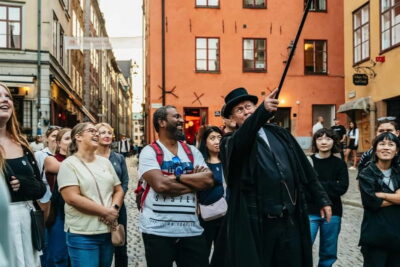
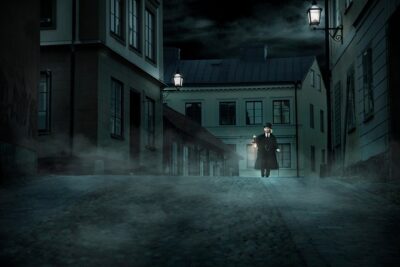
The Original Stockholm Ghost Walk and Historical Tour – Gamla Stan
Read our review →
Browse the lists this tour appears in