
Reviewed · UPPSALA TOURS
Guided tour 90min at Old Uppsala mounds and old Uppsala church
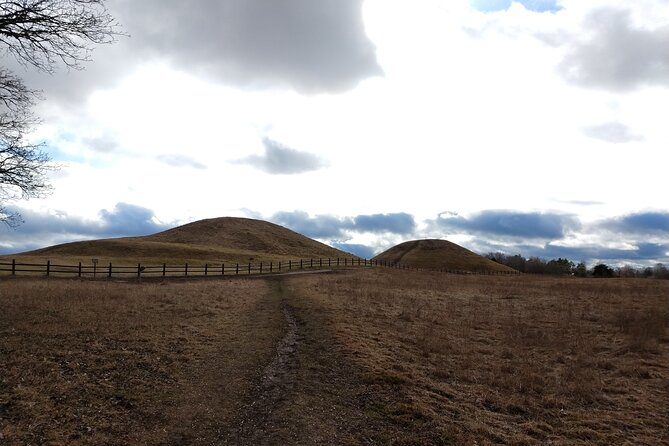
Gamla Uppsala is where Sweden’s early power feels close at hand: three huge burial mounds, broad grassy ground, and the remains of halls where rulers and craftsmen once worked. On this 90-minute guided walk, you hear how the Vendel and Viking-period settlement functioned, what recent excavations have found, and why this quiet site mattered so much.
I like the tour’s focus on archaeological evidence, not just heroic tales. I also like the chance to connect the mounds with the old church and the longhouse platforms nearby, including finds linked to gold, silver, gemstones, and garnets from Sri Lanka. The main caution is simple: the church visit depends on it being open, and one past experience reportedly became more of a stationary talk than a full walk around the mounds.
Key points to know before booking
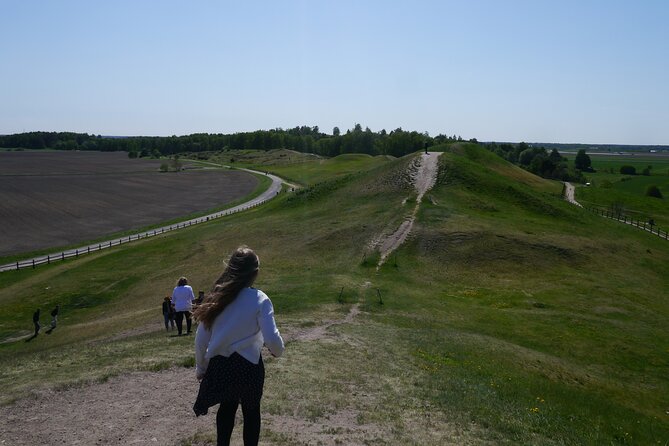
- Three royal burial mounds: Learn about Gamla Uppsala kungshögar, among Sweden’s most important early burial monuments.
- Vendel-period focus: The tour looks closely at the centuries before and around the Viking Age, roughly the 500s through 800s.
- Ancient longhouse platforms: See the raised areas where large halls once stood near the church.
- Church entry is conditional: Old Uppsala Church is visited only if it is open.
- Small group format: The maximum group size is 15 people, helping keep the guide’s explanations personal.
- Named guide option: Jonathan Olsson is praised for his command of the Vendel and Viking periods.
Why Gamla Uppsala is worth your time
Gamla Uppsala is not simply a collection of mounds beside a church. It was a major political and religious center, with farms, halls, workshops, burial grounds, and a later cathedral. The setting helps you picture how power worked before Sweden became the country you know today.
The burial mounds are the obvious draw. Their size gives you an immediate sense that the people buried here were important, but the guide adds the details that the earth alone cannot provide. You learn about dates, excavation methods, nearby farms, and the objects found in and around the mounds.
That context matters. Without it, you may see three grassy rises and move on in ten minutes. With a good guide, you begin to read the whole area as a settlement: the mounds for the dead, the hall platforms for public life, the work areas for skilled production, and the church for the site’s later religious role.
The tour begins at Disavägen 13 in Uppsala at 5:30 pm and returns to the same meeting point. The late-day timing can work well if you have spent the earlier part of the day in central Uppsala or have come from Stockholm. One person described making the trip from Stockholm by train and finding Uppsala easy to navigate, though this tour itself begins at the stated meeting point rather than at the railway station.
More Sweden outings to compare
- Stockholm: City Archipelago Sightseeing Cruise with Guide
★ 4.3 · 10,798 reviews - Stockholm Archipelago Cruise with Guide
★ 4.0 · 1,125 reviews - Gothenburg: Archipelago cruise with guide
★ 4.3 · 1,002 reviews
Walking around the three royal mounds
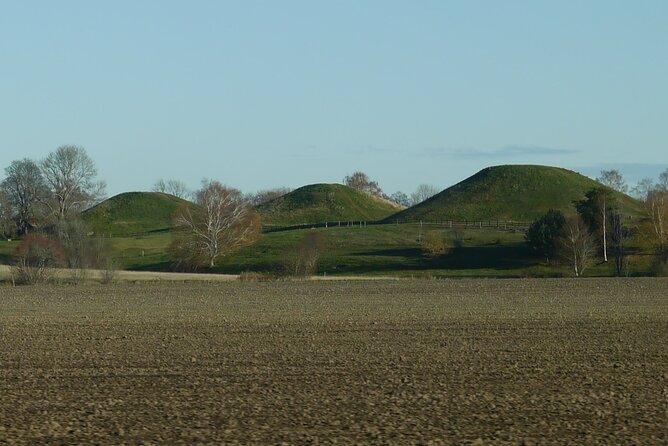
The first part lasts about 50 minutes and centers on Gamla Uppsala’s burial mounds. Admission to the stops is included, so you are paying for the guide’s time and interpretation rather than a separate entrance ticket.
The mounds are known as Gamla Uppsala kungshögar, or the royal mounds. Their scale and position have made them some of the most famous early monuments in Sweden. The guide explains what they may tell us about the people who controlled this area and how the burial ground related to the settlement around it.
Expect the discussion to cover recent excavations, the dating of finds, and how archaeologists piece together daily life from fragments. The useful part is the movement beyond famous names and legends. You hear about the farms around Gamla Uppsala, their possible functions, and how the larger site supported a powerful community.
This is also where the quality of the guiding matters most. Jonathan Olsson is specifically praised for his command of the Vendel and Viking periods. That makes him a particularly good fit if you want more than a quick introduction and enjoy hearing how archaeological evidence supports or challenges familiar stories.
The walking route is described as a walk around the mounds, but you should pay attention to the guide’s performance on the day. One disappointing experience involved a guide who mainly gave a stationary talk and did not properly walk around the mounds. The tour provider acknowledged this as a problem connected with a newer guide. That response is encouraging, but it also gives you a practical point to remember: the value of this experience depends heavily on receiving the active site walk that is intended.
The physical demands should be moderate. You will be outdoors and walking around the archaeological area, so comfortable shoes make sense. The stated requirement is a moderate level of fitness, but no strenuous activity is described.
Reading the longhouse platforms near the church
The second part lasts about 40 minutes and moves toward Old Uppsala Church. Near the church are several raised platforms marking the locations of large long halls used between the 500s and 800s.
These platforms are easy to overlook if you are exploring alone. They do not have the visual drama of intact walls, yet they point to the buildings where important gatherings, ceremonies, meals, and political business may have taken place. The guide connects these platforms to the wider settlement and helps you understand that Gamla Uppsala was not only a burial site.
The excavated workshops add another layer. Finds connected with gold, silver, precious stones, and garnets from Sri Lanka suggest skilled production and far-reaching contacts. That detail is especially striking because it puts this Scandinavian site into a much wider trading world. You are not just hearing about local farmers and warriors. You are hearing about people who handled luxury materials that had traveled a long way.
The tour also covers discoveries beneath the old cathedral and the changing role of Gamla Uppsala. This is valuable because the site’s story did not stop when the Vendel period ended. The later cathedral and church were built into a place that already carried enormous religious and political weight.
What you may see inside Old Uppsala Church
If the church is open, the guide takes you inside. If it is closed, this part remains an explanation from outside, and you should not book on the assumption that interior access is guaranteed.
Inside, the advertised sights include medieval statues, fifteenth-century frescoes, and a twelfth-century sacrificial log. The church also reflects Gamla Uppsala’s role as an early cathedral center. It was the earliest cathedral in Sweden outside Danish Lund and was among Sweden’s earliest bishop’s seats after Sigtuna, dating to the 1130s.
Those details make the church more than a convenient final stop. It shows how an older ceremonial center was given a Christian role, while the ground around it still preserves traces of earlier halls and workshops.
The conditional entry is the tour’s clearest limitation. One past booking found the church closed, and the group had already walked around the area independently. If seeing the medieval interior is essential to you, check the opening situation before booking or treat the church as a welcome extra rather than the main reason to go.
Even without entry, the surrounding platforms and the explanation of the cathedral’s earlier history can still make the second half worthwhile. But the tour should be judged honestly: the exact balance between outdoor walking and church viewing may change.
Something quite different in Sweden:
- Stockholm: Skansen Open-Air Museum Admission Ticket
★ 4.5 · 3,427 reviews - Stockholm: Archipelago Boat Tour
★ 4.4 · 3,110 reviews - Stockholm: Highlights Boat Tour
★ 4.3 · 2,542 reviews - Stockholm Pass: Save up to 50% – Includes Vasa Museum Ticket
★ 4.1 · 2,392 reviews
The guide makes or breaks this small-group experience
A group limit of 15 is a sensible size for an archaeological site. You should be able to hear the guide and ask questions without feeling lost in a crowd. It also gives the experience a more personal feel than a large coach excursion.
The strongest feedback centers on Jonathan Olsson. He is described as an endless source of information about the Vendel and Viking periods, and that is exactly the subject this tour needs handled well. The Swedish-language comments also describe the walk as pleasant and inspiring, with enough new material to interest people who already live in or near Uppsala.
That last point is useful. You do not need to be a beginner to get something from the experience. The tour can work for a first-time visitor, but it may also suit you if you already know central Uppsala and want to understand the older settlement beyond the cathedral and university.
Still, do not confuse a small group with a guaranteed first-rate tour. The weaker experience described above shows that a guide can know facts without delivering a proper site walk. Ideally, you should be moving between the mounds, platforms, and church area while the guide explains each feature in place. A talk beside one spot cannot give the site the same clarity.
Is $106.73 good value for 90 minutes?
At $106.73 per person, this is not a cheap add-on. You are paying roughly the price of a substantial half-day activity for an hour and a half, while the listed stops have no separate admission charge.
The value comes from interpretation. If you walk around Gamla Uppsala alone, you can see the mounds and church, but you may miss how the farms, halls, workshops, cathedral, and burial ground fit together. A strong guide can turn a short visit into a clear explanation of the site’s changing role across several centuries.
The price is easier to justify if you care about archaeology, early Scandinavian society, or the Vendel period, which is often less familiar than the Viking Age. It is less attractive if you only want a quick look at the mounds or expect a full afternoon of sightseeing.
You should also factor in the chance that the church is closed. Since entry is not guaranteed and the main outdoor area is free, the cost rests almost entirely on the guide. That is why the guide’s ability to walk the site and explain the evidence is so important.
For two people or a small group with a specific interest in early Sweden, the price may feel worthwhile. For a solo visitor on a tight budget, it is a more serious decision. The tour requires at least two people to run, so a booking may be changed or refunded if that minimum is not met.
Who should book this Uppsala history walk?
I would point this tour toward you if you enjoy places where the clues are subtle. Gamla Uppsala has no complete royal hall waiting for a photograph, so you need to appreciate earthworks, platforms, excavation results, and careful reconstruction.
It is a good match for:
- People interested in the Vendel and Viking periods
- Visitors who want archaeological context rather than a quick photo stop
- Anyone spending a day in Uppsala and looking beyond the university and cathedral
- Families or small groups comfortable with a moderate outdoor walk
- Visitors who prefer a guide who can answer questions on the spot
It may not suit you if you need guaranteed church entry, dislike outdoor walking, or want a tour packed with major surviving buildings. The experience is strongest when you are curious about what used to be there, not only what remains above ground.
Service animals are allowed, and the meeting point is near public transportation. The mobile ticket is convenient, and confirmation is provided when you book. Free cancellation is available up to 24 hours before the start time. Later cancellations and changes are not accepted, and the local time cutoff applies.
How to get more from the 5:30 pm start
Plan to arrive at Disavägen 13 with enough time to find the meeting point. Since the tour ends where it begins, you do not need to arrange a separate pickup or work out a second meeting location afterward.
The 5:30 pm start makes this easy to add after other Uppsala sights. You can visit the university area, cathedral, or museum earlier, then use the tour to put the city’s later story into a much older setting. One useful approach is to keep the afternoon flexible, since the mounds and church area are the central focus and the tour does not include a wider city route.
Bring shoes suitable for walking outdoors. The experience is only 90 minutes, but the tour depends on moving around the site, and the guide’s explanations make more sense when you can comfortably follow from one feature to the next.
If you are booking with a friend, remember that two people are required for the tour to operate. The maximum is 15, so you get a small-group setting without needing to organize a private party.
Should you book the Gamla Uppsala tour?
Book it if you want the mounds explained, not merely seen. The best version of this experience links the royal burial grounds, Vendel-era halls, luxury workshops, early cathedral, and medieval church into one readable story. Jonathan Olsson’s strong subject knowledge is a real reason to consider it.
I would be more cautious if the church interior is your main goal or if the $106.73 price feels high for a 90-minute walk. Entry depends on opening hours, and the tour’s quality relies on the guide actually walking the site rather than giving a fixed talk.
For history-minded visitors who value expert interpretation and a small group, this can be a memorable way to understand Uppsala’s oldest center. For a casual sightseeing stop, visiting the area independently may offer better value.
FAQ
Where does the tour start?
The tour starts at Disavägen 13, 754 40 Uppsala, Sweden.
What time does the tour begin?
The scheduled start time is 5:30 pm.
How long does the experience last?
The tour lasts approximately 1 hour and 30 minutes.
Where does the tour end?
The activity ends back at the meeting point.
Is admission to the mounds and church included?
All fees and taxes are included. The tour visits Old Uppsala Church only if it is open.
How many people can join the tour?
The maximum group size is 15 people. At least two people must book for the tour to run.
Can I cancel for a full refund?
Yes. You can cancel at least 24 hours before the start time for a full refund. Cancellations or changes made less than 24 hours before the start are not accepted, and the minimum number of participants must be met for the experience to operate.
Just added around Sweden
- Beautiful Stockholm Small Group Walking Tour★ 5.0 · 3 reviews
- Kiruna: Cross-Country Skiing Tour with a Guide★ 5.0 · 3 reviews
- Arlanda Express Train Airport and Stockholm City Transfer★ 5.0 · 3 reviews
- Gothenburg: Private Walking Tour with a Guide★ 3.6 · 3 reviews
- Karlskrona Self Guided Sherlock Holmes Murder Mystery Game★ 4.0 · 3 reviews
- Private Golden Hour Photo Walk in Stockholm★ 5.0 · 3 reviews
- Half Day Guided Walk with Huskies★ 5.0 · 3 reviews
- ROYAL Castle Skokloster and Viking Sigtuna (private tour)★ 4.5 · 3 reviews
Uppsala Tours, compared.
Stockholm Viking History Full Day Tour to Sigtuna + Uppsala
Read our review →
Uppsala: City Highlights and Hidden Gems Walking Tour
Read our review →
Best of Uppsala: Private Walking Tour with a Local
Read our review →
Uppsala bloody history 1h- racial biology, 18th century plague, 19th century prostitution etc.
Read our review →
Uppsala Must See 2h city walk – 2h tour of all big attractions!
Read our review →
Browse the lists this tour appears in