
Reviewed · UPPSALA TOURS
Uppsala bloody history 1h- racial biology, 18th century plague, 19th century prostitution etc.
Uppsala’s grand cathedral and university town have a darker story than the postcard suggests. This one-hour walking tour takes you through plague, poverty, prostitution, slave trading, racial science, religious persecution, and forced sterilization. It is history with the tidy cover pulled off.
I like the unusual subject matter and the way the tour connects difficult chapters to ordinary streets and familiar buildings. I also like the small group limit of 20 people, which should make it easier to hear the guide and ask questions. The main drawback is its short length: one hour allows for a sharp introduction, not a full treatment of every subject.
Key points to know
- A one-hour walk through uncomfortable history: The route covers Uppsala’s poor districts, former red-light area, cathedral, university museum, and racial biology history.
- The topics are unusually direct: Expect discussion of the 1709 to 1712 plague, slave trade, anatomical dissection, phrenology, persecution, and forced sterilization.
- The walk is mostly outdoors: You move through central Uppsala streets, with a stop by Gustavianum where admission is not included.
- Small groups matter here: A maximum of 20 people suits a serious talk better than a large bus-style tour.
- The price reflects specialist storytelling: At $36.58, you are paying for a focused history walk rather than entrance tickets or a long sightseeing circuit.
- Check the meeting details carefully: The supplied information names Riddartorget as the start and the City Library as the end, while another description refers to meeting outside the library.
Uppsala beyond the postcard
Uppsala is often presented through its cathedral, university, royal connections, and handsome central streets. This tour asks you to look again. The same city also dealt with epidemics, social exclusion, sexual exploitation, religious control, and state policies aimed at classifying and controlling people.
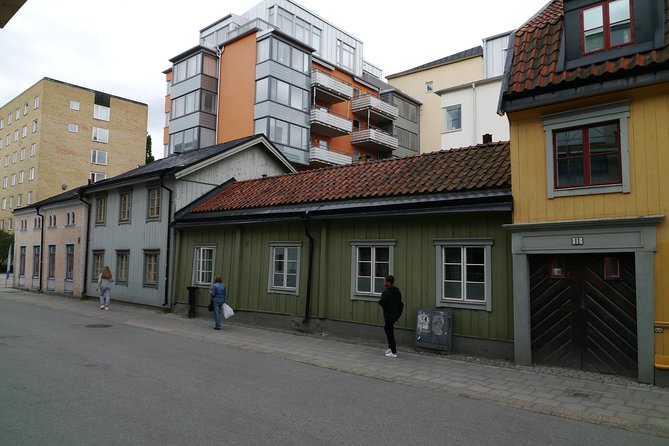
That change of viewpoint is the tour’s main value. You are not simply told that Uppsala has a long past. You are shown how difficult history sits beside everyday places, including streets near Linnéträdgården, St Erik’s Square, the cathedral, and Gustavianum.
The tone is serious, but it is not described as a purely grim march. One detailed response to the tour called it a good mixture of dark and lighter parts of Uppsala’s past, with facts that could be both interesting and amusing. That balance matters. A walk built only around suffering can become exhausting, while a little context and lighter detail helps you keep listening.
The tour is led by Sweden History Tours. Responses connected with the company name Owe and Jonathan, but the booking details do not clearly state which guide leads each date. If a particular guide matters to you, ask before booking.
More Sweden outings to compare
- Stockholm: Ghost Walk and Historical Tour
★ 4.7 · 2,206 reviews - The Original Stockholm Ghost Walk and Historical Tour – Gamla Stan
★ 4.5 · 1,165 reviews - Stockholm: Old Town Historical Walking Tour
★ 4.9 · 344 reviews
Starting at Riddartorget
The stated meeting point is Riddartorget, or Knights’ Square, on Biskopsgatan. The start time is 3 p.m. The information also refers to an introduction outside the main entrance of Uppsala City Library, so you should confirm the exact meeting place before setting out.
That small inconsistency is worth taking seriously. It does not change the route’s subject, but it can create a needless scramble at the beginning of a short tour. Arrive early and have the provider’s confirmation ready on your phone.
The activity uses a mobile ticket and includes all fees and taxes. No separate admission is included for Gustavianum. Service animals are allowed, and you should have a moderate level of physical fitness because this is a walking tour through city streets.
Svartbäcksgatan and poor Uppsala
The early part of the walk focuses on Svartbäcksgatan, the poor sections of Uppsala, and the plague that struck the city from 1709 to 1712. This is a useful opening because it places public health beside social class. Disease did not affect a city as an abstract map. It moved through homes, neighborhoods, and crowded communities where poverty shaped people’s choices.
The stop is listed as about 20 minutes, making it the longest named section of the route. That gives the guide room to establish the setting before moving into the more specialized subjects later in the walk.
You should expect the emphasis to be on storytelling rather than a museum display. Admission is free, and the historical setting is the street itself. That keeps the discussion connected to the city, though it also means you need to listen closely. There may not be a large sign or object in front of you to explain the point.
This portion should suit you if you want social history rather than a parade of famous names. It may be less satisfying if you prefer interiors, artifacts, or long pauses at major sights.
Linnéträdgården and the former red-light district
The route then passes streets outside Linnéträdgården, where Uppsala’s 19th-century brothels and red-light district were located. The discussion also covers alcohol problems and poor neighborhoods.
This is one of the tour’s most revealing shifts. A botanical garden is normally associated with science, order, and cultivated beauty. Nearby streets can carry a very different memory, one involving sex work, drinking, poverty, and people living with few safe choices. The tour’s strength is in placing those subjects within the same urban frame.
The information does not promise a visit inside a former brothel, so you should think of this as a street-history stop. You are hearing about what happened in the area rather than entering a preserved attraction.
The subject is handled as part of a wider social story. That is important because prostitution is not just a colorful detail from the past. It raises questions about gender, money, policing, housing, and which parts of city life later get removed from public memory.
Something quite different in Sweden:
- Stockholm: City Archipelago Sightseeing Cruise with Guide
★ 4.3 · 10,798 reviews - Stockholm: Skansen Open-Air Museum Admission Ticket
★ 4.5 · 3,427 reviews - Stockholm: Archipelago Boat Tour
★ 4.4 · 3,110 reviews - Stockholm: Highlights Boat Tour
★ 4.3 · 2,542 reviews
St Erik’s Square and the 1709 to 1712 plague
St Erik’s Square brings the plague story back into focus. The tour connects the square with the epidemic that affected Uppsala between 1709 and 1712.
The date range gives the subject useful shape. Instead of a vague account of an old disease, you get a specific crisis tied to a particular city and period. The guide can also link the plague to the poor districts already discussed, helping you see how illness, housing, and social inequality fit together.
This is another outdoor stop with no admission fee. The benefit is immediacy: you are standing in the city while hearing about a past emergency. The limitation is that a public square is still a working urban space, so noise or distractions may affect how clearly you hear.
If you have already seen Uppsala’s major religious and academic sights, this stop gives the city a more human scale. It shifts attention from institutions to the people who had to live through an epidemic.
Uppsala Cathedral and religious persecution
At Uppsala Cathedral, the subject changes from disease and poverty to religious control. You hear about the persecution of dissenting Christians and atheists, especially during the 19th century.
The cathedral is a powerful setting for this discussion. It represents established religious authority, while the story concerns people who did not fit the accepted religious order. The point is not simply that religion mattered in the past. It is that institutions could influence who was considered respectable, dangerous, or outside the community.
The stop is listed at roughly 10 minutes and admission is free. That is enough time for a focused explanation, but not enough for a full account of Swedish religious law or the history of dissent. Consider it a concise introduction that may leave you wanting to read more.
I would pay close attention here if you are interested in the gap between official ideals and private belief. The subject also helps prepare you for the later discussion of scientific authority and state power. Different institutions appear, but the underlying question remains similar: who gets to define normal behavior?
The Dean’s House and racial biology
The cathedral area also brings in one of the tour’s most serious subjects, the Swedish Institute of Racial Biology, which operated from 1920 to 1958. The discussion examines what happened inside the institute and how racial classification was used.
This part needs careful handling, and the short format makes the guide’s explanation especially important. The topic is not presented as an isolated foreign horror. It belongs to Sweden’s own institutional history, and the tour asks you to consider how educated professionals and public authorities could give harmful ideas an official appearance.
The supplied material also connects this history with forced sterilizations in the 1940s. That makes the subject more than a story about outdated theories. It concerns real state action and people whose lives were changed by decisions made in the name of social improvement or biological control.
Some descriptions of the tour use very strong language about these policies. I would approach the walk ready for disturbing material, but also ready to hear the historical details rather than only a moral verdict. The value lies in understanding how such systems operated and why they were accepted by parts of society.
Gustavianum, anatomy, and the slave trade
The final major stop is Gustavianum, Uppsala University Museum. The tour discusses the 17th-century slave trade, the anatomical institution, and 19th-century phrenologists. It also returns to forced sterilization in the 1940s.
This is a lot for a 10-minute stop. The subjects are linked by the use of bodies and human difference: people treated as property, bodies examined under institutional rules, and heads or physical features studied in an effort to rank human beings.
You hear about the anatomical department’s rules governing which crimes could result in a person ending up under the knife. That detail gives the discussion a particularly unsettling edge. It points to the legal and administrative systems behind dissection, rather than treating anatomy as a neutral scientific activity.
Phrenology is another reminder that bad science can look respectable when it is dressed in technical language. The tour connects these ideas to Uppsala’s academic setting, showing that a university can be a place of discovery and a place where harmful theories gain authority.
Admission to Gustavianum is not included. The supplied details do not say that the walk enters the museum, so you should not assume that your ticket covers an indoor visit. The stop is best understood as an explanation connected with the building and the university’s past.
What $36.58 buys you
At $36.58 per person, this is not the cheapest way to spend an hour in Uppsala. You are not paying for several major entrance tickets, a meal, or a long sightseeing route. You are paying for a tightly focused guide-led discussion of subjects that are difficult to research quickly on your own.
The value is strongest if you care about social history, public memory, ethics, or the less polished side of Swedish history. It is weaker if you want a broad introduction to Uppsala’s cathedral, university, and main landmarks. A standard city tour would cover more familiar sights.
The maximum group size of 20 helps justify the cost. In a tour about persecution, racial biology, and forced sterilization, the ability to hear clearly and ask a question is more important than it would be on a simple photo walk.
The average booking time is 34 days in advance. That suggests you should not leave this one until the last afternoon of your trip, particularly if your dates are fixed. Free cancellation is available up to 24 hours before the 3 p.m. start time. Cancellations made within 24 hours are not refunded, and the provider may cancel if the minimum number of participants is not reached.
Who will appreciate this walk
I would recommend it to you if you have already seen some of Uppsala’s standard sights and want a different angle. It is also a good fit for visitors interested in Scandinavian social policy, the history of science, religious dissent, or the way cities remember uncomfortable events.
The tour may suit older children or teenagers who can handle serious subjects, but the supplied information does not give a recommended minimum age. Use your own judgment, especially because the material includes plague, prostitution, slave trade, anatomical dissection, and forced sterilization.
You do not need specialist background knowledge. One response praised the guide’s ability to answer questions and combine substantial information with lighter facts. That suggests the tour is designed to explain rather than lecture, though the exact style will depend on the guide assigned to your date.
If mobility is a concern, remember that the experience involves walking between central locations. The stated requirement is moderate physical fitness. No specific route length, seating arrangements, or accessibility details are provided, so ask Sweden History Tours before booking if you need that information.
Should you book Uppsala Bloody History?
Book it if you want Uppsala to feel more complicated, human, and honest. The tour’s best feature is its range: one hour moves from plague and poverty to brothels, dissent, racial biology, anatomy, slave trade, phrenology, and forced sterilization.
Do not book it expecting a relaxed landmark tour or a detailed museum visit. The pace is brisk, the subjects can be upsetting, and the short duration means some topics will receive only a brief explanation.
For the right reader, $36.58 is fair value for a small-group walk that puts difficult history directly onto Uppsala’s streets. Confirm the meeting point, prepare for serious material, and book ahead if your schedule is firm.
FAQ
How long does Uppsala Bloody History last?
The experience lasts approximately one hour.
What time does the tour start?
The stated start time is 3 p.m.
Where does the tour begin?
The meeting information lists Riddartorget, or Knights’ Square, on Biskopsgatan in Uppsala as the starting point. Another description refers to collecting outside the main entrance of Uppsala City Library, so confirm the exact meeting location before arrival.
Where does the tour end?
The listed end point is Uppsala City Library, Svartbäcksgatan 17.
How much does the tour cost?
The listed price is $36.58 per person.
What subjects are covered?
The walk covers the 17th-century slave trade, Uppsala’s gallows hill, poverty, the 1709 to 1712 plague, 19th-century prostitution and the red-light district, religious persecution, racial biology, anatomical dissection, phrenology, and forced sterilizations in the 1940s.
Is entry to Gustavianum included?
No. Admission to Gustavianum is listed as not included.
How many people can join the tour?
The activity allows a maximum of 20 participants.
Can I cancel for a full refund?
Yes, if you cancel at least 24 hours before the experience start time. Cancellations made less than 24 hours in advance are not refunded.
Just added around Sweden
- Beautiful Stockholm Small Group Walking Tour★ 5.0 · 3 reviews
- Kiruna: Cross-Country Skiing Tour with a Guide★ 5.0 · 3 reviews
- Arlanda Express Train Airport and Stockholm City Transfer★ 5.0 · 3 reviews
- Gothenburg: Private Walking Tour with a Guide★ 3.6 · 3 reviews
- Karlskrona Self Guided Sherlock Holmes Murder Mystery Game★ 4.0 · 3 reviews
- Private Golden Hour Photo Walk in Stockholm★ 5.0 · 3 reviews
- Half Day Guided Walk with Huskies★ 5.0 · 3 reviews
- ROYAL Castle Skokloster and Viking Sigtuna (private tour)★ 4.5 · 3 reviews
Uppsala Tours, compared.
Stockholm Viking History Full Day Tour to Sigtuna + Uppsala
Read our review →
Uppsala: City Highlights and Hidden Gems Walking Tour
Read our review →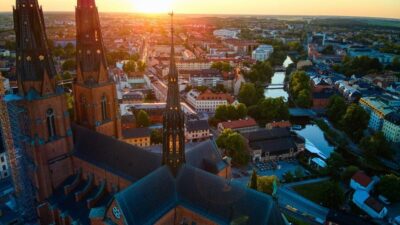
Best of Uppsala: Private Walking Tour with a Local
Read our review →
Guided tour 90min at Old Uppsala mounds and old Uppsala church
Read our review →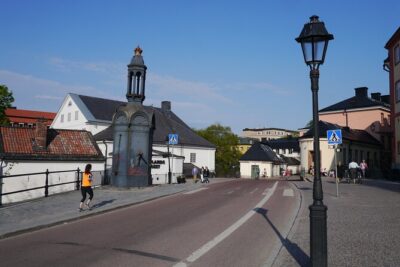
Uppsala Must See 2h city walk – 2h tour of all big attractions!
Read our review →
Browse the lists this tour appears in