
Reviewed · UPPSALA TOURS
Cube of Art Uppsala Museum of Interactive Art
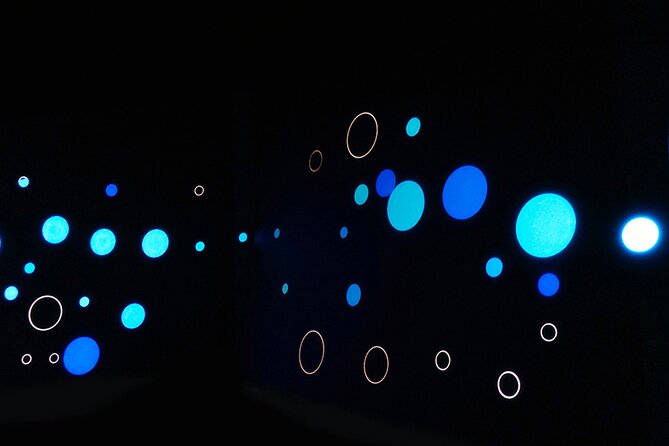
The most unusual thing about Cube of Art is that the artwork does not sit quietly on a wall. Inside a seven-meter-high black cube, laser and lidar sensors track movement, touch, and drawings, then turn them into shifting forms, colors, and sounds. You are not just looking at the art. You help set it in motion.
I like the way this gives children and adults a reason to play together, and I like the easy one-hour length, which fits neatly into a day in Uppsala. The main caution is space: it can feel cozy with only a few people, but crowded once more than about eight are inside, and the room may feel smaller than you expect.
Key points to know before you go

- Your movements affect the artwork: Steps, gestures, and touch can change the digital display around you.
- Drawing is part of the experience: You can draw on the wall and see the technology respond, though recognition may be limited to certain animals and objects.
- The visit lasts about one hour: Two passes through the exhibition may be enough for many people.
- It works especially well for families: Infants, toddlers, older children, teenagers, and adults can all take part at their own level.
- Crowd size matters: The room feels more comfortable with a small group and less relaxed when more than eight people are present.
- The price is $21.68 per person: That is reasonable if you want an active art experience, but less so if you prefer a large museum with many separate galleries.
What makes Cube of Art different from a normal museum
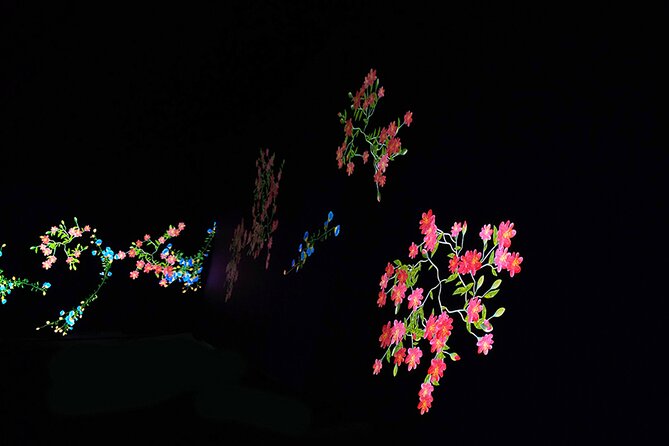
Cube of Art takes place inside a specially designed black cube rather than a traditional series of rooms. Its seven-meter ceiling gives the space a tall, theatrical feel, while laser and lidar technology detect activity in the room.
That technology is the point of the visit. Your body becomes part of the system. A step can alter a pattern. A touch can change the display. A drawing can trigger an animated response. Shapes, colors, and sounds develop according to what people do around them.
I find the idea more interesting than a standard digital projection because you are not standing outside the artwork. You have to test it. Walk. Wave. Touch. Draw. Then watch what happens.
This also makes the experience easy to understand without a long art lecture. The museum brings together established and younger artists who work with digital art and interactive technology, but the appeal is direct. You do not need a background in contemporary art or computer science to take part.
The setting is designed around a single interactive environment, so do not expect a large museum complex with many rooms and dozens of displays. Cube of Art is a focused experience. That is part of its charm, but it also explains why some people may want more content after the first visit.
More museums in Sweden
- Stockholm: Skansen Open-Air Museum Admission Ticket
★ 4.5 · 3,427 reviews - Stockholm Pass: Save up to 50% – Includes Vasa Museum Ticket
★ 4.1 · 2,392 reviews - Stockholm: Nobel Prize Museum and Exhibition Entry Ticket
★ 4.3 · 994 reviews
Inside the seven-meter-high black cube
The room’s height helps create a sense of scale. Digital patterns can reach across the walls and floor, making your movements feel larger than they would on a small screen.
The interactive floor and wall are especially useful for young children. A two-year-old does not need to understand the technology to enjoy seeing movement produce an immediate result. A baby can watch the changing shapes and sounds, while an older child may spend time testing how the system reacts.
For teenagers, the attraction is less about simply pressing buttons and more about experimenting. You can try to create a certain effect, draw on the wall, or see how several people moving at once change the scene.
Adults may enjoy the same process for a different reason. It is a chance to set aside the usual museum rule of standing still and keeping your hands away from the art. Here, interaction is expected.
The room does not appear to offer an endless number of activities. One account found the display fun but wished the space were larger and offered more to do. Another found the colors and effects less chaotic and intense than hoped, with the drawing system recognizing only a limited range of animals and objects.
That is useful context. You should come for the novelty of responsive digital art, not for a giant entertainment center packed with separate attractions.
How the interactive artwork responds to you

The lidar sensors are the technical feature that makes Cube of Art feel different from a simple projected film. Lidar can detect where people are and how they move, allowing the artwork to react and adapt as activity changes.
In practical terms, you can expect your movement to matter. If you stand still, the artwork may behave differently than when you walk across the room. If several people move at once, the display can become a shared activity rather than a private one.
The drawing feature adds another layer. You are free to draw and influence what appears on the walls. The system does not necessarily understand every sketch, so a drawing may produce a response that feels more general than precise. I would treat this as playful experimentation, not a sophisticated art-recognition test.
The colors and motion are a large part of the appeal. Families can make up small challenges, such as seeing who can create the biggest reaction or working together to alter one section of the display. A team can also use the room as a relaxed activity that gets everyone involved quickly.
There is no need to be artistic. In fact, the experience may work best when you stop worrying about making something impressive. The system is designed to respond to what you do, not judge the quality of your drawing.
Why the one-hour visit works well

The stated duration is about one hour, which feels like a sensible target for this type of activity. Interactive art demands attention, but the novelty can wear off if the visit runs too long.
One particularly useful detail is that two rounds through the exhibition may be enough. On a first pass, you get used to the controls and discover what the room can do. On a second, you can spend more time with the effects you found most interesting.
Some people may feel that an hour passes quickly. One family with children aged four and seven found the session seemed much shorter than it was because the children stayed engaged. That is a good sign if you need an activity that can hold a young child’s attention on a rainy day.
Still, I would not plan your entire day around Cube of Art. It is best used as a compact stop between other Uppsala plans. The short format also helps if you are visiting with a mixed-age group and need an activity that does not require prolonged concentration.
The experience uses a timer or scheduled session format, and you may not be able to leave whenever you wish. Keep that in mind if you are bringing a very young child. The fixed timing is manageable for most people, but it may feel restrictive if someone in your group needs to step out early.
Something quite different in Sweden:
- Stockholm: City Archipelago Sightseeing Cruise with Guide
★ 4.3 · 10,798 reviews - Stockholm: Archipelago Boat Tour
★ 4.4 · 3,110 reviews - Stockholm: Highlights Boat Tour
★ 4.3 · 2,542 reviews - Stockholm: Ghost Walk and Historical Tour
★ 4.7 · 2,206 reviews
The best choice for families and mixed-age groups
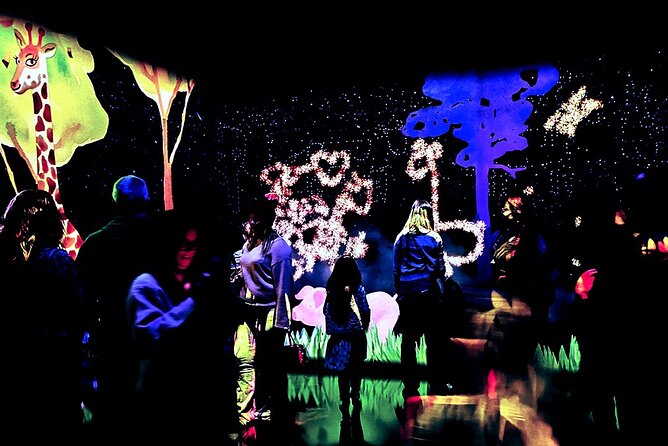
Cube of Art is strongest as a family activity. A ten-month-old and a three-year-old can respond to light, sound, and movement in simple ways, while older children can draw and test the technology more deliberately.
It also gives parents something to do. You are not simply watching children play from the side. The artwork reacts to your own movement, so adults can join in without needing to pretend that they are supervising a science lesson.
A teenager can also fit comfortably into the visit. The activity has enough novelty to feel different from a standard museum, and the option to create effects offers more control than simply walking past exhibits.
For adults without children, the experience depends on your expectations. If you like playful technology, collaborative activities, and digital art, you may find the format refreshing. If you prefer quiet galleries, detailed labels, or a long sequence of individual works, this is probably not the best match.
The room is also suitable for a team activity. People tend to start interacting quickly once the displays begin responding. That makes it a useful option for a small group that wants something social without booking a long guided program.
Why group size can change the experience
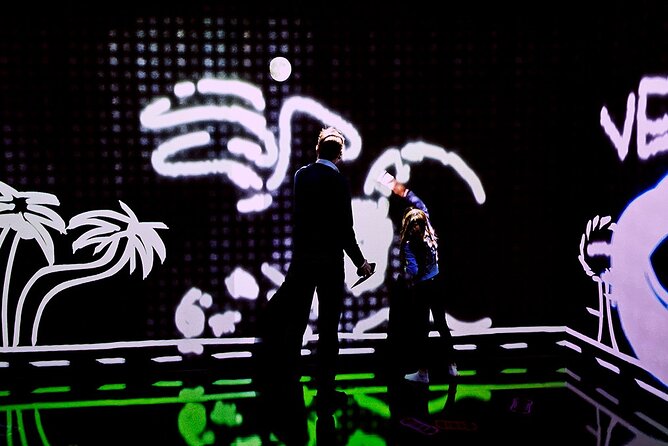
Space is the most important practical issue. With only two to five people in the room, the experience can feel relaxed and comfortable. You have room to move, draw, and watch the effects without constantly crossing paths.
Once the number rises above about eight, the room may feel less comfortable. Several people moving at the same time can be part of the fun, but it can also make it harder to focus on your own interaction.
This matters most if you dislike crowded activities or are visiting with a stroller, very young children, or a group that needs extra personal space. The sensors may respond to many people at once, but the physical room still has limits.
I would try to choose a quieter session if you have flexibility. The booking pattern suggests that people often reserve around 17 days ahead, so planning early may help if you want a particular date or time. The attraction is open Wednesday through Sunday from 10 a.m. to 6 p.m. during the listed operating period.
The opening schedule also means you should not assume a daily visit is possible. Check the date carefully, especially if Cube of Art is one stop in a short Uppsala stay.
Is $21.68 per person a fair price?

At $21.68 per person, Cube of Art sits in the range where expectations matter. You are paying for an interactive experience lasting about an hour, not admission to a large museum with a full day of galleries.
I think the price works best for families who want a memorable activity that everyone can share. A young child may get more from this than from a conventional art exhibition, and the immediate response from the walls and floor keeps the visit active.
It also has value as a rainy-day plan. You can spend an hour doing something creative indoors, and the experience does not ask you to stand quietly while children lose interest.
For a team or small adult group, the cost can make sense because the activity creates a shared challenge. It is more than looking at projections, yet less formal than a workshop.
The value is weaker if you expect a large number of installations or a long visit. Some people may finish their exploration after one or two rounds. If your priority is quantity, a broader museum may offer more for the same time and money.
The admission includes all fees and taxes. Hotel pickup and drop-off are not included, but the museum is near public transportation, so you will need to make your own way there.
A practical plan for your visit

Bring your mobile ticket and allow about an hour for the experience itself. Since there is no hotel transfer, build in your own transport time and check the Wednesday through Sunday schedule before setting out.
If you are visiting with children, explain that the room is interactive but still has a timed structure. The art responds to movement and drawing, yet you may not be able to leave whenever you want.
Try not to judge the experience during the first few minutes. The point is to experiment. Walk across the room, move your hands, watch the floor, and try drawing on the wall. Once you understand the basic response, the visit becomes more rewarding.
A second round can be useful. The first lets you learn the system, while the next gives you time to focus on favorite effects. Many people will find two rounds sufficient, so an hour is a realistic plan rather than a rushed estimate.
If your group includes a baby, toddler, or child who dislikes crowded rooms, aim for a smaller session if possible. Two to five people may provide the most comfortable balance between shared energy and room to move.
Who should book Cube of Art?
I would choose Cube of Art for a family with children, a teenager looking for something different, or a small group that enjoys hands-on technology. It is also a smart backup for a wet day in Uppsala.
The experience suits you if you want art that responds to your actions and if you enjoy trying things without needing a perfect result. You do not need special skills, and the interactive wall and floor give very young children a way to participate.
I would think twice if you want a large exhibition, advanced artificial intelligence, or a fully enclosed room filled with constant color and action. The drawing recognition may be limited, the room can feel tight with a bigger group, and some people may want more to do after the first hour.
For most families, the mix of play, technology, and shared discovery makes the $21.68 price reasonable. Book it when you want a focused, memorable activity rather than a traditional museum visit. Free cancellation is available if you cancel at least 24 hours before the start time, which gives you some flexibility when planning.
FAQ
Where is Cube of Art located?
Cube of Art is located in Uppsala, Sweden.
How long does the experience last?
The visit lasts approximately one hour. Two rounds through the exhibition may be enough for many people.
What are the opening hours?
During the listed operating period from December 26, 2024, through February 3, 2027, Cube of Art is open Wednesday through Sunday from 10 a.m. to 6 p.m.
How much does admission cost?
The listed price is $21.68 per person. All fees and taxes are included.
Is a mobile ticket available?
Yes. The experience includes a mobile ticket, and confirmation is received when you book.
Is transportation from my hotel included?
No. Hotel pickup and drop-off are not included. The museum is near public transportation.
Can I cancel for a full refund?
Yes. You can receive a full refund if you cancel at least 24 hours before the experience start time. Changes or cancellations made less than 24 hours before the start time are not accepted for a refund.
Just added around Sweden
- Beautiful Stockholm Small Group Walking Tour★ 5.0 · 3 reviews
- Kiruna: Cross-Country Skiing Tour with a Guide★ 5.0 · 3 reviews
- Arlanda Express Train Airport and Stockholm City Transfer★ 5.0 · 3 reviews
- Gothenburg: Private Walking Tour with a Guide★ 3.6 · 3 reviews
- Karlskrona Self Guided Sherlock Holmes Murder Mystery Game★ 4.0 · 3 reviews
- Private Golden Hour Photo Walk in Stockholm★ 5.0 · 3 reviews
- Half Day Guided Walk with Huskies★ 5.0 · 3 reviews
- ROYAL Castle Skokloster and Viking Sigtuna (private tour)★ 4.5 · 3 reviews
Uppsala Tours, compared.
Stockholm Viking History Full Day Tour to Sigtuna + Uppsala
Read our review →

Uppsala: City Highlights and Hidden Gems Walking Tour
Read our review →
Best of Uppsala: Private Walking Tour with a Local
Read our review →
Guided tour 90min at Old Uppsala mounds and old Uppsala church
Read our review →
Uppsala bloody history 1h- racial biology, 18th century plague, 19th century prostitution etc.
Read our review →
Uppsala Must See 2h city walk – 2h tour of all big attractions!
Read our review →
Browse the lists this tour appears in