
Reviewed · STOCKHOLM TOURS
Bloody Stockholm 2h – ghosts, horror and Dark Folklore Tour
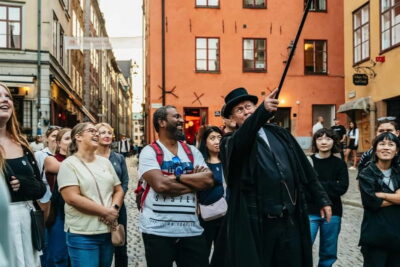
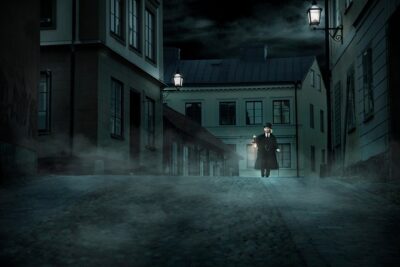
Stockholm’s Old Town looks cozy by daylight, with tidy façades and narrow lanes. This tour asks you to look again. At Stortorget, you hear about executions and the grim use of human body parts in old folklore. Later, iron charms, drowned spirits, trolls, witches, and undead children turn familiar streets into something far less comfortable. The contrast is the main pleasure.
I like the way the walk joins documented Stockholm history with Swedish folk beliefs, instead of offering only a standard ghost story. I also like that the route keeps moving through central sights, from Stortorget to Saint Jacob’s Church, so you get a useful Old Town orientation along with the darker tales. The main consideration is tone: this is more an informed folklore and history walk than a theatrical hunt for visible ghosts.
Key points
- Stortorget’s executions: Hear how around 90 people were killed around the time Danish King Kristian took Stockholm, along with beliefs about the magical power of the dead.
- A walk through old beliefs: Learn how iron, doors, baptism, and household customs were used to guard against trolls, elves, and restless souls.
- Water spirits and forest beings: Meet Näcken, the bäckahästen, the Sjörå, the Skogsrået, and other dangerous creatures from Swedish folklore.
- A strong guide-led experience: Guides including Jonathan and Åsa bring facts, humor, and room for questions.
- Useful central route: The walk begins at the Nobel Prize Museum and ends near Kungsträdgården, outside the Old Town.
- Flexible length: It is presented as roughly 1.5 to 2 hours, but the pace and guide can affect the total time.
Why Stockholm’s prettiest square makes such a dark beginning
Meet at the Nobel Prize Museum at Stortorget 2, right in Stockholm’s Old Town. The tour begins in one of the city’s most recognizable squares, a place that can feel almost storybook-like until the subject turns to public death.
The opening centers on the executions of around 90 people connected with the Danish King Kristian’s capture of Stockholm. This gives the tour a firm historical base before it moves into folklore. You are not simply told that a place is haunted. You hear how death was understood, feared, and sometimes used in older magical practices.
The guide also discusses beliefs about blood from the dead, gallows parts, and other body parts used in curses or remedies. It is unsettling material, but it helps explain why older folklore could be practical rather than merely entertaining. People once used stories and rituals to make sense of danger, illness, enemies, and sudden death.
Allow about 10 minutes at Stortorget. The stop is short, but the subject is dense. If you prefer light sightseeing, this opening may feel too grim. If you enjoy the uncomfortable corners of history that normal city tours skip, it gives the walk a clear purpose from the start.
More Stockholm outings to compare
- Stockholm: 2-Hour RIB Speed Boat Tour of the Archipelago
★ 4.9 · 396 reviews - Stockholm Speed Boat 2 Hour Archipelago Tour
★ 5.0 · 139 reviews - Södermalm: 2-Hour Sightseeing Tour
★ 4.0 · 46 reviews
Prästgatan and the lane once called Hell
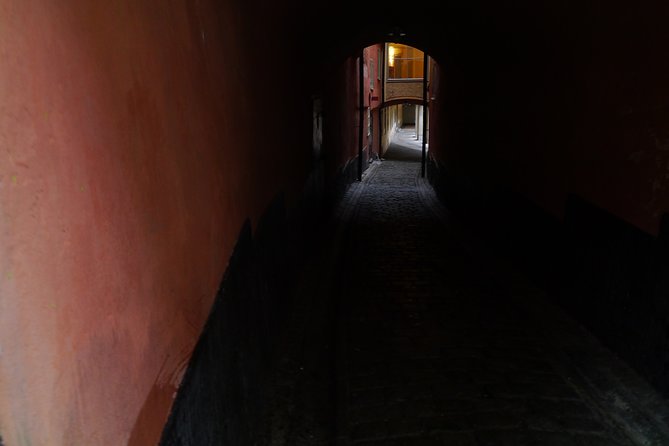
From Stortorget, the route continues along Prästgatan. Here, the guide talks about a section once known as Hell and the people who lived there.
This is one of the tour’s useful habits: it connects folklore to ordinary streets and residents. The stories are not presented in a distant museum setting. You are standing among homes, doorways, and lanes where names and local beliefs shaped how people understood their surroundings.
The stop takes about 10 minutes. It is not a dramatic attraction with a special entrance, and there is no admission charge at any point on the route. The value comes from the guide’s explanation. Without that context, Prästgatan is simply another attractive Old Town lane. With it, the street gains a more uneasy past.
The tour guide matters here. Jonathan is described as able to mix dark facts with humor, while Åsa has led an especially engaging small-group walk. Guide quality can shape this kind of experience more than the setting itself, since the route depends on storytelling rather than props or displays.
Iron, doors, and the danger around a newborn
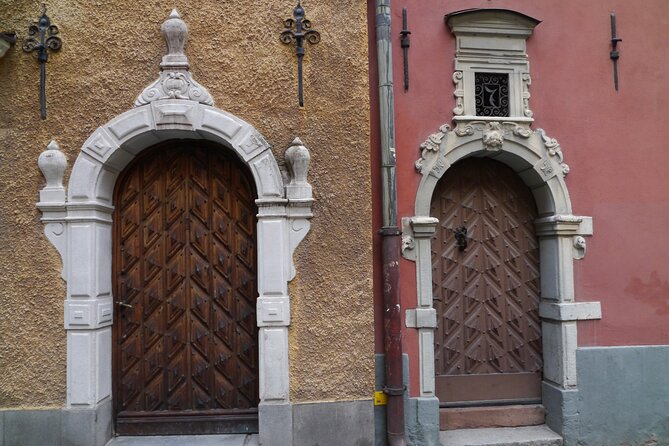
At a house doorway in Stockholm’s Old Town, the subject changes from public violence to private protection. You hear about the use of iron against vaesen, the supernatural beings of Swedish folklore.
The guide explains beliefs about elves arriving with mist, with the mist understood as connected to souls that had not found rest. You also meet the Swedish Tomte, a household figure often softened in modern Christmas imagery but tied here to older Scandinavian beliefs.
Doors receive special attention. In the worldview discussed on this walk, a door is not just an entrance. It is a weak point between the protected home and whatever may be waiting outside. Newborn babies were considered especially vulnerable before baptism, when they lacked the protection associated with the Christian ceremony.
This section is valuable because it shows how folklore entered daily life. You learn not only the names of creatures, but also what people were supposed to do about them. Iron, thresholds, baptism, and household rules become part of a larger system of protection.
The stop is planned for about 10 minutes. Since the group gathers outside a house rather than entering a building, the experience depends on being able to hear the guide clearly. A maximum group size of 30 is listed, so this is worth keeping in mind if you prefer very intimate storytelling.
At Logårdstrappan, meet Sweden’s water spirits
At Logårdstrappan, the tour turns toward the folklore of water. This section introduces several beings connected with rivers, lakes, the sea, and ships.
Näcken is one of the best-known figures. The bäckahästen is described as the Swedish version of the Kelpie, while the Sjörå and skepps-rå are linked to the sea and ships. The common thread is danger. These beings could lure people toward the water, drag them into the depths, or cause trouble for those who misjudged the natural world.
This stop lasts about 10 minutes, but the subject gives the guide room to compare different kinds of water spirits. A sea-related being does not serve exactly the same purpose as a creature tied to a stream or ship. The names may be unfamiliar at first, so listen for the practical warning behind each story.
I find this part especially effective for visitors who want more than imported haunted-house tales. The folklore is specifically Swedish, and it reflects a culture shaped by water. You get a sense of how dangerous coastlines and waterways could seem before modern safety, lighting, and communication.
The setting also changes the rhythm of the tour. After the tight lanes around Stortorget and Prästgatan, the water-side stop gives you a different kind of atmosphere. Still, the tour remains a street walk, not a staged supernatural event. Do not book it expecting special effects or guaranteed ghost sightings.
Something quite different in Stockholm:
- Stockholm: City Archipelago Sightseeing Cruise with Guide
★ 4.3 · 10,798 reviews - Stockholm: Skansen Open-Air Museum Admission Ticket
★ 4.5 · 3,427 reviews - Stockholm: Archipelago Boat Tour
★ 4.4 · 3,110 reviews - Stockholm: Highlights Boat Tour
★ 4.3 · 2,542 reviews
Kungsträdgården and the creatures of forest and marsh
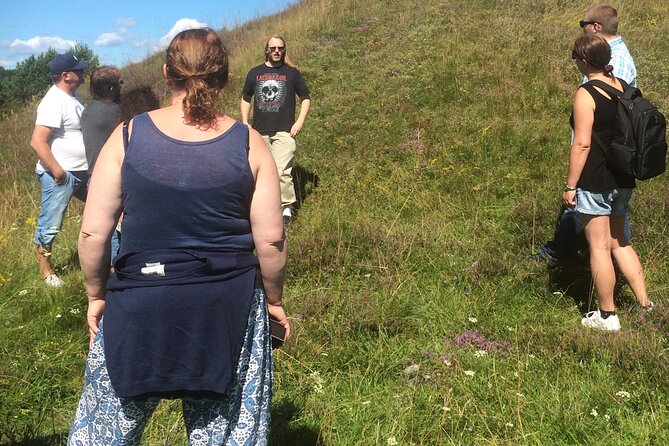
The longest stop comes at Kungsträdgården, where the guide spends around 20 minutes on other vaesen. The main figures include the Skogsrået, also known as the huldran, and the Myrling, an undead living child from Swedish folklore.
The Skogsrået or huldran belongs to the forest. The Myrling brings the darker idea of a child who has died but remains present among the living. These tales move the tour away from historical executions and toward the fears attached to wild places, hidden wrongdoing, and the dead who have not been properly laid to rest.
This is where the experience most clearly earns its dark folklore title. You are not only hearing about famous ghosts. You are being introduced to a set of beings with different habits, settings, and dangers. The guide’s job is to keep those distinctions clear and explain how the stories worked within Swedish culture.
Kungsträdgården is also a practical point on the route. The tour is no longer confined to the Old Town, and the final stop is only a short walk away. If you are planning dinner or another activity afterward, this central location makes the ending convenient.
The longer time here can be a strength or a weakness. If you enjoy folklore, it gives the guide space to tell complete stories. If you came mainly for brutal historical events, the supernatural material may feel less direct.
Saint Jacob’s Church and the final warnings
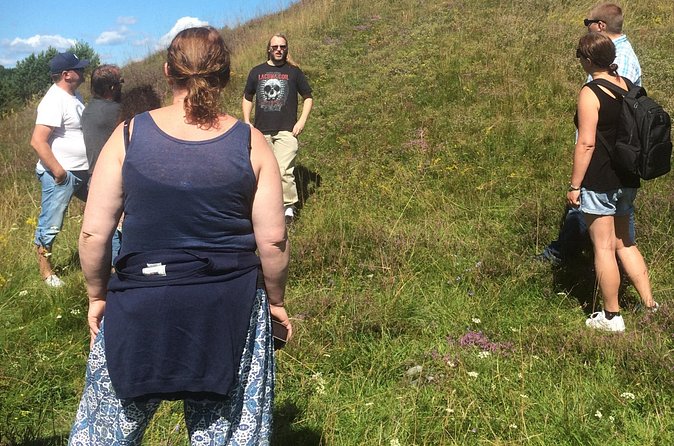
The final stop is outside Saint Jacob’s Church on Västra Trädgårdsgatan. The discussion focuses on the church door, vulnerable points in the building, baptism, exorcism, and ways an enemy might be punished.
This closing section brings several earlier themes together. The door returns as a protective boundary. Baptism returns as a safeguard for a child. Religious spaces become places that require protection too, rather than automatically being safe from supernatural threats.
The reference to an exorcism involving a child at baptism gives the finale a particularly unsettling edge. The tour also looks at old methods for punishing a worst enemy. These details make clear that folklore was not always harmless entertainment. It could express fear, jealousy, revenge, grief, and the need to control events that people could not explain.
The planned time is about 15 minutes. The tour ends outside the church, on the north side of the Old Town beside Kungsträdgården. From there, you can walk back to the starting point in about 10 minutes, though returning is not part of the guided route.
What the guides add to the walk
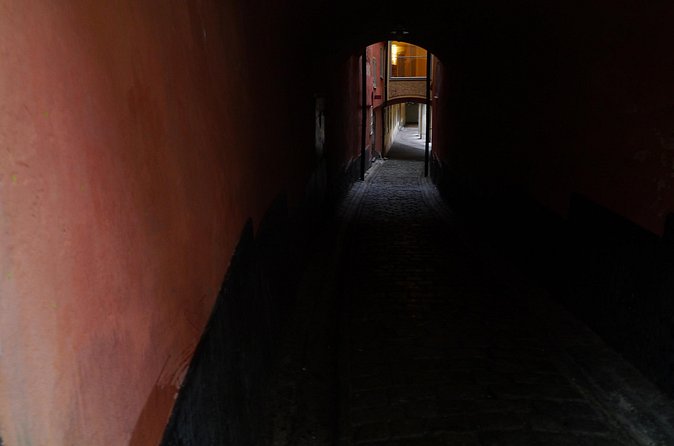
A tour built around stories rises or falls on its guide. Here, Jonathan and Åsa are the named guides connected with the experience.
Jonathan’s style includes facts, dark details, humor, and openness to questions. That mix matters. Horror stories can become repetitive when every stop is delivered in the same dramatic voice. A guide who can answer questions and add historical context gives the walk more substance.
Åsa has also led the tour, including a very small group of three. That kind of private-feeling outing can make it easier to ask questions and adjust the pace, but you should not assume your group will be that small. The listed maximum is 30 people.
One useful point about timing is that the actual length can vary. The tour is described as approximately 1 hour 30 minutes, while the title suggests two hours, and one guide-led outing ran for more than two and a half hours. That could mean extra stories, questions, or a relaxed pace. If you have a firm dinner reservation, leave a generous cushion.
Is the tour good value?
No price is provided here, so I cannot judge it against a specific fee. I can say what you are paying for: a guide, a carefully linked central walking route, and interpretation you would not get by simply wandering through Old Town with a map.
There are no admission tickets for the stops. That keeps the structure simple. The experience is about the guide’s storytelling, not entry to a museum, church interior, exhibit, or performance.
For me, the value is strongest if you want a tour with a clear subject and local character. You get Stockholm history at Stortorget, neighborhood folklore on Prästgatan, household beliefs in Old Town, water spirits at Logårdstrappan, forest and marsh creatures at Kungsträdgården, and religious protection at Saint Jacob’s Church.
The value is weaker if you expect a conventional ghost tour with haunted buildings, actors, jump scares, or supernatural investigation. One useful description of the experience is an informative stroll with dark stories. That is not a criticism, but it is an important expectation to set before booking.
Who should book Bloody Stockholm?
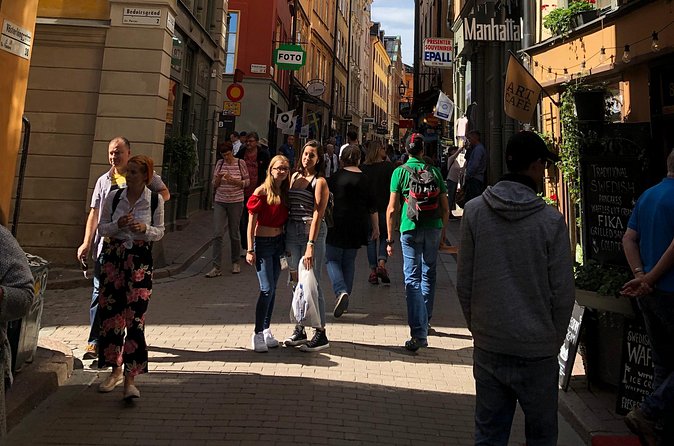
I would choose this tour if you enjoy history with a grim edge, Scandinavian folklore, and walking tours that make familiar streets feel newly strange. It also suits families with older children who can handle stories about death, executions, trolls, and undead children. A 10-year-old enjoyed the mix of suspense and learning, but younger children may find some material too intense.
It is a good match for a first day in Stockholm because the route helps you understand where the Old Town sits in relation to Kungsträdgården. It also works well after a standard city tour, when you want a different angle on places you have already seen.
You should think twice if you dislike graphic subjects or want a polished theatrical production. The tone is dark, but the format is a guided walk. Weather also matters. You are outside for the full experience, and the walk continues even in less-than-ideal conditions, so wear shoes and clothing suited to Stockholm’s weather.
The tour is offered in English and uses a mobile ticket. Service animals are allowed, public transportation is nearby, and most people can participate. Free cancellation is available up to 24 hours before the start time, but cancellations or changes within 24 hours are not refunded or accepted.
My verdict on this dark Stockholm walk
I like Bloody Stockholm because it gives you more than a list of haunted addresses. It explains how Stockholm’s history, religious customs, household protections, and supernatural beings fit together.
The strongest parts are the opening at Stortorget, the practical beliefs about iron and doors, and the distinctly Swedish water and forest spirits. The main weakness is that the experience may feel less like a ghost tour than its title suggests. The length can also run beyond the advertised estimate, especially when the guide has plenty to say.
Book it if you want dark history and local folklore delivered on foot, with room for questions and a little humor. Skip it if you need theatrical scares or a tightly timed attraction. For the right audience, it is a memorable way to see Stockholm’s Old Town after its postcard image has worn off.
FAQ
How long does Bloody Stockholm last?
The experience is described as approximately 1 hour 30 minutes, while the tour title refers to two hours. The itinerary includes about 75 minutes of stop time, and the actual outing may run longer depending on walking, questions, and the guide.
Where does the tour start?
It starts at the Nobel Prize Museum, Stortorget 2, 103 16 Stockholm, Sweden.
Where does the tour end?
It ends outside Saint Jacob’s Church at Västra Trädgårdsgatan 2A, 111 53 Stockholm, beside Kungsträdgården and just north of the Old Town.
Can I walk back to the starting point?
Yes. The end point is about a 10-minute walk from the starting point, although the guided tour itself ends at Saint Jacob’s Church.
What language is the tour offered in?
The tour is offered in English.
What subjects are covered?
The walk covers executions, death rituals, curses, body parts in folklore, protection with iron, trolls, elves, the Swedish Tomte, water spirits, forest beings, undead children, church protection, baptism, exorcism, and punishment of enemies.
Are entry tickets included?
There are no admission charges for the listed stops. The experience includes a guide.
How many people can join?
The maximum group size is 30 people.
Can I cancel for a full refund?
You can cancel at least 24 hours before the start time for a full refund. Cancellations or changes made less than 24 hours before the start time are not accepted, and the amount paid is not refunded.
Just added around Stockholm
- Beautiful Stockholm Small Group Walking Tour★ 5.0 · 3 reviews
- Private Golden Hour Photo Walk in Stockholm★ 5.0 · 3 reviews
- ROYAL Castle Skokloster and Viking Sigtuna (private tour)★ 4.5 · 3 reviews
- Stockholm Port to Stockholm Arlanda Airport (ARN) – Departure Private Transfer★ 3.5 · 3 reviews
- Stockholm Ghost Hunt: Self-Guided Tour and Puzzle Adventure★ 4.5 · 3 reviews
- Swedish Beer Tasting Tour in Stockholm Old Town Pubs★ 5.0 · 3 reviews
- Private Photography workshop in Stockholm★ 5.0 · 3 reviews
- Private blood, ghosts and folklore Old Town 2h Stockholm tour★ 4.0 · 3 reviews
Stockholm Tours, compared.

Stockholm: City Archipelago Sightseeing Cruise with Guide
Read our review →
Stockholm: Skansen Open-Air Museum Admission Ticket
Read our review →

The Original Stockholm Ghost Walk and Historical Tour – Gamla Stan
Read our review →
Browse the lists this tour appears in