
Reviewed · STOCKHOLM TOURS
2-Day Small-Group Basic Skills Survival Course in Södermanland
The most useful part of this two-day wilderness course is its practical focus. You do not simply hear a talk about survival. You work with fire, shelter, food, water, plants, maps, and camp life in the Swedish forest, under William’s steady instruction.
I like the mix of hands-on practice and calm teaching, especially the chance to cook over a fire and sleep outdoors. I also like the small maximum group of eight, which gives you room to ask questions and try each task. The main consideration is that two days can only introduce these skills, not turn you into an expert. Weather, outdoor sleeping, and a full schedule also require some personal readiness.
Key points at a glance
- William leads the course: Expect practical demonstrations, patient explanations, and time to repeat each skill yourself.
- Fire and food share the spotlight: Build a fire, prepare meals, and learn how the forest can supply useful plants and ingredients.
- You practice shelter and water skills: Learn how to create a basic shelter and collect water using available resources.
- The group stays small: A maximum of eight people makes this more personal than a large outdoor excursion.
- Transport and meals are included: Private transport, breakfast, lunch, dinner, and required gear are covered in the listed price.
- Seasonal minimums matter: At least three participants are needed from October through April, and five from May through September.
What this Södermanland survival course is really about
This is not a dramatic test of endurance built around extreme stunts. It is a basic skills course designed to help you react more sensibly if you become lost, separated from help, caught in severe weather, or faced with another sudden problem outdoors.
The central lesson is priority. You first need to think clearly, then deal with the basic needs of warmth, shelter, water, and food. That order matters. A person who knows many clever tricks but cannot decide what to do first is still in trouble.
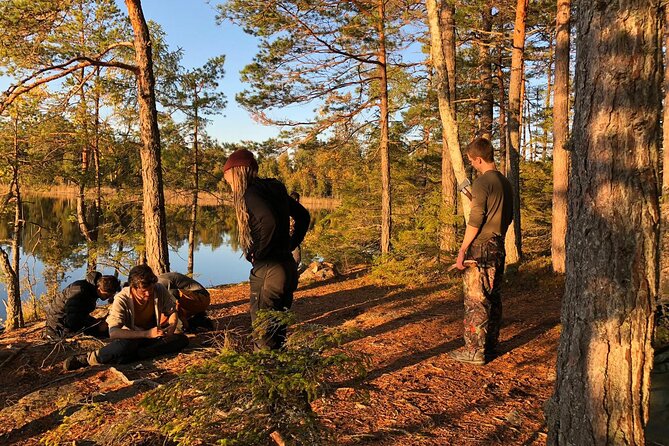
The setting in Södermanland gives those lessons a useful context. The whole course takes place in the forest, so the trees, ground cover, water sources, and natural materials around you become part of the class. You learn to look at the outdoors not only as scenery, but also as a place containing resources and risks.
That does not mean you should casually eat an unknown plant or assume every stream is safe. The course introduces edible, toxic, and medicinal plants, but the value lies in learning careful identification and judgment. Survival training is partly about doing things, and partly about knowing when not to act.
More Stockholm outings to compare
- 2-Day Small-Group Stockholm Archipelago Kayak Tour
★ 5.0 · 25 reviews - 2-Day Kayak Tour in the Stockholm Archipelago
★ 5.0 · 13 reviews - 2-Day Small-Group Stockholm Hiking Tours
★ 5.0 · 6 reviews
Day one: fire, shelter, and the first priorities
The course begins at 9:00 am at True Nature Sweden AB on Tideliusgatan 62 in Stockholm. From there, private transportation takes you toward the forest area used for the course. The exact drive time is not provided, so you should keep the morning open and confirm the practical timing when booking.
Early instruction centers on the three survival fundamentals and your immediate needs. Fire is one of the most useful first skills because it can provide warmth, help with cooking, support morale, and make a night outdoors more manageable. You learn how to build one and what materials can be used, rather than simply watching an instructor light a flame.
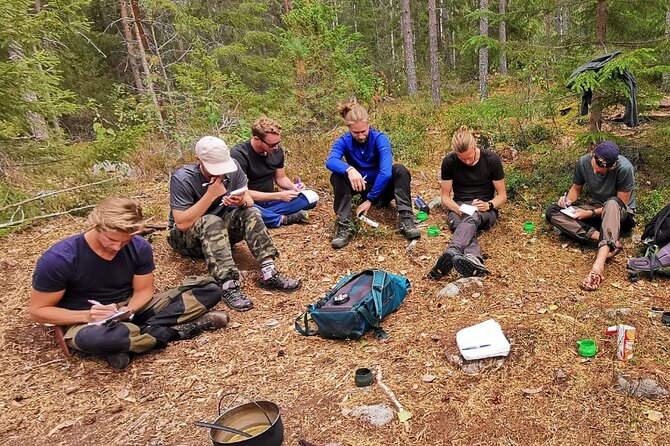
This kind of practice is more valuable than a short demonstration. You need to handle materials, understand preparation, and see how the process works in real conditions. William explains the steps, then gives you the chance to try them. The pace is suited to beginners, with theory and practical work placed side by side.
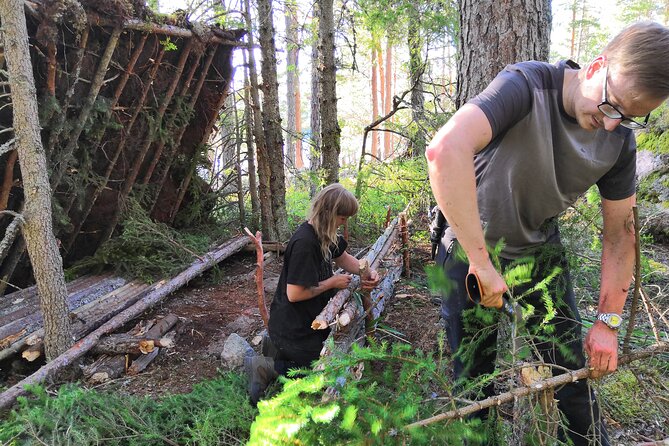
Shelter follows naturally. You learn how to make a basic shelter and consider what materials are available around you. The aim is not luxury. A simple structure can reduce exposure to wind, rain, cold, or damp ground, and that can make a major difference to your comfort and safety.
The shelter session also shows the limits of a short course. You can learn the main principles in a day, but building efficiently takes practice. Do not expect a polished cabin or a complete answer to every climate. This is an introduction to making a workable shelter from what the forest provides.
Camp life adds another layer. The course includes simple encampment techniques intended to make outdoor living easier. These small choices can save energy and reduce discomfort, which is important when you have limited supplies or are tired.
Fire cooking and meals in the forest
Breakfast, lunch, and dinner are included, and food preparation forms part of the experience rather than an interruption to it. Cooking over a fire gives you a direct lesson in heat control, fuel use, timing, and camp organization.
The supplied information does not give a fixed menu, so you should not book expecting particular dishes. What is clear is that food is treated as part of the practical training, and the meals have been well received by people who took the course. One particularly useful detail is the emphasis on fire cooking, which can make a basic outdoor meal feel both satisfying and instructive.
You also explore what can be found in the forest, where food may be located, and how it can be prepared. Plant instruction covers edible, toxic, and medicinal examples. This is one of the more interesting parts of the course because it changes how you notice the woodland around you.
Still, plant foraging demands caution. An introductory lesson should make you more careful, not more adventurous. Identification errors can have serious results, so treat this as a starting point for safe study rather than permission to sample anything you find.
Water collection and food awareness
Water is another basic need, and the course explains where to look for it and how to collect it. The details provided do not specify the exact collection or treatment methods, so you should ask the provider what techniques will be practiced on your chosen date.
The broader lesson is useful: finding water is only one part of the problem. You also need to think about collection, cleanliness, storage, and the energy required to obtain it. Learning to assess a source helps you avoid acting on the first promising puddle or stream.
Food work includes more than plants. The course also covers trapping and fishing. These are introductory subjects within a busy two-day program, so you should expect an overview and guided practice rather than advanced fieldcraft.
That variety is a strength. You see several ways people might obtain food in a difficult situation, while also learning that food usually comes after warmth, shelter, and water. The course keeps bringing you back to priorities instead of treating every skill as equally urgent.
Something quite different in Stockholm:
- Stockholm: City Archipelago Sightseeing Cruise with Guide
★ 4.3 · 10,798 reviews - Stockholm: Skansen Open-Air Museum Admission Ticket
★ 4.5 · 3,427 reviews - Stockholm: Archipelago Boat Tour
★ 4.4 · 3,110 reviews - Stockholm: Highlights Boat Tour
★ 4.3 · 2,542 reviews
Navigation, wildlife, and staying calm
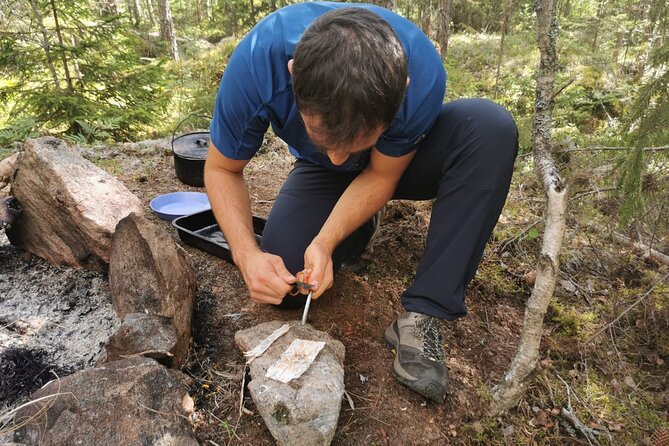
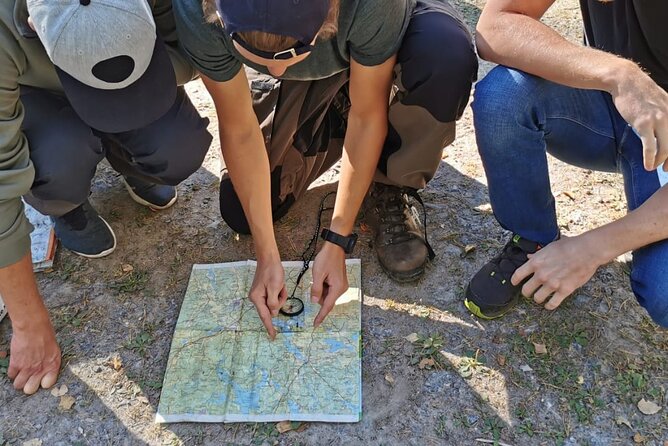
Orientation and map reading help you deal with one of the most common outdoor problems: losing your way. You learn to use a compass and read a map, skills that are easy to underestimate when a phone normally does the work for you.
The course is especially useful here because navigation is tied to decision-making. You are not only learning symbols and directions. You are learning how to find your way out of a difficult situation without rushing blindly through the forest.
The exact map type, route, and navigation exercises are not specified. That means you should view the session as basic instruction rather than a demanding navigation challenge. If you already use a compass often, you may want to ask how advanced the exercises will be.
Wildlife tracking adds another way of reading the woods. You learn to look for signs of animals and discuss their possible dangers. The emphasis is awareness, not pursuit. Knowing what may be nearby can help you choose where to move, where to rest, and how to avoid unnecessary contact.
This section also supports the course’s wider aim: seeing nature differently. The forest becomes a place of clues. Tracks, plants, shelter materials, water, and firewood all receive more attention once you know what they may tell you.
Group survival and the overnight experience
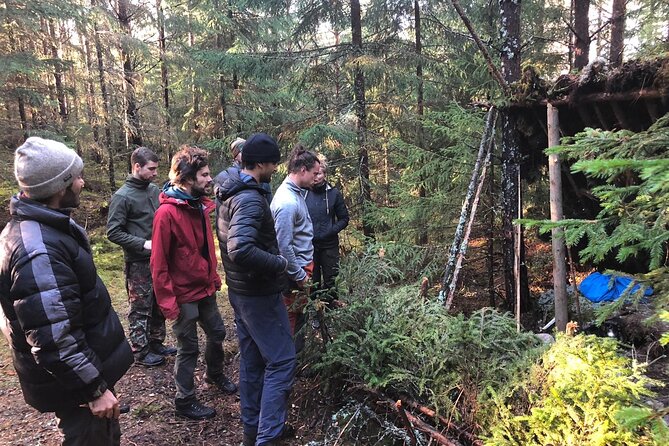
A survival situation rarely follows a neat lesson plan, and working with other people can help or complicate matters. The course includes group survival and leadership, giving you a chance to consider how decisions are made when several people share limited time, energy, and resources.
A small group of up to eight is a good fit for this subject. You have enough people for group tasks and discussion, but the setting should not feel like a crowded outdoor event. Several participants can also mean different comfort levels, strengths, and concerns, which makes the leadership topic more realistic.
The two-day format includes sleeping in the forest. That overnight element matters because outdoor skills feel different after dark and after a full day of work. Fire management, shelter, food, and organization take on more meaning once you are living with them rather than practicing for a few minutes.
You should be honest with yourself about this part. The course is described as a basic introduction, and one participant found it less tough than expected, but it is still an outdoor overnight in the forest. If you are hoping for a hotel bed and a light activity schedule, this is the wrong choice.
Camping gear rental is listed as an optional extra at 450 kr per person. Backpack rental is also available for 100 kr per person. The course includes all needed gear, but the wording suggests that personal camping equipment and a backpack may be separate from the standard package, so clarify exactly what is supplied before departure.
William’s teaching style and the group atmosphere
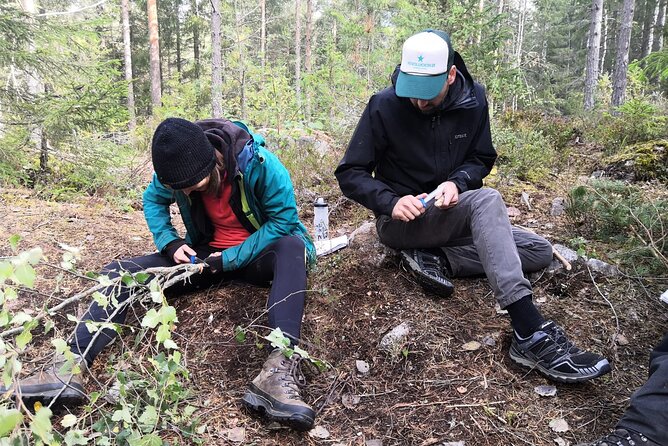
William is the named instructor, and his role is one of the strongest reasons to choose this course. The teaching combines explanations with demonstrations and practice. That balance helps beginners understand not just what to do, but why each step matters.
Patience is important in a survival class. Fire-making, compass work, shelter building, and plant identification can all feel awkward on the first attempt. William’s approach, as described through the course material, makes room for questions and mistakes without turning the experience into a macho contest.
That broad welcome is worth noting. The course is not presented as an activity only for hardened outdoorsmen. A mother and daughter with no advanced background were able to take part, and the group atmosphere was described as friendly and relaxed. You can expect people with different levels of experience and different reasons for signing up.
The course also seems to balance serious instruction with humor. That is not a minor point. Learning in a forest for two days can become tiring, and a guide who keeps the mood light can help you stay engaged without making the safety lessons seem casual.
Price, inclusions, and practical value

At $480.71 per person, this is a significant purchase for a two-day activity. The value depends on how much you want the full package rather than a simple outdoor outing.
The price includes private transportation from Stockholm, breakfast, lunch, dinner, and all needed gear. It also includes access to an instructor-led program covering many separate areas: fire, shelter, water, food, plants, wildlife, trapping, fishing, navigation, camp life, and group leadership.
If you had to arrange transport, meals, equipment, and instruction separately, the cost could rise quickly. The included overnight experience also gives the course more substance than a short forest walk or half-day workshop.
On the other hand, you are buying an introduction, not a professional qualification. If your main goal is a cheap taste of Swedish nature, the price may feel high. If you want structured practice with a guide, meals, transport, and equipment handled in one booking, the package becomes easier to justify.
The maximum group size of eight improves the value further. Personal correction matters when you are learning practical skills. A large class could leave you watching from the edge, while this format gives you a better chance to handle the tools and ask William about your own mistakes.
Seasons, participation rules, and planning
The minimum group requirement changes with the season. From early October through late April, the activity needs at least three participants. From early May through late September, it needs at least five.
This rule is important if you are planning around a fixed Stockholm stay. If the minimum is not reached, you will be offered another date or experience, or receive a full refund. It is wise to check availability before building your trip around the course.
Most people can participate, and the activity is capped at eight people. No specific fitness standard is given, so you should not assume the course is a race or an extreme physical challenge. Even so, you will be outdoors, building, walking, handling materials, and sleeping in the forest.
Bring a practical attitude. Seasonal weather will affect how the experience feels, even though no exact packing list is provided. Ask what clothing, footwear, sleeping equipment, and personal items you should bring, especially if you are considering the optional camping gear rental.
The course starts in Stockholm but takes place in the wilderness of Södermanland. That makes private transportation especially useful. You do not need to solve the transfer to the forest yourself, and the activity returns to the meeting point at the end.
Free cancellation is available if you cancel at least 24 hours before the 9:00 am start. Changes or cancellations inside that window are not accepted for a refund. Because the course has a minimum participant rule, keep the seasonal requirements in mind when booking.
Who should book this course?
I would choose this for a beginner who wants practical outdoor skills without signing up for a long expedition. It suits curious solo participants, couples, families, and small groups who enjoy learning by doing.
It is also a good fit if you want more than scenery. You will come away with a new way to read the forest, from plant types and animal tracks to potential firewood and water sources. The course can be especially rewarding for someone who normally relies on phones and modern comforts but wants to understand the basics behind self-sufficiency.
I would hesitate if you dislike sleeping outdoors, need a tightly timed city activity, or expect advanced survival training in only two days. The program covers a lot, so each subject must remain at an introductory level.
Should you book the Södermanland survival course?
Book it if you want a friendly, small-group introduction led by William, with real practice in fire-making, shelter building, navigation, foraging, camp cooking, and overnight forest life. The included transport, meals, and gear make the $480.71 price easier to weigh, particularly for visitors without outdoor equipment.
Skip it if you want a polished sightseeing tour, a luxury camp, or expert-level training. For the right person, this is a useful reset: two days of practical work that can make the Swedish forest feel less mysterious and much more readable.
FAQ
Where does the survival course start?
The course starts at True Nature Sweden AB, Tideliusgatan 62, 118 69 Stockholm, Sweden.
What time does the course begin?
The stated start time is 9:00 am.
How long does the activity last?
The course lasts approximately two days and ends back at the Stockholm meeting point.
How many people can join?
The maximum group size is eight participants.
What meals are included?
Breakfast, lunch, and dinner are included in the course price.
Is transportation included?
Yes. Private transportation is included, with the activity beginning and ending at the listed Stockholm meeting point.
What happens if there are not enough participants?
The activity requires at least three participants from early October through late April and at least five from early May through late September. If the minimum is not met, you will be offered a different date or experience, or a full refund.
Just added around Stockholm
- Beautiful Stockholm Small Group Walking Tour★ 5.0 · 3 reviews
- ROYAL Castle Skokloster and Viking Sigtuna (private tour)★ 4.5 · 3 reviews
- Private Golden Hour Photo Walk in Stockholm★ 5.0 · 3 reviews
- Stockholm Port to Stockholm Arlanda Airport (ARN) – Departure Private Transfer★ 3.5 · 3 reviews
- Swedish Beer Tasting Tour in Stockholm Old Town Pubs★ 5.0 · 3 reviews
- Stockholm Ghost Hunt: Self-Guided Tour and Puzzle Adventure★ 4.5 · 3 reviews
- Private Photography workshop in Stockholm★ 5.0 · 3 reviews
- Private blood, ghosts and folklore Old Town 2h Stockholm tour★ 4.0 · 3 reviews
Stockholm Tours, compared.

Stockholm: City Archipelago Sightseeing Cruise with Guide
Read our review →
Stockholm: Skansen Open-Air Museum Admission Ticket
Read our review →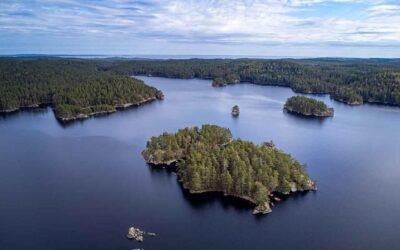



The Original Stockholm Ghost Walk and Historical Tour – Gamla Stan
Read our review →
Browse the lists this tour appears in