
Reviewed · UPPSALA TOURS
Uppsala Must See 2h city walk – 2h tour of all big attractions!
Uppsala’s big story comes together on this compact walk: Viking runestones, a grand cathedral, a university library, and a castle linked to murder all sit within a manageable central route. I like the way the tour connects famous sights with less comfortable chapters, including Sweden’s race biology institute and the castle’s killings. I also like that the guide adjusts the pace and can help if you lose your way.
The main caution is that this is an outside-focused tour. Several buildings may be entered only if they are open, and Uppsala Castle itself is closed to visitors, so you should book this for guided context and city orientation rather than a long list of interior visits.
Key points at a glance
- Viking runestones beside the cathedral: Begin with carved evidence of Uppsala’s Viking-age past.
- A cathedral seen from the outside: Take in the city’s largest church without spending tour time inside.
- The castle’s darker story: Hear about murders connected with Uppsala Castle while visiting its courtyard.
- A difficult chapter at Dekanhuset: Learn about the Swedish race biology institute and its work from 1920 to 1958.
- The Silver Bible at Carolina Rediviva: Enter the library if it is open and see the historic Gothic-language manuscript.
- A brisk two-hour route: Cover major sights with a maximum group size of 20 people.
What this Uppsala walk is really about
At $110.15 per person, this is not a cheap orientation walk. Its value depends on how much you want a guide to connect Uppsala’s sights, rather than simply point them out.
The route covers a lot in two hours. You move from Viking stones to the university, from botanical collections to a royal castle, then down toward the river and older city landmarks. That range gives you a useful first picture of Uppsala, especially if you have limited time.
I would not choose it if your main goal is to spend hours inside museums. The schedule allows only short visits, and some stops are viewed from the outside. I would choose it if you want a focused introduction, historical explanation, and help deciding which places deserve a longer return visit.
The tour starts at 5:30 pm from Riddartorget, also called Knights’ Square, on Biskopsgatan. It ends at the same meeting point. The fixed start makes it easy to plan around the rest of your day, though you should allow enough time to arrive before the guide begins.
More walking tours in Sweden
- Stockholm: Ghost Walk and Historical Tour
★ 4.7 · 2,206 reviews - Walking Tour of Stockholm Old Town
★ 5.0 · 1,175 reviews - The Original Stockholm Ghost Walk and Historical Tour – Gamla Stan
★ 4.5 · 1,165 reviews
Riddartorget and Uppsala Cathedral
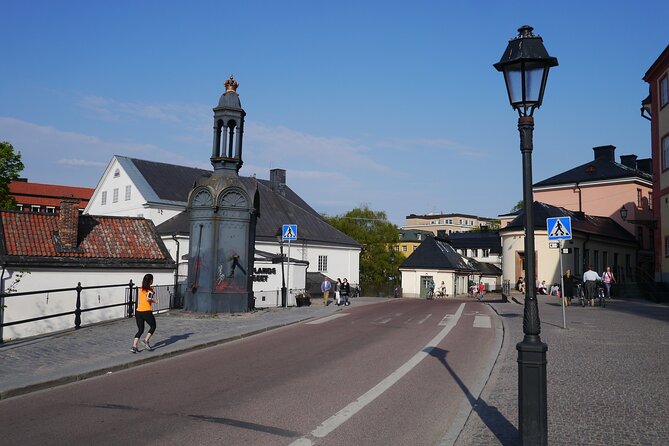
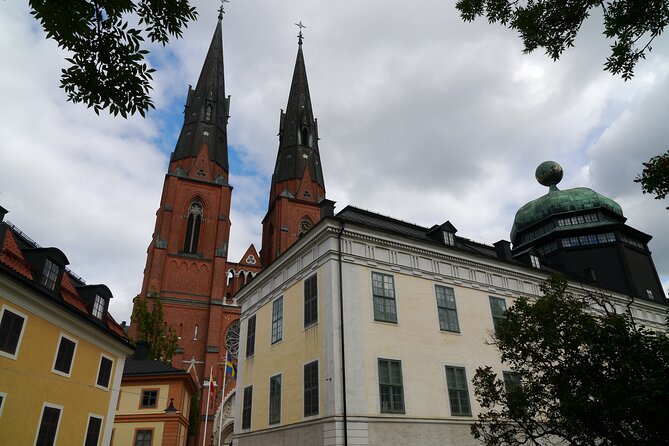
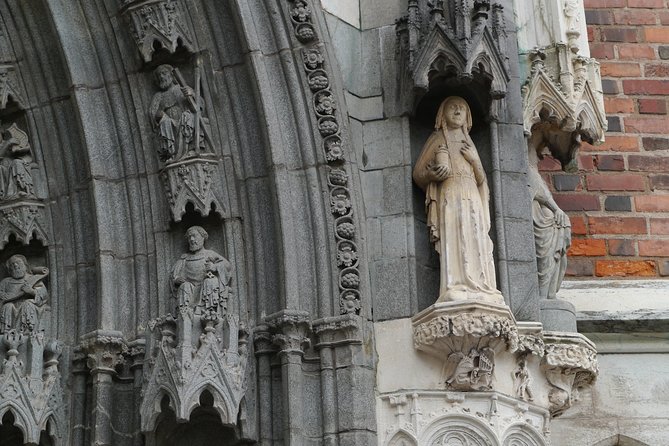
The walk begins near the cathedral, where you first experience Uppsala’s largest church from the outside. The cathedral is a powerful opening sight because it immediately gives the city a sense of scale and importance.
The visit is not presented as an interior cathedral tour. That matters if you want to examine chapels, artwork, or the church’s inside spaces. Here, the focus is on the building’s place in Uppsala and on the stories that surround the nearby historic center.
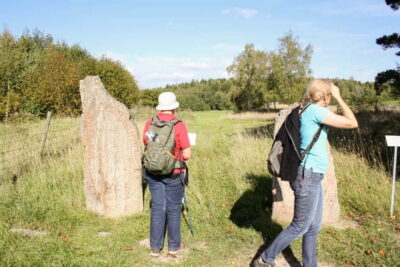
From the cathedral area, the guide takes you to Viking-age runestones. This is one of the most useful parts of the walk for anyone who wants something more tangible than a general statement about Sweden’s Viking past.
The stones offer a direct link to people who lived centuries ago. You can see the carved surfaces close to the cathedral and hear how this part of Uppsala connects to the Viking age. Admission is free, so this stop adds historical weight without adding a ticket cost.
You spend about 20 minutes here. That is enough for an introduction and explanation, but not a long archaeological study. Keep your expectations in line with the format: this is a guided encounter with the stones, not a specialist field visit.
Uppsala University and the old academic world
The next stop is the Uppsala University Main Building, where you spend about 10 minutes. If the building is open, the tour enters it. If not, you see it from the outside and hear about the site there.
This flexible approach is practical, but it also means the experience can vary. An interior visit gives you a closer look at the university setting. An exterior visit still keeps the building on the route, but you should not assume that entry is guaranteed.
I like this stop because it adds another layer to Uppsala. The city is not only about medieval religion and Viking remains. Its university is part of the central identity, and the main building helps you see how academic life fits into the old city.
The short time here also keeps the walk moving. You will not get a full campus tour, and the experience is better understood as a quick historical introduction.
Dekanhuset and a troubling Swedish chapter
Dekanhuset brings the most difficult subject into the tour. Here you hear about the Swedish race biology institute and its history from 1920 to 1958.
This stop matters because it prevents the walk from presenting Uppsala as a polished collection of old buildings. Historic cities contain uncomfortable decisions and institutions as well as beautiful architecture. A guide can give this subject a place within the wider story of Sweden.
You spend about 10 minutes at Dekanhuset. That is a short time for a serious topic, so expect an introduction rather than a full academic treatment. Still, the inclusion is important. It shows that the tour is willing to address a dark part of the city’s past instead of keeping the mood light at every stop.
For me, this is one of the reasons to take a guided walk rather than simply follow a map. A building may look ordinary, while its past needs explanation.
More Sweden outings to compare
- Stockholm: 2-Hour RIB Speed Boat Tour of the Archipelago
★ 4.9 · 396 reviews - Stockholm Speed Boat 2 Hour Archipelago Tour
★ 5.0 · 139 reviews - Södermalm: 2-Hour Sightseeing Tour
★ 4.0 · 46 reviews - Luleå : Snowmobile – Forest and Ice Nature Tour 2h
★ 4.9 · 34 reviews
Carolina Rediviva and the Silver Bible
The route continues to Carolina Rediviva, Uppsala University’s historic library. If it is open, you enter to see the historical museum and the famous Silver Bible, written in a Gothic language.
You spend about 20 minutes here, making it one of the longer stops. That extra time makes sense. A historic manuscript is difficult to understand from a passing view, and the guide’s explanation can help you place it within Uppsala’s academic and religious story.
The important practical point is the opening-hours condition. Entry is not certain, so you should regard the interior and the Silver Bible as a possible highlight, not a promise for every departure. If the library is closed, the tour remains an exterior visit.
The Silver Bible is a particularly good fit for travelers who like old books, language, religion, or medieval culture. If you are mainly interested in architecture, the building itself still gives you something to see, but the museum access is what makes this stop more rewarding.
Botaniska Tradgarden and a change of pace
Botaniska Tradgarden, or the botanical garden, gives the walk a welcome shift away from churches, libraries, and political history. The tour presents it as one of the world’s oldest botanical gardens, with the guide introducing local flora and fauna if the garden is open.
You spend around 10 minutes here. That is enough for a quick look and some interpretation, but not enough for a slow garden visit. If you care deeply about plants, you may want to return independently with more time.
I like the stop because it breaks up the architectural route. It also shows that Uppsala’s attractions are not confined to its medieval center. The garden adds a natural setting and gives the guide a chance to discuss the local environment.
Again, opening hours are important. You may see the garden from outside if it is not open. The experience is still useful as part of the route, but the garden visit itself depends on access.
Uppsala Castle and the murders in the courtyard
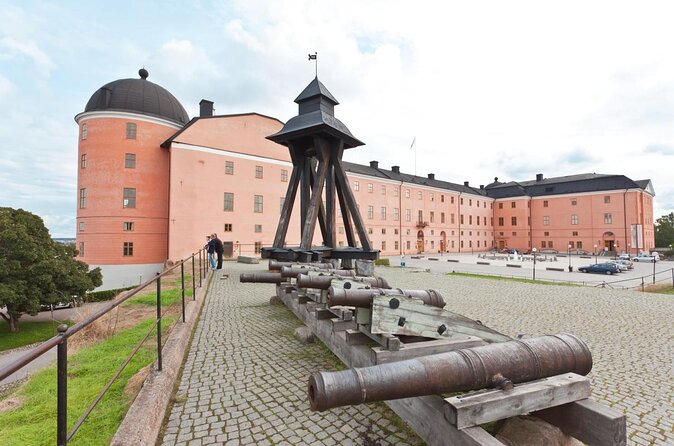
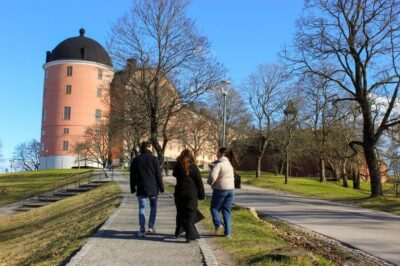
Uppsala Castle is one of the tour’s strongest story stops. You visit the courtyard and hear about murders at the castle, including its murderous history.
The castle is closed to visitors, so do not book this expecting to tour its rooms. The courtyard visit gives you a physical setting for the story, while the guide supplies the background that an outside view alone cannot provide.
You spend about 20 minutes here, matching the time given to the cathedral area and Carolina Rediviva. That tells you something about the tour’s priorities. This is not a quick photograph and move on. The castle receives enough time for the guide to explain its darker events.
I find this kind of stop particularly useful because it turns a grand building into a place with human conflict. Royal and political history can seem distant when reduced to dates. A story about murder makes the setting easier to remember, though the subject may not suit anyone looking for a purely gentle sightseeing walk.
No admission ticket is included for the castle. Since the building is closed to visitors, the main experience here is the courtyard and the guide’s account.
Dombron, the old square, and the river
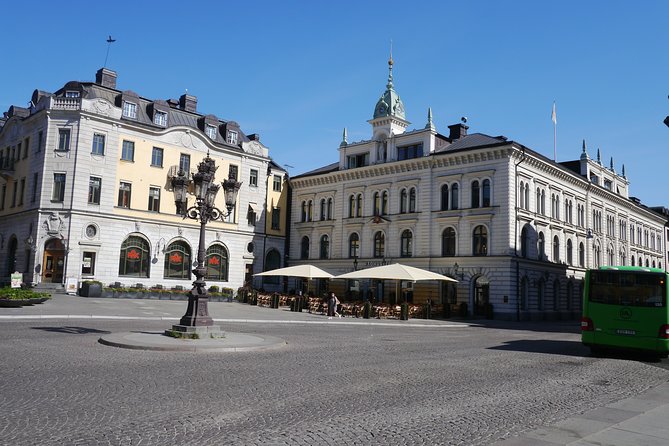
The walk then reaches Uppsala’s old main square and Dombron. This is a short five-minute stop, but it helps tie the city together.
Here you hear about the river and merchant Uppsala. The river was part of the city’s working life, and the old square gives you a sense of how commerce and movement shaped the center.
The brief timing means you should not expect a long pause for shopping or riverfront exploration. Instead, this is a connecting point between the major monuments. I like it as a reminder that cities are not built only around rulers, churches, or universities. Trade and everyday movement also shape the urban story.
The walk also passes the old mill that houses Upplandsmuseet. You see the building from the outside. The mill gives the route another practical link to the city’s working past, although the museum itself is not listed as an included visit.
Gustavianum and Saint Erik’s spring
Near Museum Gustavianum, you walk by the anatomical theater from the outside. The tour does not include entry, and the stop lasts about 10 minutes.
The anatomical theater is an unusual sight because it points to the history of teaching, medicine, and academic display. Seeing it from outside will not satisfy someone who specifically wants to inspect the theater’s interior, but it adds another distinctive detail to the university quarter.
The final listed stop is Sankt Eriks Källa, or Saint Erik’s spring. You spend only about three minutes here, hearing about the battle and Saint Erik’s sainthood.
This is a very short stop, so think of it as a final historical marker rather than a major attraction. It brings the tour back to religious tradition and local legend after the university, castle, and river stories.
The route returns to Riddartorget. That is convenient if you want to continue exploring on your own, since you finish where you began rather than at an unfamiliar edge of the city.
Pace, group size, and physical demands
The experience lasts about two hours and accepts a maximum of 20 people. That is a moderate group size for a city walk. You should have enough space to hear the guide, though the group is not private or especially intimate.
The physical requirement is moderate fitness. No unusual athletic ability is stated, but you should be ready to walk between several central sights and remain on your feet during short explanations.
A useful detail comes from the tour’s handling of one participant’s arrival. The guide found the person after they became lost and adjusted the pace and the visit to suit what was needed. You should still make every effort to arrive at Riddartorget on time, but this suggests the guide can be attentive when practical problems arise.
The guide’s enthusiasm for local history and the area is another real strength. You are not simply being led from one postcard view to another. The tour depends heavily on the guide’s storytelling, especially at Dekanhuset, Uppsala Castle, and Sankt Eriks Källa.
The tour is offered in English, and a mobile ticket is provided. Service animals are allowed, and the meeting point is near public transportation.
Price, access, and who gets good value
At $110.15 per person, the price is high for a two-hour walk. All fees and taxes are included, but gratuities are not.
The value is strongest if you want a compact overview with historical explanation. In two hours, you see the cathedral area, Viking stones, university buildings, library, botanical garden, castle, old square, river crossing, mill, anatomical theater, and Saint Erik’s spring. Reaching that many places independently would be possible, but you would need to research the background yourself.
The value is weaker if you expect guaranteed interior access. The university building, Carolina Rediviva, and botanical garden can be entered only if open. Uppsala Castle and the anatomical theater are outside stops, and the cathedral is also experienced from the exterior.
I would compare the price against your schedule. If you have one free evening in Uppsala and want a guide to organize the city’s major stories, the cost may be justified. If you have several days and enjoy reading plaques and museum displays at your own pace, a self-guided walk may suit you better.
Free cancellation is available if you cancel at least 24 hours before the start time. Changes or cancellations made inside that window are not accepted for a refund, and the activity requires a minimum number of participants.
Should you book the Uppsala Must See walk?
Book this tour if you want a fast, story-led introduction to Uppsala and are especially interested in Viking remains, university culture, royal conflict, religion, and difficult modern history.
It suits first-time visitors, history-focused couples, and anyone with only a short window in the city. The guide’s flexible approach to pace is useful, and the route gives you several places to revisit later.
Skip it if you want guaranteed museum entry, a cathedral interior tour, or a private experience. The two-hour format moves quickly, and the price is substantial for an outside-heavy walk.
My practical choice would be to book it early in your Uppsala stay, then return on your own to any site that catches your interest. Just remember that access to several interiors depends on opening hours, and the castle is viewed from the courtyard only.
FAQ
Where does the tour start?
It starts at Riddartorget, also called Knights’ Square, on Biskopsgatan, 753 10 Uppsala, Sweden.
What time does the tour begin?
The start time is 5:30 pm.
Where does the tour finish?
The activity ends back at the meeting point at Riddartorget.
How long does the tour last?
The walk lasts approximately two hours.
Is the tour offered in English?
Yes. The tour is offered in English.
What is the maximum group size?
The tour has a maximum of 20 travelers.
Is Uppsala Castle open during the tour?
No. The castle is closed to visitors, but the tour includes the courtyard and an explanation of the murders connected with the castle.
Can I enter Carolina Rediviva?
You can enter if it is open. The visit may otherwise take place from outside.
Is the botanical garden visit guaranteed?
No. You explore Botaniska Tradgarden with the guide if it is open.
What is the cancellation policy?
You can cancel at least 24 hours before the start time for a full refund. Cancellations or changes made less than 24 hours before the start time are not accepted for a refund.
Just added around Sweden
- Beautiful Stockholm Small Group Walking Tour★ 5.0 · 3 reviews
- Kiruna: Cross-Country Skiing Tour with a Guide★ 5.0 · 3 reviews
- Arlanda Express Train Airport and Stockholm City Transfer★ 5.0 · 3 reviews
- Gothenburg: Private Walking Tour with a Guide★ 3.6 · 3 reviews
- Karlskrona Self Guided Sherlock Holmes Murder Mystery Game★ 4.0 · 3 reviews
- Private Golden Hour Photo Walk in Stockholm★ 5.0 · 3 reviews
- Half Day Guided Walk with Huskies★ 5.0 · 3 reviews
- ROYAL Castle Skokloster and Viking Sigtuna (private tour)★ 4.5 · 3 reviews
Uppsala Tours, compared.
Stockholm Viking History Full Day Tour to Sigtuna + Uppsala
Read our review →

Uppsala: City Highlights and Hidden Gems Walking Tour
Read our review →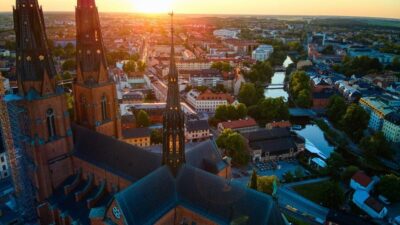
Best of Uppsala: Private Walking Tour with a Local
Read our review →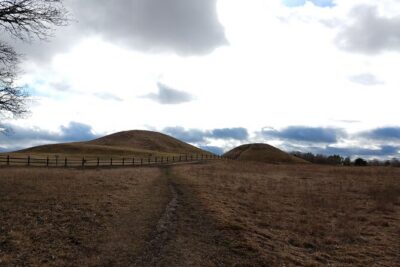
Guided tour 90min at Old Uppsala mounds and old Uppsala church
Read our review →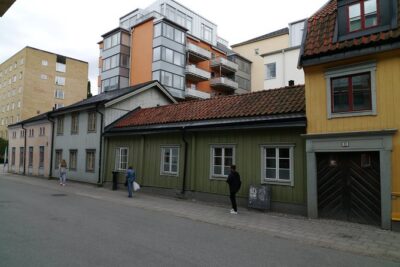
Uppsala bloody history 1h- racial biology, 18th century plague, 19th century prostitution etc.
Read our review →
Browse the lists this tour appears in